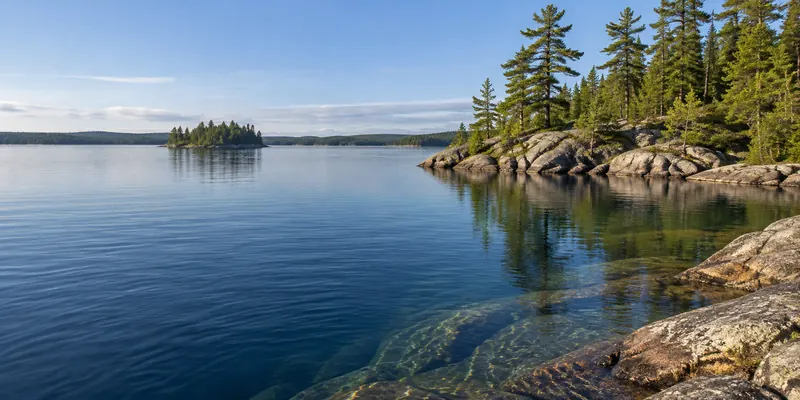
A lake-trout trip asks for a closer look at both the fish and the water. These native cold-water fish can move between shallow and deeper areas through the year, while the legal season changes from lake to lake. Begin with identification and the named-water rules. Equipment and fishing depth come after those two checks.
The facts before the trip
- Identification
- Light spots on a darker body, no red spots and a deeply forked tail. Compare the whole fish with the provincial profile.
Ontario lake-trout species profile - Usual size
- Ontario lists 30–80 cm and 1–5 kg as a usual range. Individual fish and waters vary.
Ontario lake-trout species profile - Seasonal habitat
- DFO describes near-surface use after ice-out and a move toward deeper cold water as lakes warm.
DFO lake-trout profile - Spawning
- Autumn spawning over rocky bottom. Spawning biology does not set an angling season.
DFO lake-trout profile
Sources checked November 19, 2026. Read the current annual rules and any later notices before fishing.
Use the tail and spots together
A single mark is a poor substitute for reading the whole fish. Lake trout have a deeply forked tail and light spots against a darker body. Ontario's species profile helps separate them from other trout and char. Learn those differences before a trip where identification will decide whether a fish may be kept.
Keep a species guide available offline if the lake has poor reception. If there is doubt, do not turn a guess into a retained fish. The label trout covers several different species in Ontario, and their seasons, sizes and limits need separate checks. Our wider trout guide compares those choices.
Match the method to the time of year
Fisheries and Oceans Canada describes lake trout using water near the surface after ice-out and moving toward colder depths as a lake warms. That is useful background for a trip, rather than a promise about a particular fishing depth. Weather, the lake and the day still matter.
Ask a guide which equipment and methods suit your visit. Make the fish-handling plan part of that discussion, including whether it makes sense to target fish at the proposed depth. A general tackle box and a depth sounder do not settle every question about a release-focused outing.
Read the lake exception before the zone table becomes a plan
Lake Temagami has its own lake-trout season and a September release-only period within FMZ 11. Lake Simcoe also needs a named-water check. A date taken from a nearby lake or remembered from last year is therefore an uncertain starting point.
Use the current annual summary, zone map, named-water entries and sanctuaries together. Check the licence type and any size rule before fishing. Our Temagami, Simcoe and Nipigon guides provide places to begin the trip planning, but the current provincial rules remain the source for legal dates and limits.
Give spawning fish and habitat care
Lake trout spawn in autumn over rocky bottom. Their long life and late maturity make careful fish handling and protection of spawning areas worthwhile. A visible group of fish or suitable-looking reef does not mean it is open to fishing. Read closures before putting a lure in the water.
Keep landing tools ready and avoid unnecessary handling. If fishing for release, discuss water conditions, depth and the landing method with a knowledgeable guide. A photograph should fit into a short, controlled landing. Leave it out when getting the fish back safely takes priority.
Keep a weight record in perspective
The OFAH registry lists a 63.12 lb Ontario lake-trout weight record, caught by Hubert Hammers near Isle Royale in Lake Superior on May 25, 1952. That entry is a historical record from the list checked for this guide. It is far outside the province's usual size range.
Use the Ontario fishing records page for other registered weights, then return to choosing a lake that fits your route, equipment and fishing purpose. A sound trout trip comes from a clear season check, suitable water and a daily plan the group can manage. The record book can stay a separate bit of reading.