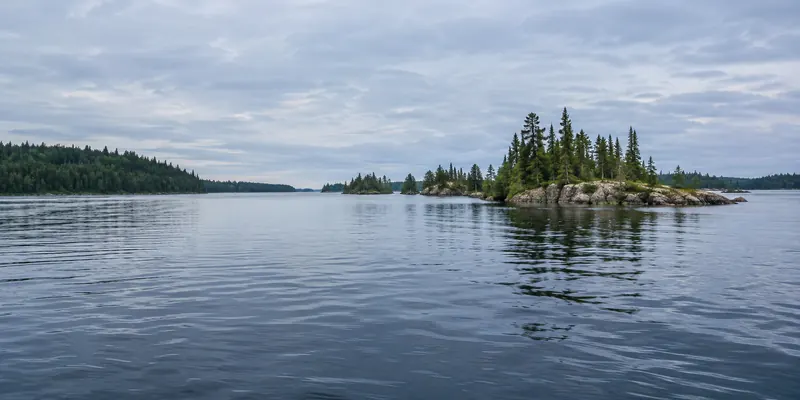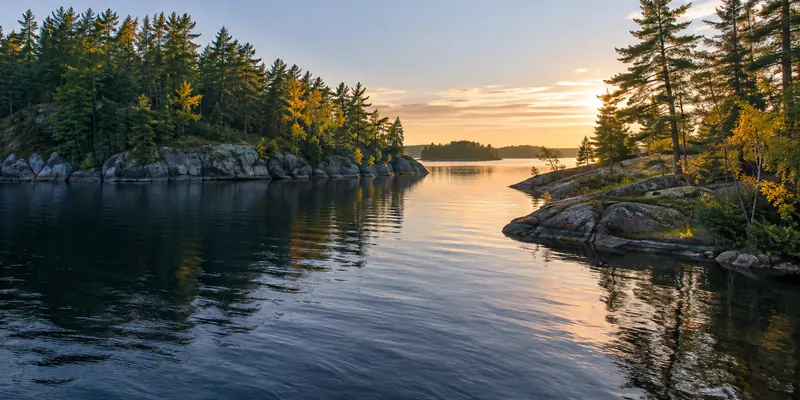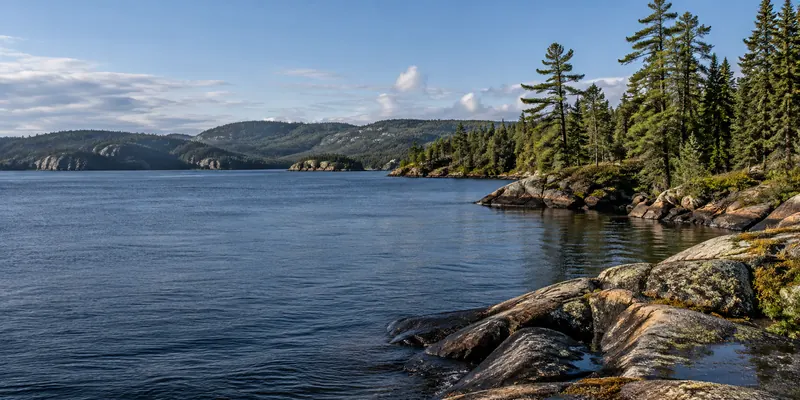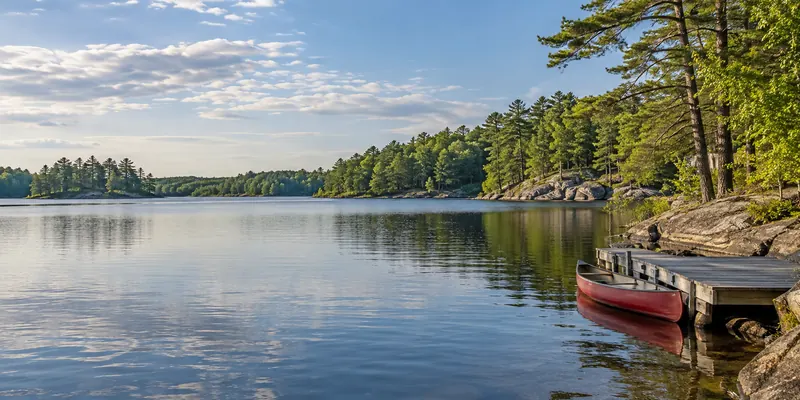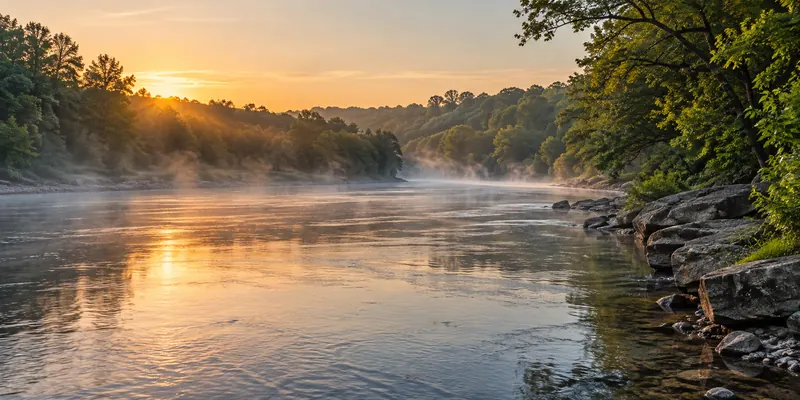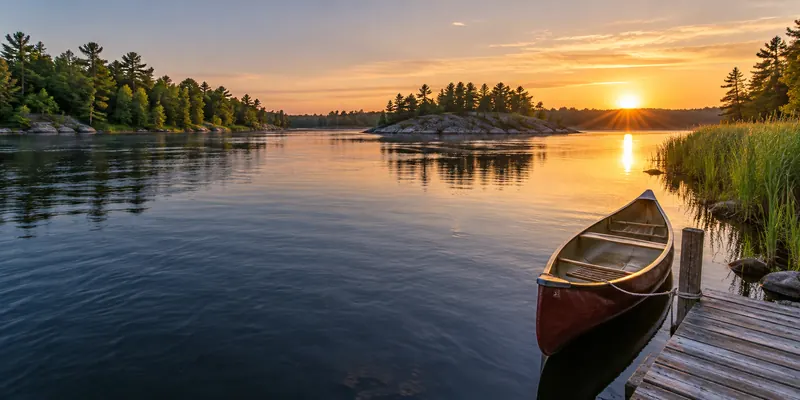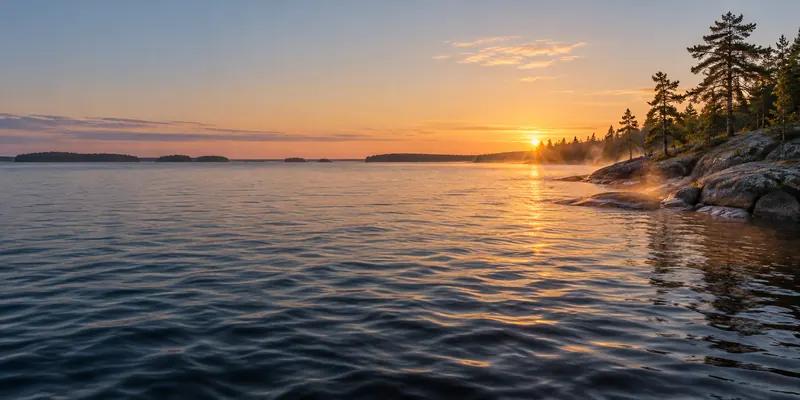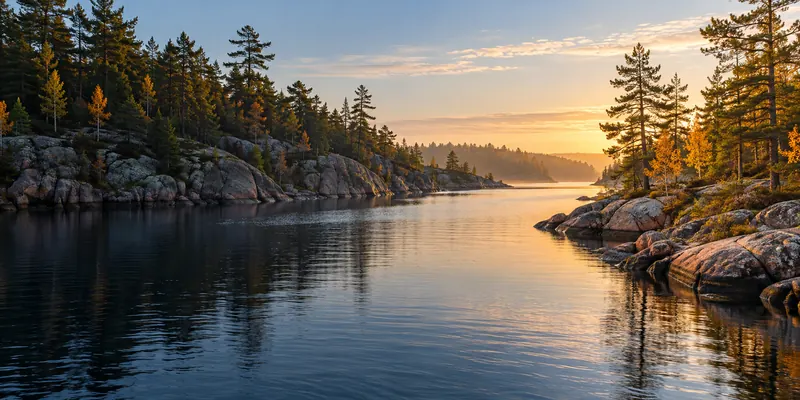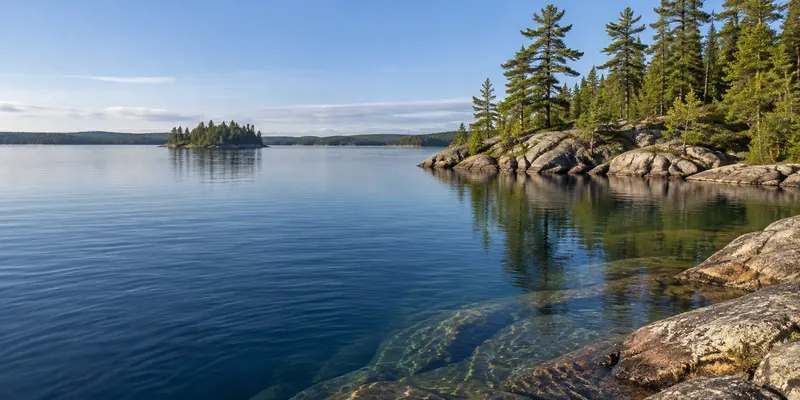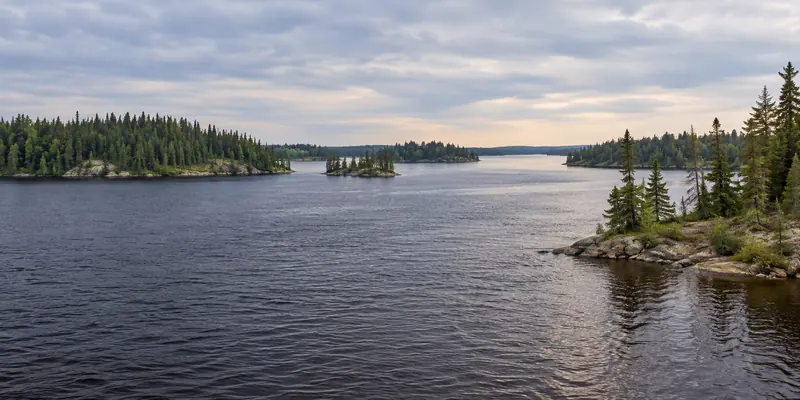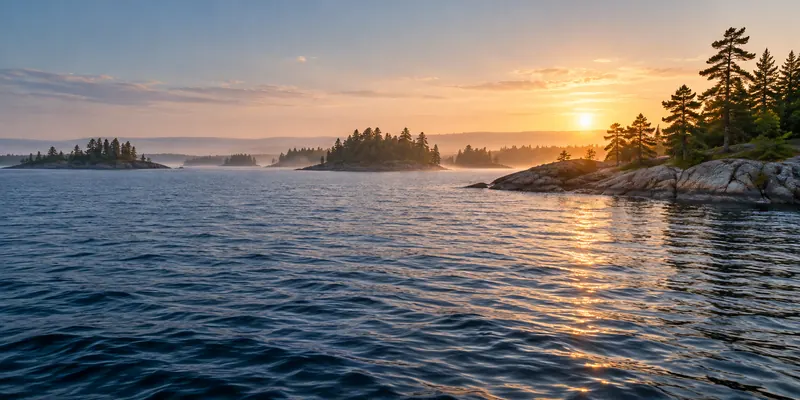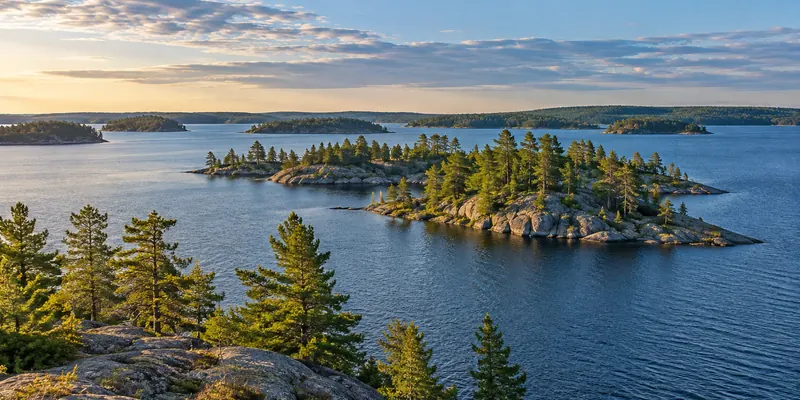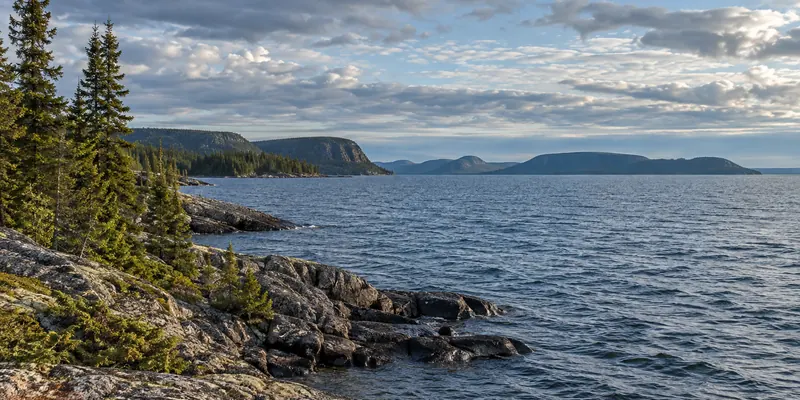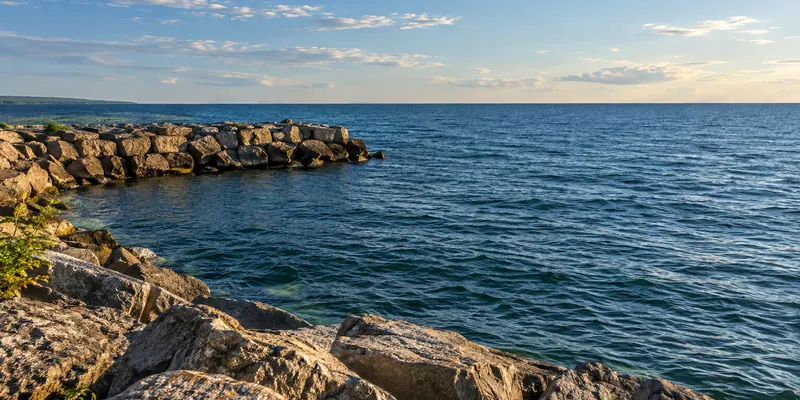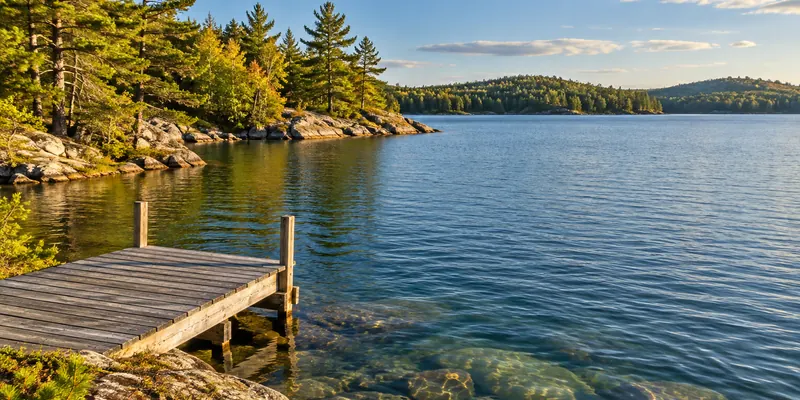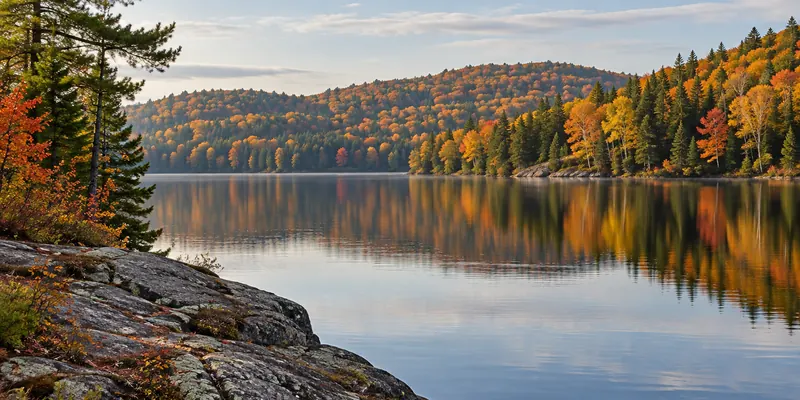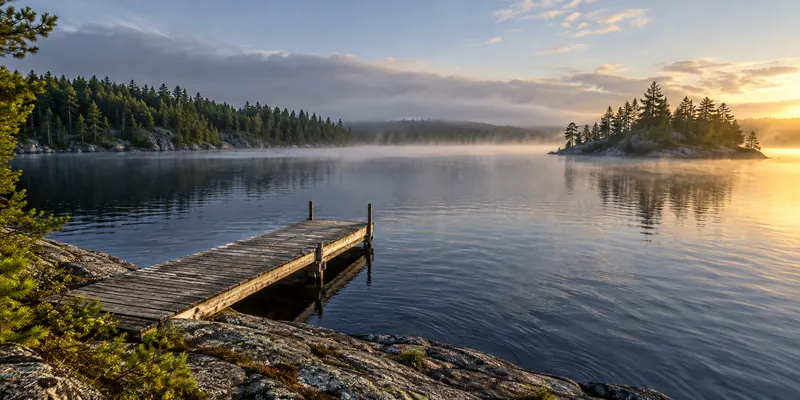
Ontario is too much water for a single fishing plan. A map that looks tidy on a kitchen table becomes a much bigger place when the truck is loaded, the weather changes and the nearest launch sits on the wrong side of the lake. Start with the country you want to visit, then narrow the choice to water that suits your boat, your time and the people coming with you.
These Ontario fishing regions are travel groupings. They help you decide where to fish; they are not Fisheries Management Zones. The rule that matters belongs to the particular lake, river or stretch of shoreline you intend to use.
Northwestern Ontario: islands and long horizons
Lake of the Woods, Lac Seul and the Minaki area put the northwest high on many anglers’ lists. There is room here for a road trip with your own boat, a lodge stay where the dock becomes your daily starting point, or a flight into an inland lake. Kenora and Sioux Lookout are useful names to put on the map while you compare bases.
Before choosing a large lake, ask which part you will actually fish. Two cabins with the same lake name in their descriptions can be far apart on the water. The right bay or boat transfer matters more than a broad regional label. Read our Northwestern Ontario guide for a closer look.
Northeastern Ontario: a different lake around the bend
Lake Nipissing, the French River and Temagami give the northeast several very different kinds of water. Add Gowganda and the inland country around Sudbury, Timmins and Cochrane, and the choice becomes more than a question of driving north. Some trips begin beside a road; others begin at a boat landing or an air base.
Decide whether you want one home lake for the week or a base that lets you try several smaller waters. Either can work, but the packing and daily travel will differ. The Northeastern Ontario guide puts those decisions ahead of the lodge search.
Algoma and the North Shore: inland or big water
Algoma brings together inland lake fishing and the shores of Superior and Huron. Around Sault Ste. Marie, the St. Marys River adds another choice. Wawa, White River, Blind River and the North Shore communities make useful starting names when you lay out a route.
An inland walleye trip and a day on a Great Lake need different boats and different weather plans. Ask about the water first, rather than assuming that a nearby lake offers the same fishing as the one in a photograph. Our Algoma and North Shore guide helps you sort the options.
Central Ontario: cottage country with a fishing rod
Muskoka and Haliburton suit anglers who want fishing to fit into a cottage week, a short break or time with the family. A small lake, a dock and a manageable boat ride may be a better choice than a long run across unfamiliar water. The Kawarthas and the wider central region add more lake-country choices.
A rental cottage does not automatically include fishing access, a usable launch or a boat. Check those details before paying a deposit. Read the Central Ontario guide with your own trip in mind, rather than choosing by the waterfront photograph alone.
Southern Ontario: good fishing close to the driveway
Southern Ontario offers Great Lakes shorelines, river fishing and outings that can begin after work. A harbour wall, a public park or a booked day with a guide can put you on the water without taking a full week away. The type of fishing may change sharply between a river valley and the open lake a short drive away.
Public access needs its own check. A footpath beside the water does not settle parking, land ownership or whether fishing is allowed there. The Southern Ontario guide begins with practical choices for shore trips, river days and bigger-water outings.
Eastern Ontario: rivers, channels and inland lakes
The Ottawa River, Rideau system and St. Lawrence River give eastern trips several strong starting points. Between them are inland lakes, towns with waterfronts and routes that suit a weekend with fishing at the centre. A river base can offer several types of water within the same trip, but current and boat traffic deserve attention.
Choose the stretch of river before choosing the address for the night. A protected channel and an exposed reach may sit close together on a map. Our Eastern Ontario guide looks at how to make that choice.
Turn the region into a workable trip
Write down three things before comparing places to stay: your target fish, the time you have, and how you will reach the water. Add the size of your boat or whether you need one supplied. Those few notes will rule out many unsuitable trips before you spend time on rates.
Look up the selected water in Ontario’s Fish ON-Line guide, then read the current fishing regulations. Finish with a call to the operator or local access manager. A good plan should leave you knowing where the first day starts, even if the weather changes the rest of it.