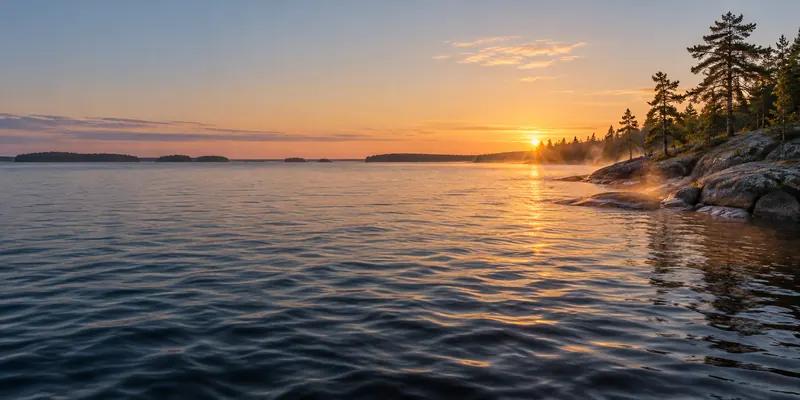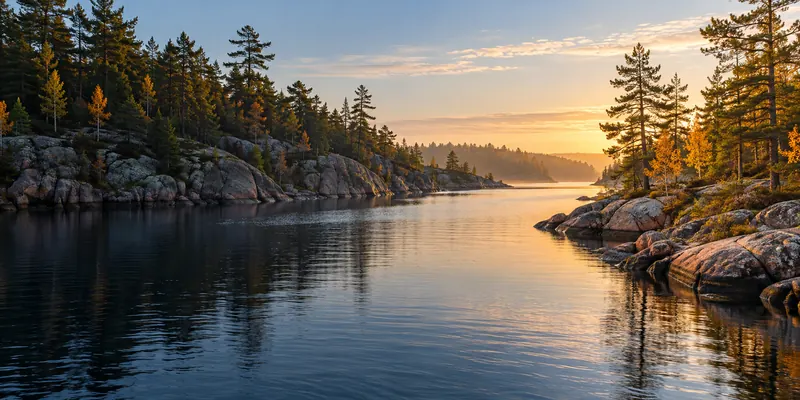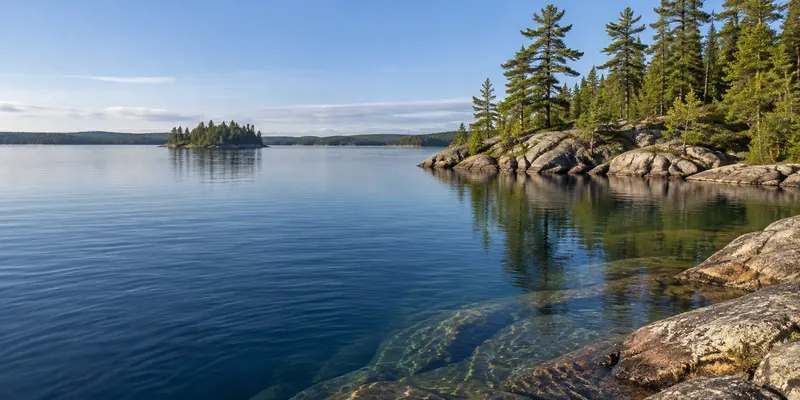
Lake Temagami fishing asks you to look below the view. A pine-covered point may drop into much deeper water than its quiet surface suggests. An island that seems close can sit across a reach you will not want to cross in a small boat when the weather turns. The lake is handsome country, but the trip works best when the chart gets as much attention as the shoreline.
Plan fishing trips around Lake Temagami itself, rather than treating every lake in the Temagami area as the same place. The surrounding country has many other waters. Each has its own access, fish and daily routine.
Choose an arm and a departure point
The town of Temagami and the Lake Temagami Access Road are useful starting names when arranging a visit. They do not settle where your boat should go. Confirm the precise landing, parking arrangements and route to your accommodation with the operator or municipality before towing a trailer north.
A boat-in stay needs another set of details. Ask where you meet, what goes in the transfer boat and how the return pickup is arranged. If taking your own craft, check that the route and docking space suit it. Your first useful piece of fishing knowledge may be the location of the dock you will need to find again.
Lake trout belong in the deeper-water plan
Lake Temagami holds lake trout, along with walleye, smallmouth bass and northern pike. Trout make the lake's depth important to a fishing trip. Decide whether the group wants to learn that deeper-water fishing or would rather spend the day casting nearer shore.
If trout are the main purpose, ask a guide about the equipment and fishing approach for the time of your visit. Do not assume a general tackle box covers the job. Sonar can help you study depth and fish position, but a screen does not tell you everything about handling a fish or choosing a suitable place to target it. Sort out those questions before beginning the outing.
A smallmouth day starts with the rock
For a bass trip, pay attention to the shape of the rocky shore. A sloping shelf, a boulder edge and a point beside deeper water give you different casts to make. Work them carefully enough to know which part drew a response, instead of treating an entire island as one fishing spot.
Clear water also gives you a chance to see more of the bottom. Use that view to learn where shallow rock changes to depth, then check it against the chart. Keep a little distance from the feature you are fishing. A quiet approach and controlled casts leave more room to watch the lure and the line.
Walleye fishing is its own outing
Bring a walleye plan if that is the fish you most want to catch. Ask about the sort of water being fished during your visit and how far it lies from the departure point. A lake-trout photograph on a lodge website tells you very little about the walleye day you have in mind.
Pack a few presentations you know well. A jigging outfit and a manageable choice of lures are easier to learn from than a boat full of gear you have never used. Keep notes on depth, light and boat position. On unfamiliar water, those details help you repeat a useful pass even if the next day begins under a different sky.
Islands make a route worth learning
Temagami's arms and island passages are part of its appeal. They also reward a short first outing. Carry an appropriate chart, identify the turns and keep the return route clear in your mind. The straight line between two points on a phone map is not a boat route.
Leave time to find the dock in daylight. If the trip involves a long exposed reach, ask about the weather plan before setting out. A sheltered departure does not guarantee sheltered water around the next point. Choose a day that fits the craft and the least experienced person aboard, then leave room to shorten it.
Fishing from a canoe needs a smaller map
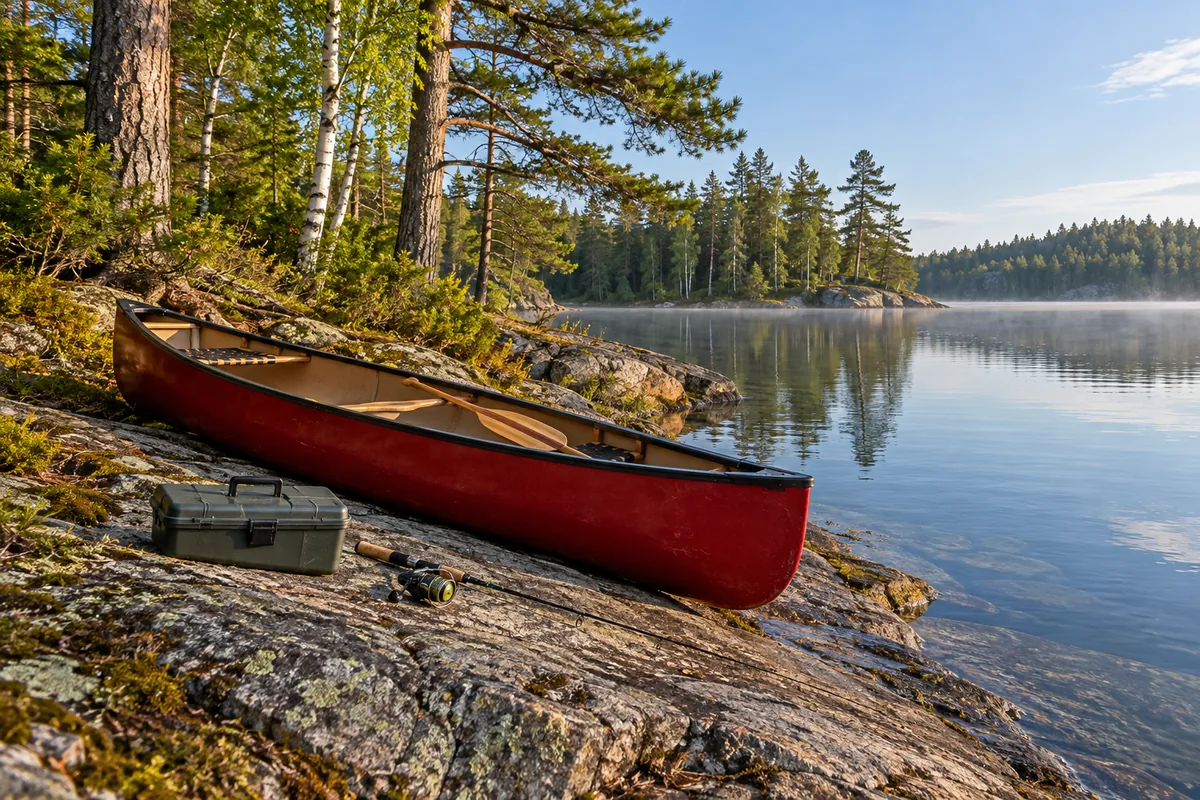
A canoe can put the shoreline close at hand. It also makes wind, loading and the length of the day much more personal. Choose a manageable stretch and keep the gear secured so landing and launching do not become a daily sorting job.
Confirm where you are permitted to land, park or camp. A tempting granite shelf is not an invitation to use someone's property. If the route includes camping or a carry into another waterbody, check those arrangements separately. The lake outing and the backcountry trip should each have a plan that someone ashore knows.
Keep the fishing week easy to repeat
A useful base lets you dry clothing, charge equipment where that service is supplied and begin another day without a long list of chores. Ask about fuel, boat arrangements and food storage before deciding what belongs in the bags. Keep a shorter nearby outing for the afternoon when the group wants less travel.
Read the Ontario fishing regulations for Lake Temagami and its exceptions. Use Temagami's municipal information for current local access questions. Compare Lake Nipissing if a town-based trip on broader water suits you better, or return to Northeastern Ontario for the wider choice. Temagami gives you plenty to look at. Give one piece of it enough time to become familiar.