
Early summer puts fresh leaves on the shore and a longer fishing day on the calendar. It does not put every walleye in Ontario at the same depth. A June trip can begin on a stained river reach, a clear Shield lake or a broad reservoir, each with its own cover, current and pace of change.
Build the day around learning a small piece of water. A point, the mouth of a bay and a nearby change in depth give you a more useful starting plan than a long list of distant spots. Early-summer walleye fishing rewards attention to the place under the boat, with room to change the plan when the first choice stays quiet.
Start with the lake, not the date
Read the walleye guide, then look at the map for your actual destination. Mark a few places where shallow feeding water lies near deeper water. Ontario’s Zone 4 fisheries plan notes that walleye occupy both shallow, stained lakes and deep, clear waters. The lake in front of you matters more than a general summer rule.
Ask a guide or camp operator what conditions have been doing, rather than asking for one magic depth. Water clarity, wind and recent weather are useful parts of that conversation. Take any suggested spot as a place to begin, not a promise that fish will wait there all day.
Confirm the season and named-water rules before choosing the target. On a large system, the route may cross more than one set of rules. Mark those boundaries on the plan while you still have time to read them carefully.
Give a small area a fair look
Begin with a section you can fish safely and repeat. Work the point or shoreline in an orderly way, keeping track of where the boat starts and ends each pass. If the boat is wandering at a different speed and depth every time, judging a lure change becomes difficult.
Note where a bite, snag or change in bottom occurs. A depth sounder can help show contours, but it is not needed to write down useful observations. Shoreline landmarks, the map and a few clear notes give the next pass a reason.
Avoid treating one fish as proof of a lake-wide pattern. Try the same small area again, then a nearby place with a similar shape. If neither gives further reason to stay, move with a clear next choice rather than circling without a plan.
Choose one method you can control
A jig can be a practical opening choice where you can control its depth and keep in touch with it. Use a weight that suits the current, wind and tackle. Too much weight may spend the cast dragging; too little can leave you unsure where the lure is working.
Cast or lower it in a way that keeps the line manageable. Start with a simple lift, settle and pause, then change one part of the presentation at a time. If the boat needs attention, stop fishing and sort its position before trying to improve the retrieve.
Other methods may fit the water better. A controlled troll or a permitted bait presentation can cover a different job. The tackle and fishing methods guide helps compare them. Check current bait rules before buying or carrying live bait to the lake.
Let wind help only where the boat remains manageable
A breeze changes the fishing day and the ride home. It can make a shoreline worth a look, but it can also make careful boat positioning difficult. Choose a place where the operator can hold a sensible course and passengers can fish without struggling to stay steady.
Wear a properly fitted, approved lifejacket or PFD and keep necessary equipment within reach. Check the forecast before leaving and watch what is happening on the lake. A productive pass is no reason to stay when the return conditions are worsening.
Keep a sheltered option on the map. A bay near the launch or camp gives the day another shape if open water becomes unsuitable. Weather may decide the route; tackle should fit the route that remains safe to travel.
Record enough to repeat the useful part
Write down the place, approximate depth, lure and boat speed or casting approach when something works. Add the time and conditions. A few lines written while the details are fresh are more helpful than a photograph of a fish with no notes attached.
When the bite slows, use those notes to decide what to change first. Try another depth on the same feature or a nearby place with a similar shape. Changing location, lure and method together leaves little basis for understanding which choice helped.
Keep the record modest. The point is to make the next hour clearer, not to turn a holiday into paperwork. A pencil and small notebook can carry the useful detail without needing a connection or another screen in the boat.
Finish with the fish handled properly
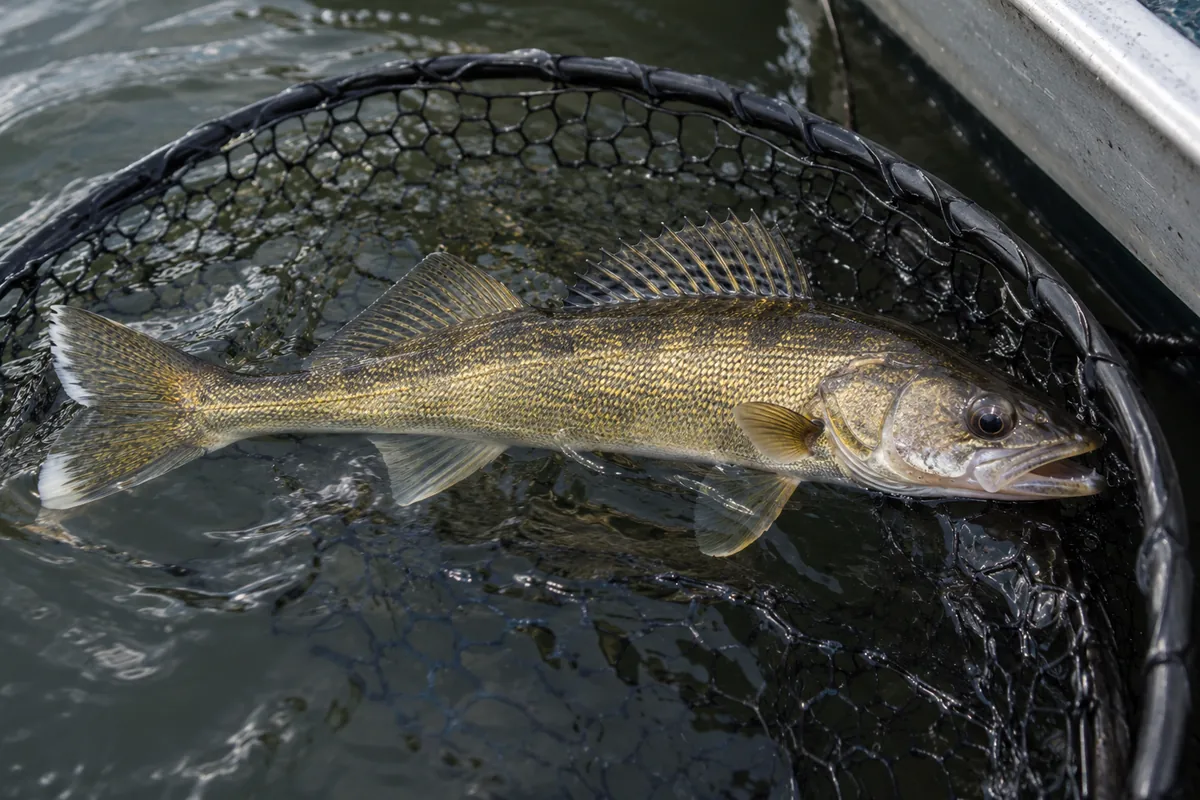
Have the net and release tools ready before the strike. Wet hands before touching fish, avoid the eyes and gills, and keep handling brief. Follow the current Ontario catch-and-release guidance, including care when choosing fishing depths.
For retained fish, check the lake’s limits, size rules and identification requirements. Decide that before fishing, not after a fish is lying on the floor. A sound early-summer plan leaves time for the return run, supper and another look at the map.