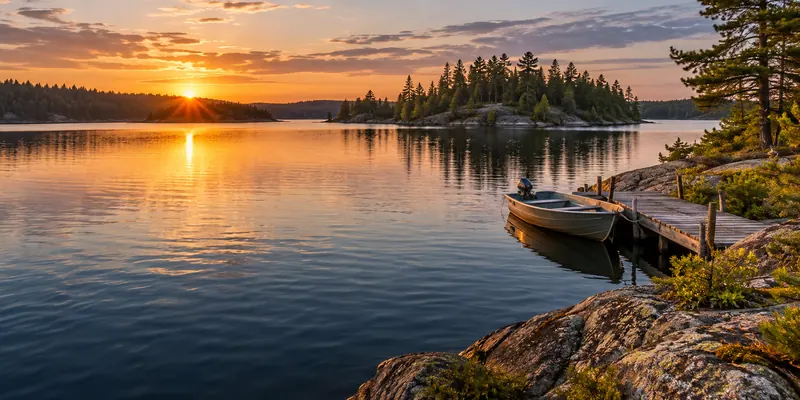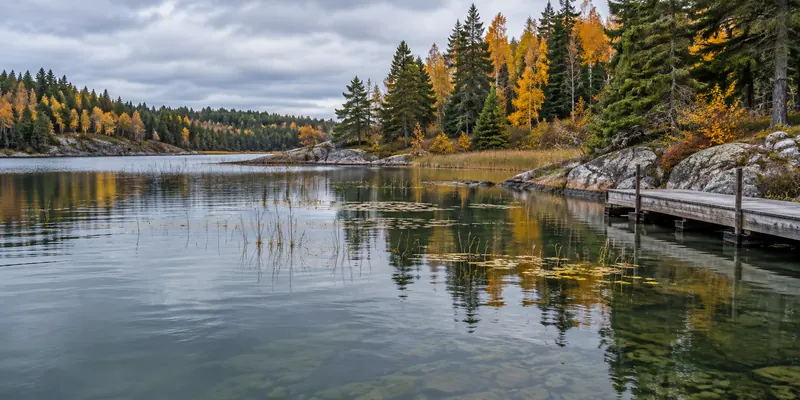
By fall, a familiar fishing lake can feel changed before a lure touches the water. The light sits lower, the morning air has an edge and the ride out asks for more clothing than it did in July. Northern Ontario fall pike fishing begins with that difference: plan a day that works in the conditions you have, rather than carrying the summer timetable into a colder season.
Pike water can include weeded bays, creek mouths, shoals and the deeper water beside them. The useful question is which places still give you a sensible casting route and a manageable boat position. A careful search beats assuming that the calendar has moved every fish to one particular depth.
Revisit the bay with fresh eyes
Look at the shoreline and the cover actually present. A weed edge that was obvious earlier may now be patchy or harder to read. Do not run straight to an old waypoint and begin casting without checking how the place has changed.
Ontario’s northern pike species page describes habitats including vegetated bays and shoals. Use that as a starting point, then ask a local guide or operator about the current lake. Their answer should help choose where to look, without turning one reported catch into a promise.
Mark several nearby options: a sheltered bay, a point at its mouth and a change in depth within a suitable boating route. Keeping them close lets you compare water without spending much of a short autumn day travelling between distant corners.
Make each cast answer a question
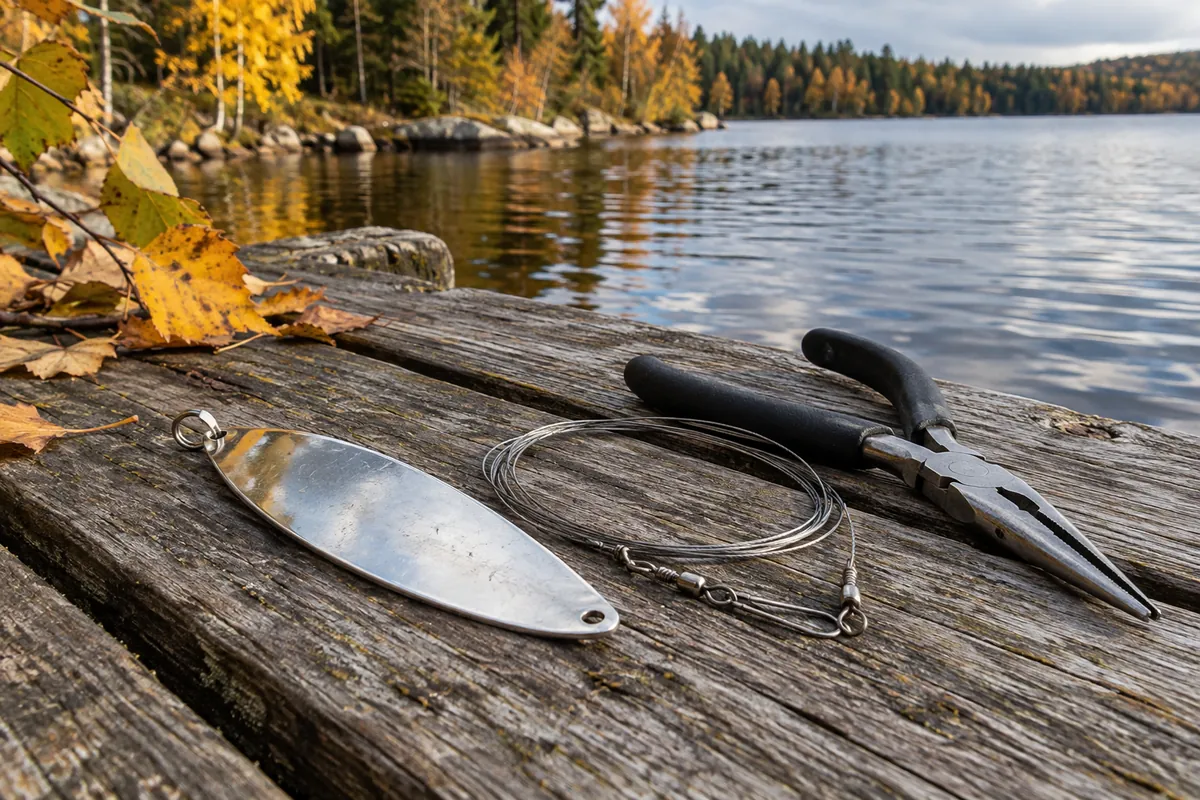
Begin with a lure suited to the cover and tackle you can handle comfortably. A spoon or another casting lure can work through open lanes; a different setup may suit heavier weeds. Choose a job for the lure instead of opening every tray at once.
Fish a section in an orderly sequence. Cast along the edge, then through available openings, noting the places where cover or depth changes. Keep the retrieve controlled enough that you know what the lure is doing and can repeat it.
If a fish follows, pay attention to where it appears and what it does. That gives a reason to try another cast or presentation. It is still one observation, not proof that every pike in the bay wants the same lure. Work nearby water before making a large change.
Put the leader and tools on the same list
Choose a bite-resistant leader suited to pike and the lure being used. Check snaps, knots, line and hooks before leaving the dock. A worn connection can undo the rest of a well-chosen setup, and repairing it is simpler ashore than with cold fingers in the boat.
Have a suitable net, long-handled pliers and hook cutters available. Agree who will handle the boat, net and tools if a fish is hooked. Keep those tools where they can be reached without stepping around loose tackle.
The northern pike guide gives tackle and handling context. If large pike are outside your handling experience, fish with a skilled guide or companion who can teach the routine. The release plan deserves the same thought as the casting plan.
Dress for sitting as well as travelling
Clothing that felt warm during the walk to the dock may feel different after an hour sitting over cold water. Take useful layers, rain protection and a dry change kept in a sealed bag. Choose gloves that let you handle the boat and tackle safely.
Wear a properly fitted, approved lifejacket or PFD. Transport Canada’s flotation guidance points out the danger of unexpected cold-water immersion. Staying close to shore does not remove that risk.
Before leaving, check the forecast and tell a responsible person your route and expected return. Agree what they should do if you are overdue. Keep the communication gear accessible and know where it works. Do not leave the day’s help plan inside a bag nobody can reach.
Set the return time before setting out
Choose a return that leaves daylight and energy for unloading. Shorter days can make a distant afternoon stop less sensible than it looked on the map. Put the travel time in the plan before adding another bay.
Check the wind and the return route as the outing goes on. If conditions are changing, turn back while the ride is still manageable. A bite at the far end of the route does not make the homeward water easier to cross.
Carry a small second plan for a sheltered area near the launch. It gives you somewhere to fish if conditions suit only a short outing. Some days the right choice is to stay ashore; having a cabin task or a walk in mind makes that choice straightforward.
Leave with useful notes and careful fish care
Check Ontario’s current fishing regulations for the exact water, species and dates. Fall is not one province-wide fishing season. Know the rules before planning a retained fish or moving between waters.
Keep fish handling brief, support fish properly and have any camera ready beforehand. Record the cover, location and method that gave you useful results, then put the tackle away for the return. A good autumn day leaves you with a clearer picture of the lake and enough time to get home comfortably.