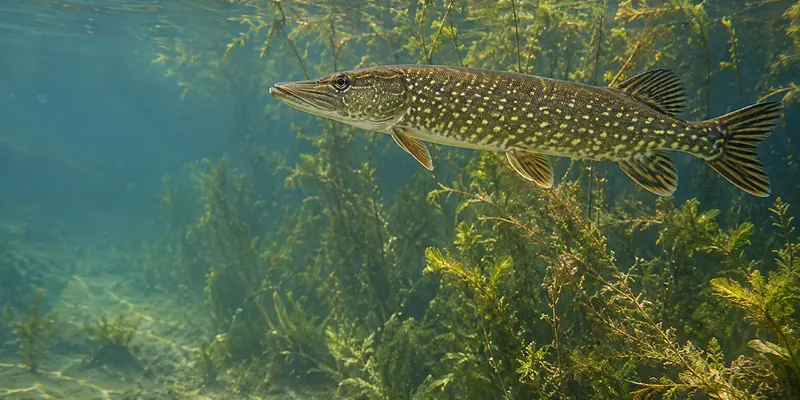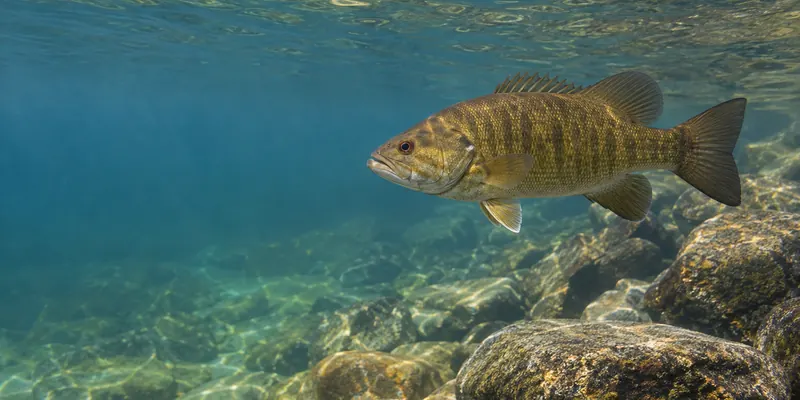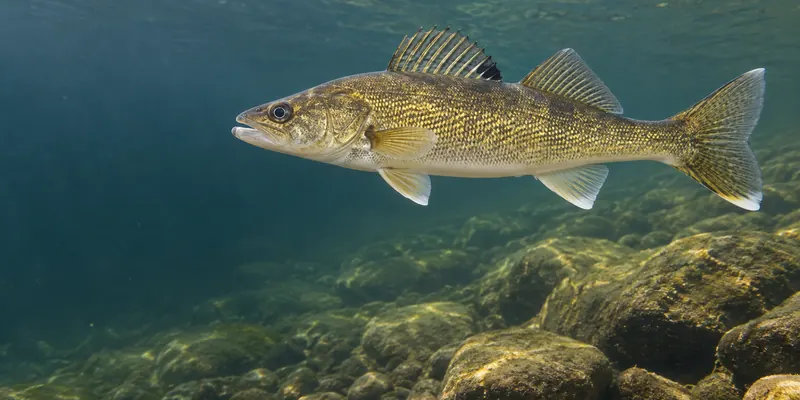
Walleye fishing in Ontario often starts with a familiar-looking point and an unfamiliar depth. The shore gives you the first clue. A chart, a controlled drift and the feel of a jig give you the rest. A good day is less about owning a box full of colours than knowing where a lure travelled when a fish took it.
The province has walleye fishing in large northern lakes, smaller inland waters and rivers. Choose a lake with the kind of access and daily route your group wants. Then choose a method you can fish well. A short stretch of useful water is enough for a first morning if you give it time.
Pick a water before a lure
Lac Seul, Lake Nipissing and Rainy Lake offer different ways to build a walleye trip. They are starting names for research, not promises that every bay near every cabin fishes alike. Compare the landing, the available boat and the water within a sensible day’s reach.
Ask a guide what the fishing normally involves during your dates. Casting jigs, drifting live bait where permitted and trolling each need their own equipment and boat routine. A booking that explains the method is more useful than a catch photograph with no account of the water behind it.
Read the point under the water
Walleye use a range of lake and river habitats, including rock, wood and vegetation. Ontario’s species notes also point to their preference for lower-light conditions. That gives mornings, evenings and cloudy days a place in the plan without turning the clock into a guarantee.
Look for changes that can be fished in a repeatable way: the end of a shelf, a bend in a weed edge or a break beside a point. A chart helps set a starting depth. Sonar, when available, helps you follow it. Keep the boat’s track in view so that another pass asks the same question as the first.
Let the jig tell you something
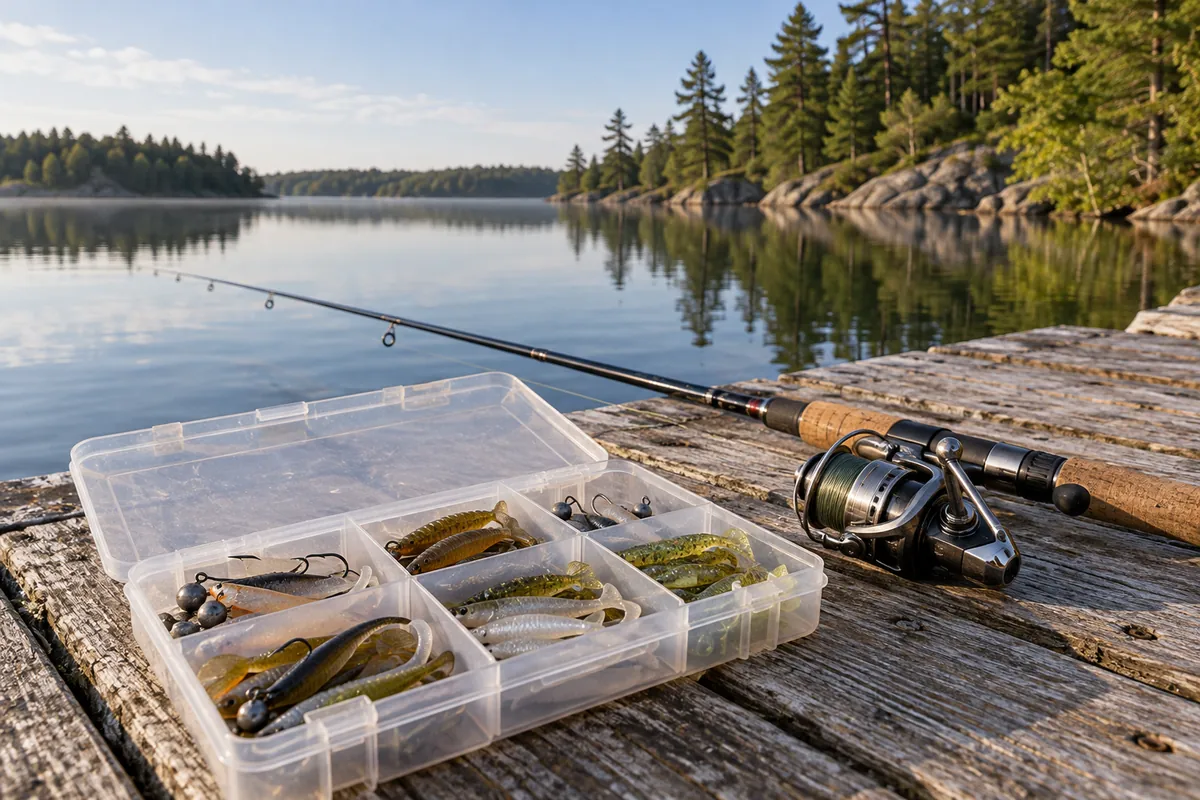
A jig and soft plastic make a practical first rig. Choose enough weight to keep contact with the intended depth while retaining control. If the lure drags constantly, the boat or the presentation may need a change. If you never know where it is, adding another colour will do little to help.
Make a short pass, note the bottom contact and watch the line. Keep loose line from collecting around feet or spare rods. When a bite comes, remember its depth and position. Return to that part of the route with the same boat angle before deciding that a new lure is needed.
Trolling gives a route some shape
Trolling minnow-shaped lures or suitable rigs can cover a longer stretch of water, but the lure still needs a purpose. Its running depth, line length and boat speed belong in the same conversation. Use equipment you understand and keep a record of what was behind the boat when a fish struck.
Avoid crowding a small boat with too many rods and instructions. Start with a simple arrangement that can be cleared promptly when a fish is hooked. Keep the landing net reachable, secure spare gear and leave working room. A neat boat makes it easier to learn what is happening rather than untangle it.
Change one thing at a time
If the morning produces little, revisit the water before replacing the whole tackle box. Try another depth, a shorter pass or a nearby piece of similar bottom. Record the result in a few words. A note such as “outside point, slower drift, cloud cover” will help tomorrow more than a list of lure colours alone.
A local guide can shorten that learning process. Ask why a particular bank or reef was chosen and how the day’s weather affected the route. The useful part of a guided trip is knowledge you can carry into the next morning, even when the fish choose another pace.
Plan the catch before it arrives
Keep suitable release tools ready and handling brief. If release is your aim, discuss depth and fish handling with the guide before selecting a method. Pulling a fish from deeper water deserves thought well before the net reaches it. A photograph should fit into a short landing, rather than become its main task.
If keeping a legal fish for supper is part of the week, check both the fishing rules and Ontario’s current fish-consumption advice for that water. Have a cooler and a cleaning plan ready. A fish caught legally is still subject to the lake’s consumption guidance, which is a separate check.
Put the rules beside the map
Read the current Ontario fishing summary for the zone and named water, including size restrictions, bait rules and exceptions. Licence type and residency can affect what applies. Do not borrow a limit from a neighbouring lake or from an old cabin notice.
Use Where to Fish to compare regions, or try Read the Lake before the trip to think through a few water choices. Once you reach the dock, start with a small route you can repeat. Learning how one point fishes is a sound use of a morning, whether the first bite comes early or makes you wait.