On a first Ontario ice fishing trip, the most useful choice may happen before anyone buys a rod: go with an experienced, reputable operator or a skilled companion, and keep the day small. An unfamiliar lake in winter is a poor place to learn every part of the outing at once. Choosing help with access, equipment and the local routine gives the fishing itself room to be new.
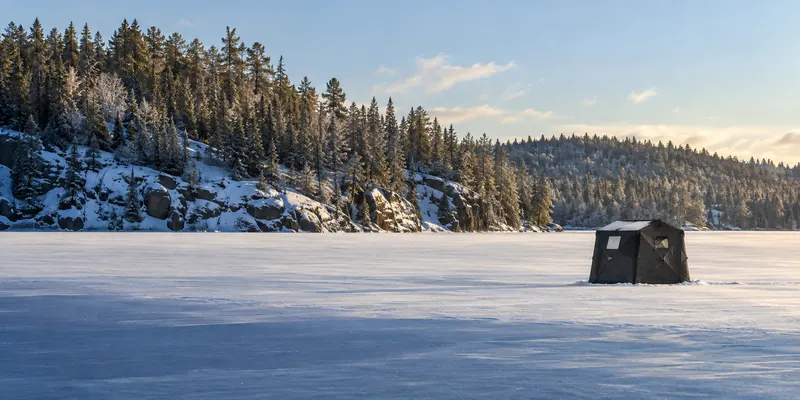
The day may include a sheltered fishing setup, a short walk and a few hours watching a small lure under a hole. It should also include a clear way to stop and return. Neither a rental hut nor other anglers on the lake should be taken as proof that ice is suitable everywhere you might go.
Ask what the booking actually includes
Before reserving, ask where you meet, how you reach the fishing location and which equipment is provided. Get the actual access instructions. The operator’s mailing address may be somewhere else, and a winter arrival deserves a clear destination.
Find out about shelter, seating, rods, tackle, bait and washroom arrangements. Ask who is present during the outing and how guests call for help. A beginner should know whether the booking includes instruction or simply the use of a space.
Ask how weather or unsuitable conditions affect the trip and payment. Read the cancellation terms before packing. The ice fishing guide offers a wider planning checklist, while the lodge directory can help you find operators to contact directly.
Treat the access plan as a separate task
Get current local guidance and ask how the route is checked. Do not copy a photograph, yesterday’s track or a social-media report into your own access plan. Ice conditions can vary within one lake and can change during the season.
Ontario Parks’ ice fishing safety guidance stresses that currents, springs and snow cover can affect the ice. Its advice includes carrying appropriate safety gear, going with someone and leaving a plan with a person ashore. Read it before the trip, then get the instruction needed to use the equipment properly.
This story offers no thickness number that approves a route. Ask the operator about the actual outing, follow their directions and do not wander away from the agreed area. If you lack current local knowledge and a workable safety plan, postpone the trip rather than guessing.
Dress for time spent sitting
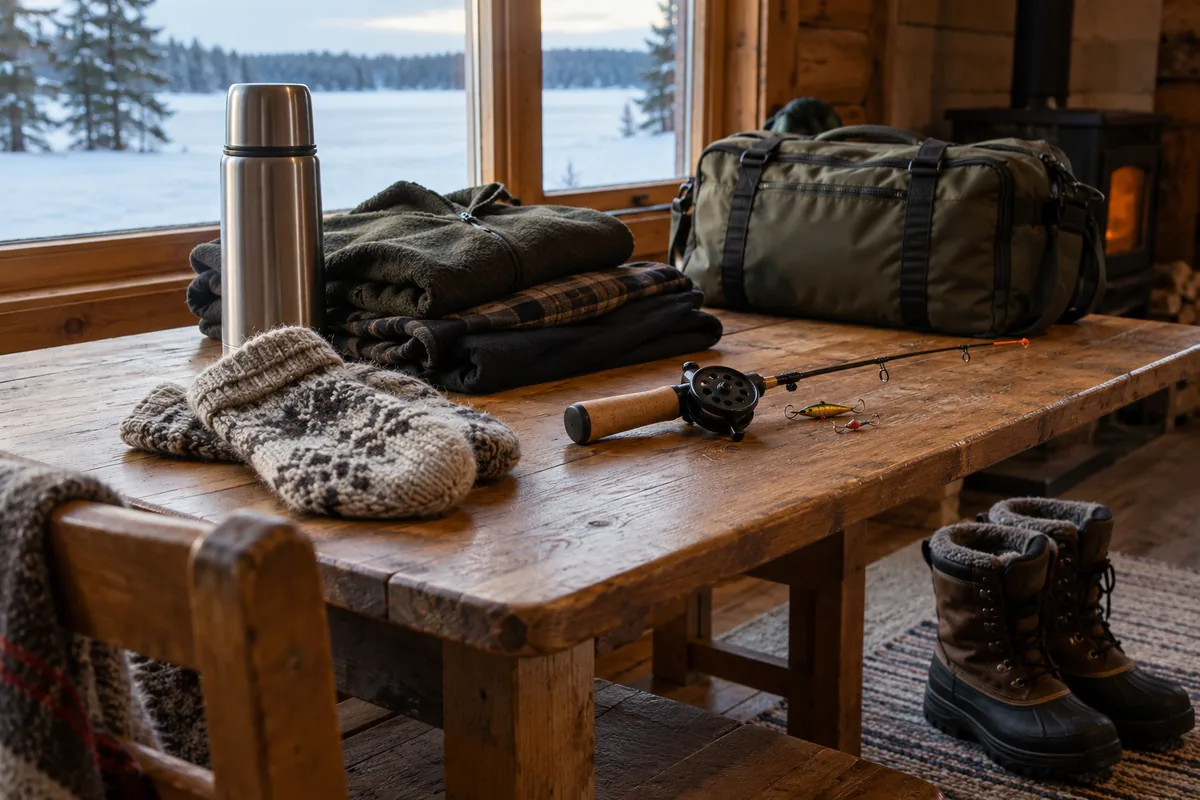
Check the forecast and plan clothing for being outside as well as inside a shelter. Warm layers, suitable winter footwear and dry spare gloves belong on the list. Keep the dry items protected during travel so they are useful if needed.
Ask the operator what clothing and flotation equipment they recommend for the route. Comfort inside a heated shelter does not describe the journey to it. Take regular breaks to check how everyone feels, and tell the person leading the trip when someone is cold, wet or tired.
Take water, an easy lunch and snacks that can be handled without spreading gear around the fishing space. A hot drink is pleasant, but meals should not be the first thought after several hours outside. Plan the ordinary needs before loading the vehicle.
Learn one fishing setup first
Let the experienced person show you the rod, reel, line and lure before putting it down the hole. Ask which species you are targeting and how the setup should be used. Begin with one method you can repeat instead of trying every lure in the box.
Watch how the lure responds to a small movement of the rod. Lift, settle and pause according to the instruction for that setup. A quiet rod tip still asks for attention; spend some time watching what happens rather than constantly changing tackle.
If a fish is hooked, follow the agreed landing routine. Keep loose hooks away from hands and clothing, and have release tools ready. Learn how to handle the target species before the fish arrives, with the experienced person helping where needed.
Keep the shelter tidy and the heater instructions close
Put bags and spare tackle where nobody needs to step over them. Keep hooks, line and any hole away from the main walking space as far as the setup allows. A small shelter is easier to fish when every item has a clear place.
Use any heater only as directed for that equipment and shelter. Ask the operator to explain ventilation and safe use, and leave controls to the person responsible for them. Do not bring an improvised heating setup to a first outing.
Keep necessary communication and safety equipment accessible. Tell the person ashore the location, people involved and expected return, with a clear overdue plan. A phone signal should be checked rather than assumed; confirm the operator’s communication routine before leaving the meeting point.
End early enough to enjoy the next trip
Check the current Ontario fishing regulations and provincial ice fishing guidance before departure. Licences, species rules, hut requirements and local permissions need their own check. A booked outing does not answer every legal question for the angler.
Stop at the agreed time, earlier if conditions or comfort call for it. Gather line and packaging, check that everyone has their belongings and return by the planned route. Let the person ashore know you are back. A first trip is a chance to learn the routine, with the next outing left for another day.