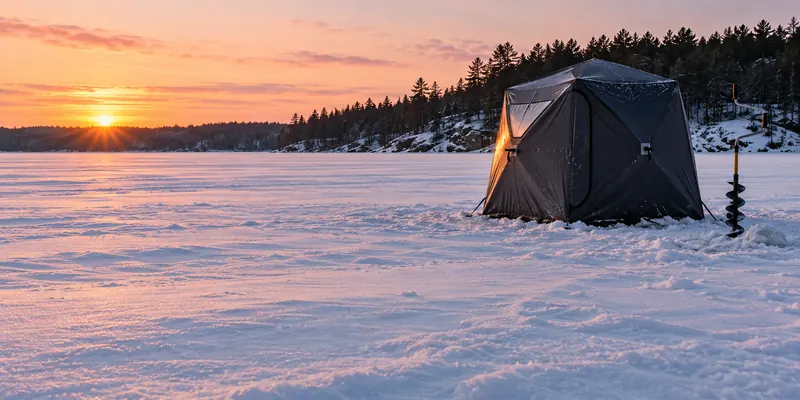
Ontario ice fishing trades the open-water boat for a hole, a short rod and a winter route onto the lake. A sheltered booking can make the equipment easier to manage, but it does not settle the access question. Current local conditions, the operator’s routine and the people coming belong at the start of the plan.
Choose a manageable first day. Ask which fish the outing targets, how the group reaches the shelter and what happens if conditions stop the trip. A quiet hour watching a rod tip is easier to enjoy when the return ride, dry clothing and warm break have already been arranged.
Choose the operator and the outing together
An ice-fishing booking may include a shelter, drilled holes, transport, tackle or guiding. Ask which of those the quoted price actually covers. Find out whether the group fishes alone after arrival or has someone nearby to help with gear and changing conditions.
Describe the ages, experience and mobility needs of the party. Ask about the meeting point, loading, washroom arrangements and the length of the outing. Confirm any extra charges, deposits and cancellation terms. A photograph of a warm shelter does not tell you how people reach it or how long they will remain outside.
Let current conditions decide access
Ice varies across a lake and can change with weather, current and local features. Ontario’s ice-fishing information notes weaker areas near flowing water, springs, pressure cracks and river or stream mouths. Tracks, a parked shelter or another group on the lake do not prove that your intended route is suitable.
Ask who checks the route and what current local information supports the day’s decision. Follow closures and the operator’s directions. If the route has not been checked, stay off. This guide gives no single thickness number as permission to travel; the full conditions and the intended activity need a sound local decision.
Name the fish before packing tackle
Winter fishing does not put every species in every lake within reach. Confirm the target, the water and the current open season before buying bait or reserving a stay. Check named-water exceptions and sanctuary rules as well as the wider fishing zone.
Read the Lake Nipissing guide for that lake’s setting. The Great Lakes guide gives broader regional context, without identifying a current ice route. A familiar summer landing may have a very different winter arrangement. Get the precise meeting instructions for the date you book.
Ask what the shelter supplies
Confirm seating, the number of fishing positions, hole preparation and any supplied rods or bait. Ask what footwear the operator recommends and whether there is a dry place for spare clothing. Tell the operator if someone is trying ice fishing for the first time.
If heat is supplied, use it only as instructed and keep equipment clear of it. Never use equipment meant for outdoor use inside a shelter. Read Health Canada’s fuel-equipment advice. Ask the operator how the shelter’s equipment and ventilation are managed. Warmth should be part of a checked setup rather than an extra gadget added after arrival.
Make the tackle work with gloves
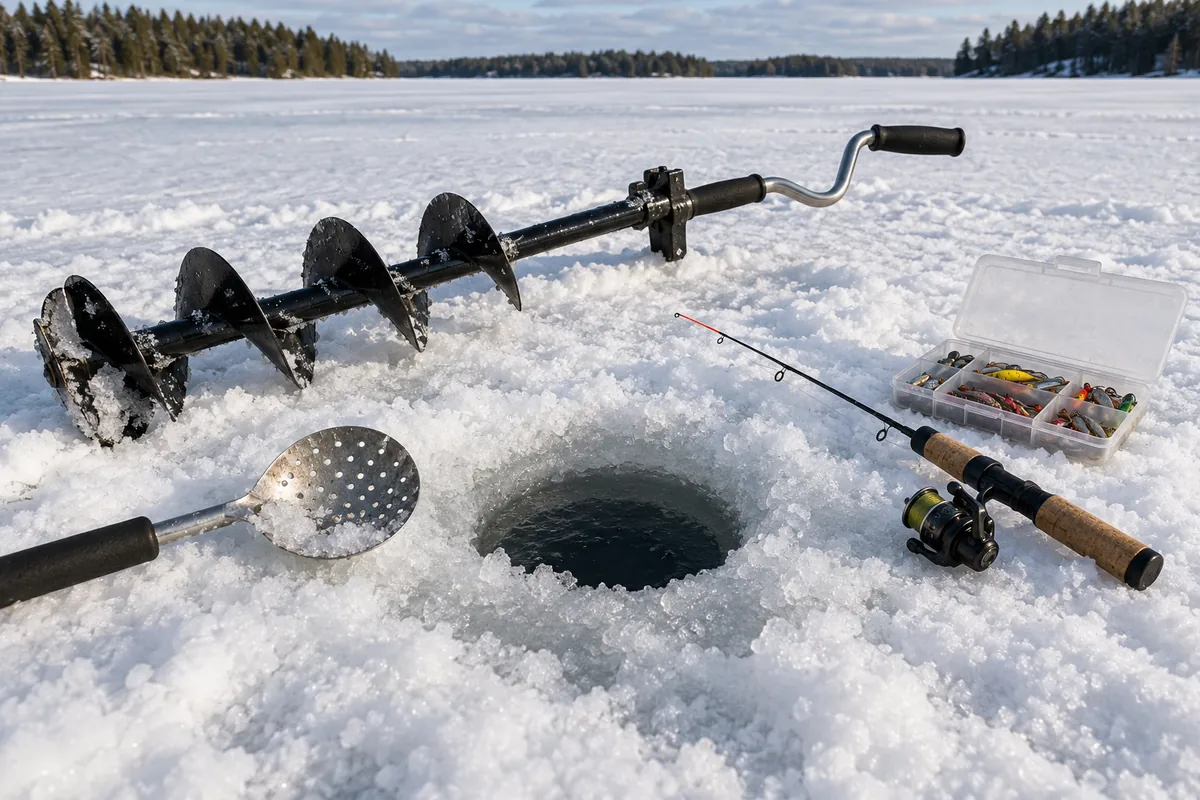
The perch and panfish guide and walleye guide help narrow the target. Then ask the operator about suitable winter rigs and legal bait choices for that water. A short rod, a small tidy tackle box and spare working equipment can keep the fishing space clear.
Learn how to use the supplied setup before settling in. Keep loose hooks away from seats and walking areas. Watch the line and lure position, then make one small change at a time. If a bite is difficult to read, ask for help rather than adding more gear around the hole.
Dress for the time outside
Pack layers, wind protection, winter footwear, spare mitts and dry socks. Think about the travel and waiting time as well as the hours in a shelter. Bring food and drink that are easy to manage without taking the whole kit apart.
Agree on how the party will request an early return. Watch for anyone becoming cold, wet or tired and act before the outing becomes a test of endurance. A shorter day can leave a new angler ready for another try. Keep the return instructions with everyone, rather than on one person’s phone alone.
Leave the route and the lake tidy
For any self-planned outing, leave the route and return time with a responsible person and confirm when back. Get current local advice and the skills and equipment needed before travelling onto ice. A booking nearby is not a reason to copy another party’s route.
Pack out line, bait packaging and food waste. If using your own shelter, check the current hut-registration and removal requirements for the area. Follow the fish rules if retaining a catch, then keep the day’s notes about tackle and timing separate from ice conditions that need checking afresh next time.