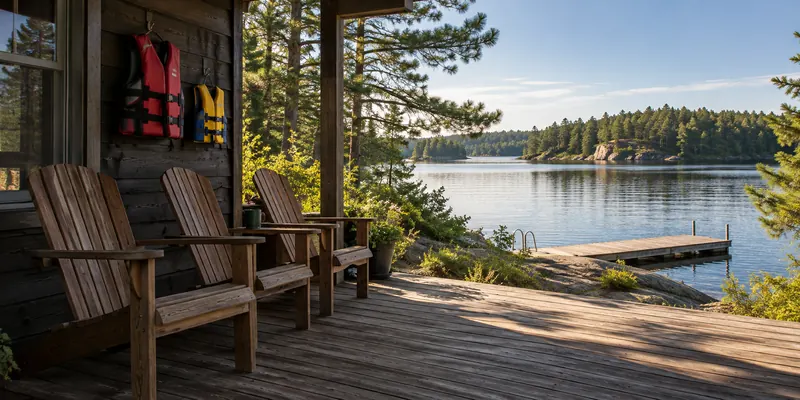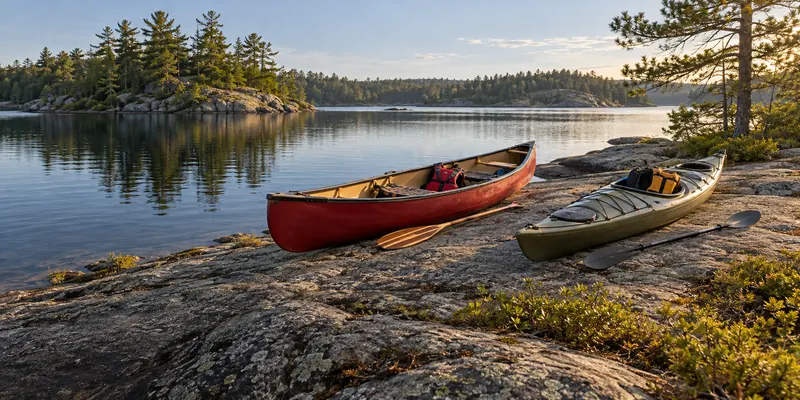
A paddle trip changes the scale of a fishing day. The landing stays in mind, each bay takes time to reach and a small tackle box earns its place in the boat. Canoe fishing and kayak fishing work best when the route leaves enough room to stop, cast and come home without turning the last hour into a hard paddle.
For a first outing, choose a craft you already know and a short stretch of sheltered water. Learn paddling and recovery skills before adding fishing gear. The quiet pace is part of the appeal, but control of the boat remains the day’s first task.
Give the route a clear turning point
Start with a legal launch that suits the boat and the people using it. Confirm parking, carrying distance and any fees. Look at the whole return route, including places to land if conditions change, before marking spots where you might cast.
Choose a turn that is easy to recognise: a suitable bay, a shoreline feature or a point on a current map. Keep it within the group’s skills and available time. Leave long crossings, strong currents and unfamiliar moving water for a trip planned with the necessary training.
If a route includes park campsites or portages, check current permits, reservations and access advice separately. An attractive line on the map does not settle those details. The canoe and kayak fishing guide brings the main planning tasks together.
Pack the boat on shore
Load within the craft’s stated capacity and follow its loading instructions. Put the gear aboard, then check that you can paddle, turn and reach necessary equipment without shifting bags. Sort that arrangement before leaving the landing.
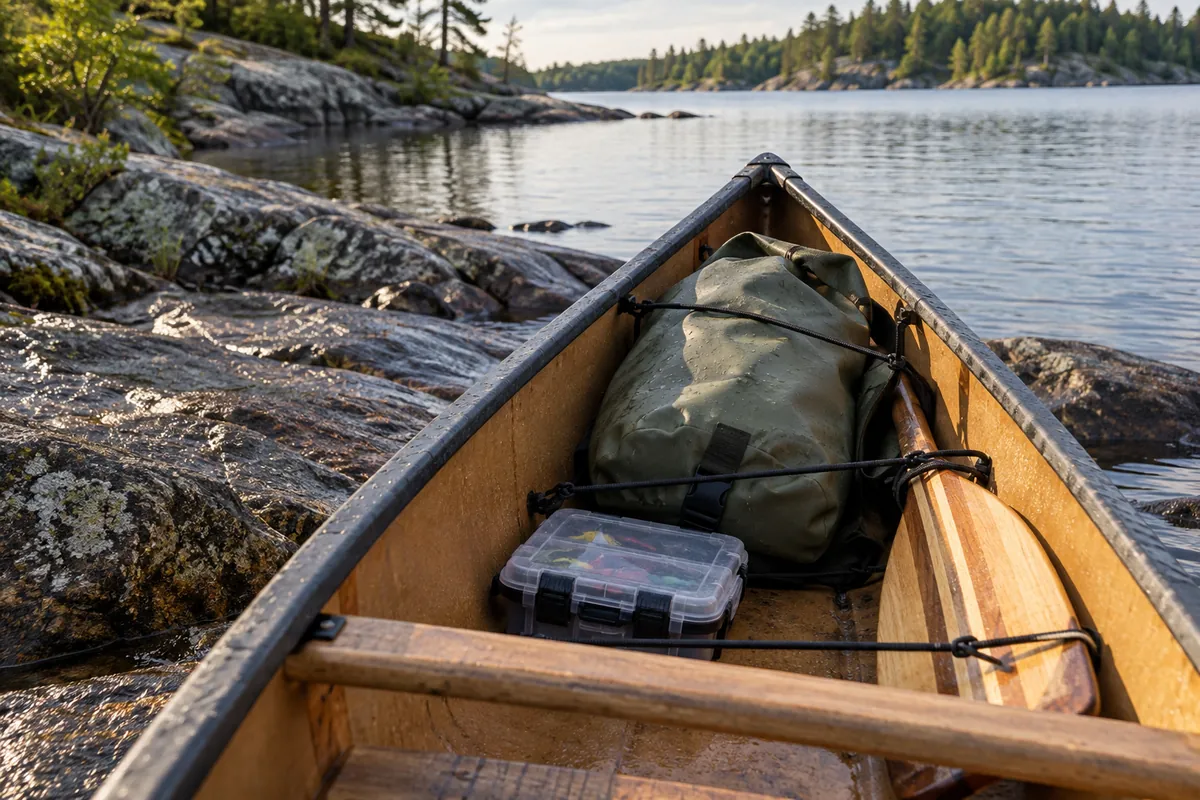
Keep a modest tackle kit for one or two methods. Secure rods and bags so they do not block movement or become loose hazards. A dry bag should protect spare clothing and documents; it should also sit where taking out a layer does not require dismantling the load.
Consider how hooks and line will be managed in the confined space. Leave spare lures closed away and keep cutters and pliers reachable. Rod holders and other fittings should suit the craft and the operator, with no assumption that adding more gear makes fishing easier.
Wear the PFD and leave the trip plan
Wear a properly fitted, approved lifejacket or PFD throughout the outing. Check Transport Canada’s human-powered craft guidance and the current safety-equipment requirements for your boat. An outing without a motor still needs preparation.
Transport Canada also advises canoeists and kayakers to be visible to other boaters and keep signalling equipment within reach. Choose the launch and route with traffic in mind. A small craft may be hard for another operator to see, even on a bright day.
Leave the route, craft description, people aboard and expected return with a responsible person. Agree what they should do if you are overdue. Check how you will communicate if the plan changes, and let them know when the trip is over.
Settle the boat before making the cast
Stop paddling and get the craft under control before picking up the rod. Watch where it is drifting and what lies nearby. Fishing should wait if the boat needs steering, if traffic is approaching or if the position is carrying you toward a hazard.
In a two-person canoe, agree who watches the boat and where each person casts. One person fishing while the other manages the position can be a useful starting routine. Change jobs only when both people are ready and the boat is steady.
A short casting session near a suitable shoreline feature may be enough. Avoid reaching or standing to chase a lure snag outside your skills and the craft’s design. A lost lure costs less than losing control of the boat. Keep movements calm and the fishing method simple.
Choose fish you can handle from the craft
Match the target species to the water, tackle and your handling experience. Check current fishing rules before departure, including legal bait and any named-water restrictions. The bass guide gives one possible starting point, but the chosen lake and its rules decide what can be targeted.
Plan the landing and release routine before a fish is hooked. Large fish and multiple hooks can be awkward in a small craft. If you are unsure how to manage that combination safely, change the target or learn with a skilled guide before attempting it.
Keep handling brief and avoid stretching over the side for a photograph. A picture is optional. The responsible fishing guide points to current fish-care advice and reminders about carrying out line and waste.
Turn back while the return still feels easy
Watch the wind and the group’s energy as the outing goes on. The outward journey can hide how much effort the return will need. Turn at the agreed point or earlier when conditions call for it, leaving time to land and unload without rushing.
If the day no longer fits the route, stop fishing and follow the agreed landing and help plan. Do not make an open-water crossing simply to reach another bay. The next cast should never decide whether a paddling route remains within your skills.
Back at the launch, check for loose tackle, clean and drain gear according to current provincial guidance, and report your return. Note what worked in the load and what was awkward. A small first route gives you useful lessons without asking the water to forgive a larger mistake.