Ontario canoe fishing and kayak fishing let the route stay small: a landing, a sheltered stretch of shore and a few places worth casting. The paddle craft carries the angler as well as the tackle, so the return journey matters from the first push off. Choose water that fits your paddling skills before adding fishing to the day.
For a first outing, keep close to a suitable launch and avoid a route that depends on a long open-water crossing. A fishing trip does not need to become a distance test. Leave time to paddle, handle the boat, eat and return before wind or tiredness makes the last leg difficult.
Pick the craft you can control
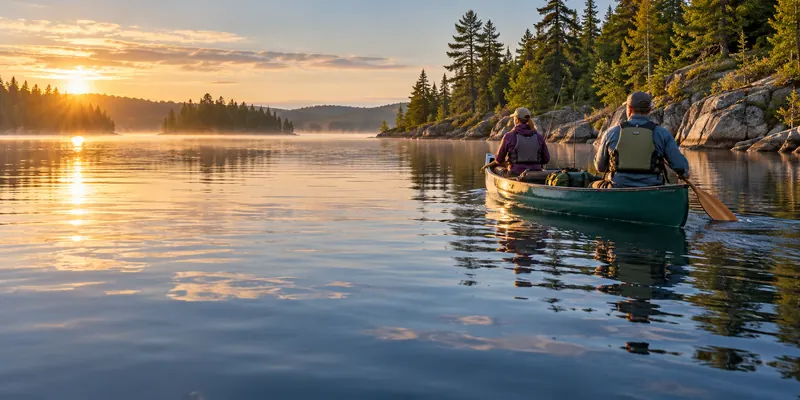
A canoe and a kayak give the angler different seating, storage and working space. Begin with a craft you can paddle and get in and out of confidently. A rental should come with instructions for the actual boat and the equipment supplied with it.
Ask a qualified paddling instructor or outfitter about the skills needed for the route, including what to do after a capsize. Practise without fishing gear before taking a loaded craft onto unfamiliar water. Adding rod holders or a small motor changes the setup; check the current rules and equipment needs for that particular craft.
Put a short route on the map
Choose a legal launch with a landing that suits the boat and people. Confirm parking, carrying distance and any fees or booking requirements. Plan a route with clear turning points and suitable places to get ashore if necessary, rather than circling bays until the afternoon is gone.
The Lake Temagami guide and Haliburton Lakes guide give useful regional water context. They do not approve a paddling route. Get current maps and local information for the specific outing, including portages, private shores, currents and any access closures. Leave the longer expedition for a separate plan.
Load for balance and clear movement
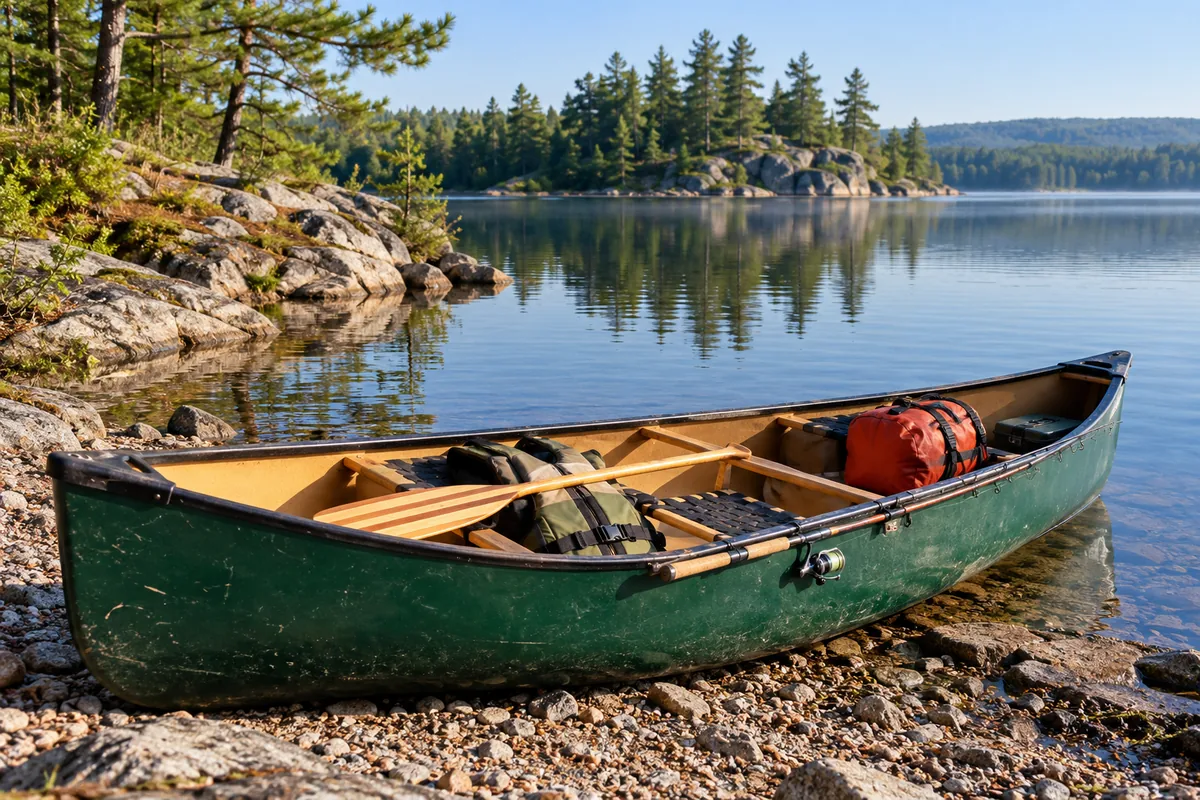
Keep the load within the craft’s capacity and follow its loading instructions. Secure bags and rods so they stay out of the paddling space. Use a sealed dry bag for clothing and documents, and keep necessary safety equipment easy to reach.
Take a compact tackle kit matched to one or two methods. Choose a rod that can be carried safely in the craft. Hooks, long rod tips and loose line deserve thought before launching. Arrange the equipment ashore, where there is room to change it, instead of sorting the load while drifting past the landing.
Wear the flotation gear
Wear a properly fitted, approved lifejacket or PFD throughout the outing. Check Transport Canada’s current safety-equipment guidance for the craft type and length. Human-powered boats have equipment requirements even when no motor is fitted; the absence of an engine does not remove the need to prepare.
Keep signalling equipment within reach and choose a setup that helps other boaters see you. Stay aware of motorboat traffic and local conditions. Cold water remains a risk close to shore. A paddling lesson and a workable recovery plan are better preparation than assuming a calm-looking lake will remain easy all afternoon.
Fish only when the boat is settled
Stop paddling and get the craft under control before making a cast. In a two-person canoe, agree who controls the boat and where each angler’s line will go. If the position is drifting into a hazard or traffic, put the rod away and deal with the boat first.
The bass guide can help choose a casting method, while the northern pike guide brings leaders and release tools into the tackle list. Confirm the species and current rules for the water. Large fish can be difficult to handle from a small craft; choose a target and landing method within your skills.
Watch the return conditions
Check the forecast and local water conditions before launching, then keep watching them. A quiet outward paddle can become a harder return if the wind changes. Turn back early enough to keep the day within the group’s ability, energy and daylight.
If conditions no longer suit the craft, stop fishing and follow the route’s agreed landing and help plan. Do not press into a crossing simply to reach another promising bay. A short trip should give you room to change the day while the choices are still straightforward.
Leave the plan with someone ashore
Give a responsible person the route, craft description, people aboard and expected return. Agree what they should do if you are overdue. Let them know when you return, and update them if the plan changes where communication allows. Transport Canada’s trip-plan guidance gives a useful starting point.
Check fishing licences, legal bait and the named-water rules before packing. If the route includes campsites or portages, confirm their separate permits and access. Carry out line and food waste, drain and clean gear before moving to another water, and make the next route longer only when the paddling skills are ready for it.