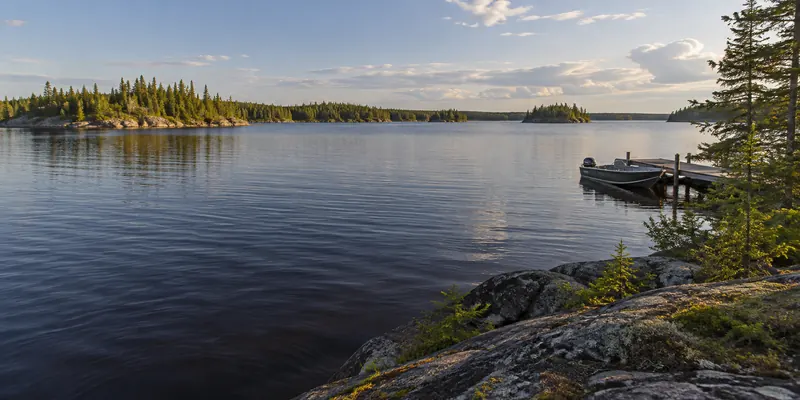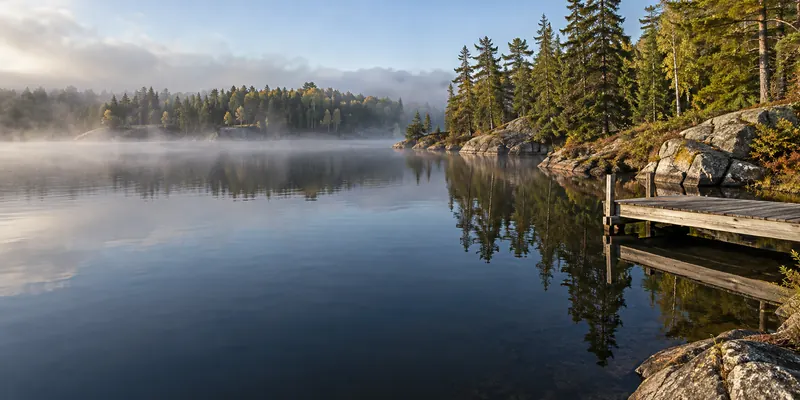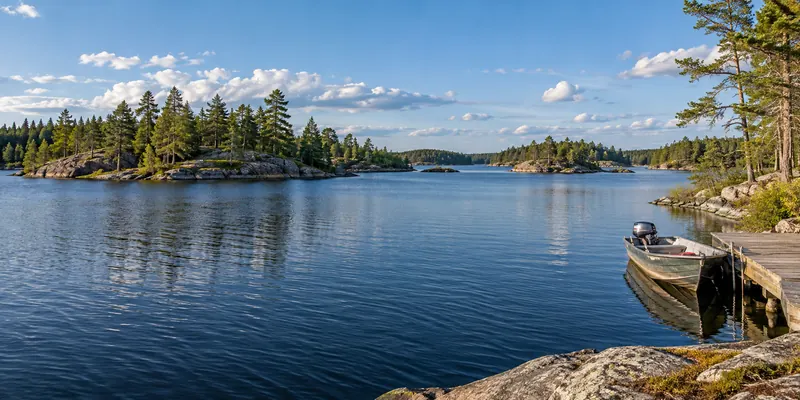
Minaki is a small place beside a large stretch of fishing water. North of Kenora, the Winnipeg River widens into lakes, narrows again between wooded shores, then opens around another group of islands. A map starts to make sense of it. A few days in a boat give those names weight: Gun Lake, Little Sand, Big Sand, Rough Rock and Pistol.
For a visiting angler, that arrangement is the draw. You can stay in a drive-in cottage and fish connected water without making every day a long road trip. Minaki fishing can mean a morning working a walleye edge, an afternoon casting for pike, or a patient day spent looking for muskie on the Winnipeg River. The choice deserves some thought before the rods go into the truck.
A river with room to spread out
Calling this a river can give newcomers the wrong picture. The Minaki stretch includes broad lake basins as well as tighter channels. Big North Lodge identifies five connected fishing lakes reachable by boat without a portage. That offers several directions for a week, though it does not make every route suitable for every boat or every forecast.
Choose one manageable area for the first outing. Learn its route, the dock approach and the places where a chart needs close attention. Keep a paper map with your electronic chart, and ask your host which passages need local knowledge. A line on a screen is useful. It is no substitute for a proper briefing about rocks, current and changing conditions.
The woods add another reason to look up from the rods. Minaki sits near the meeting of two forest regions: white pine and yellow birch on one side, jack pine, black spruce and aspen on the other. That mix is part of the setting, along with the railway crossing that helped build the modern community. The river was a travel route long before holiday cottages arrived.
Let the fish set the pace
Walleye, northern pike, bass and muskie all feature in the local fishing. Packing for every possibility is easy; trying to fish for all of them in the same morning usually makes the day harder. Pick a main target, then carry a second rod for a sensible change of plan.
For walleye, work a short piece of water carefully before moving. Note the depth where a bite comes, the speed of your drift and whether the boat is following an edge or crossing it. A jig can be a good tool for learning those details. Change its weight when you lose touch with the bottom, rather than treating one weight as a rule for the whole river.
Pike tackle calls for a leader and tools suited to teeth. Muskie fishing calls for suitable tackle, a large landing net and a release plan ready before the first cast. There is nothing wrong with spending a trip on walleye and bass instead. A fishing holiday should fit the people in the boat.
Make a small daily map
Rather than gathering a long list of spots, build a short list of useful observations. Mark a sheltered stretch, a route you know well and a place where the boat can turn safely. Record what happened at a fishing location in plain words: wind from the west, bites along the deeper edge, no response on the shallow pass.
That notebook becomes worth more than a collection of unnamed waypoints. It helps you decide whether to return to an area or try a similar piece of structure elsewhere. Share the notes with your host or guide. Good questions are easier to answer when they include a depth, a location and a clear account of what you tried.
Leave space for a quiet session near camp. The furthest point on the map need not be the best use of the afternoon, particularly when a new wind would make the ride home uncomfortable.
Plan around the boat ride home
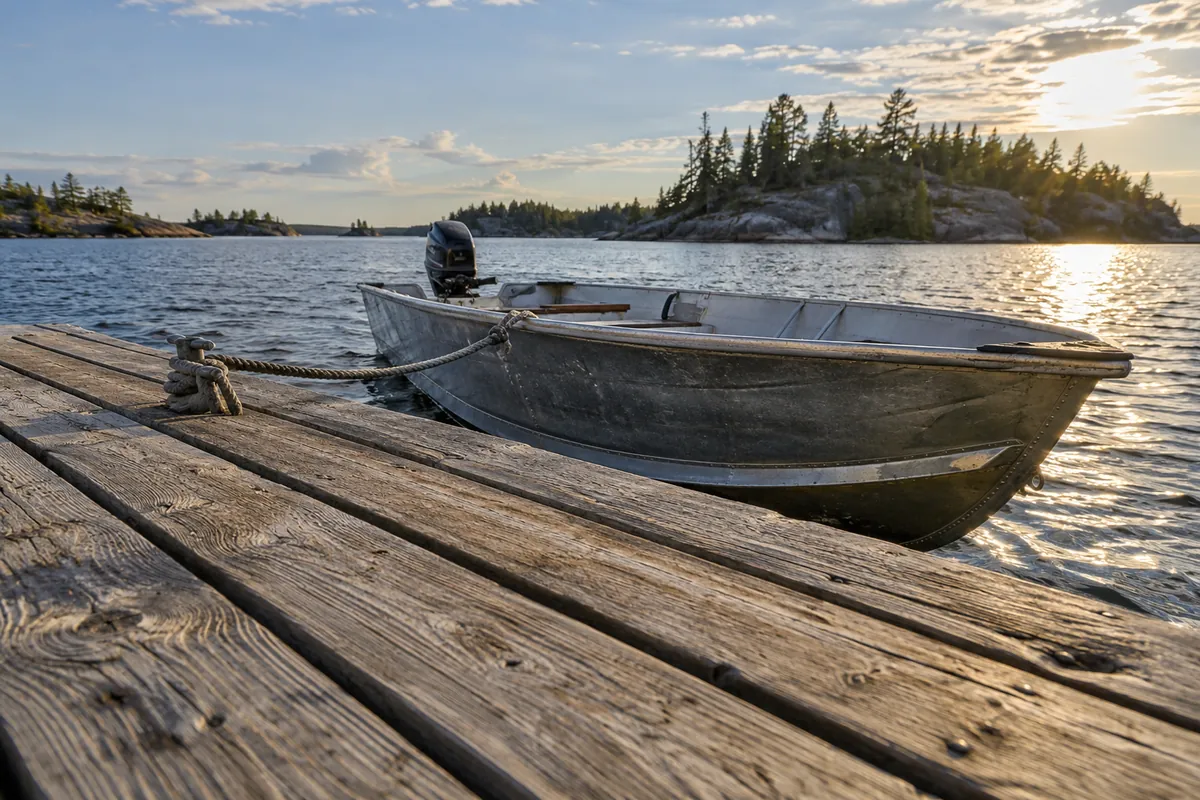
Start each day with the forecast and a route that leaves room to shorten the outing. Large basins can put open water between you and supper. Ask about safe routes for the conditions expected that day, and turn back while the choice is still easy.
Keep rain gear, warm clothing and drinking water in the boat even when the dock feels comfortable. Secure loose tackle boxes and bags before travelling. Lifejackets should be worn, rather than buried beneath the lunch. Make sure somebody ashore knows the intended area and your return time.
Before fishing, read the current Ontario rules for the exact water and species. Connected lakes do not remove the need to check water-specific exceptions. If a rule or boundary is unclear, settle it before heading out.
A day ashore in Kenora
Kenora makes a useful stop on the way to or from Minaki, and a change of scene during a longer stay. The Lake of the Woods Museum, part of The Muse, offers a look at the region's history. Check its current hours before making the trip; a museum visit is better planned than fitted around a locked door.
The city also lists Husky the Muskie among its visitor attractions. It makes a lighthearted stop for a fishing family, with none of the uncertainty of landing a live one. Allow some time for the waterfront rather than treating Kenora only as a place to refuel.
Minaki itself suits a slower evening. Put away the rods, check the next day's weather and sit near the water. A holiday with no spare hour soon feels much like a schedule at home.
Getting to Minaki
Highway 596 runs north from the Kenora area toward Minaki. Use the accommodation's current directions for the final turn and arrival point. Different camps serve different parts of the water, so a pin labelled Minaki is not the whole journey.
Buy the main groceries and supplies before the last leg, then confirm what is available at camp. Ask about docking, fuel, bait and boat arrangements when booking. If bringing your own boat, check launching instructions and any parking needs as well. Leave the first evening for settling in and learning the route, rather than counting on a full fishing session after the drive.
A base on Gun Lake
Big North Lodge & Outposts is worth a look for a Minaki trip. Its waterfront cottages sit on Gun Lake, giving guests a base on the Winnipeg River system. Housekeeping and meal-plan stays offer two ways to arrange the week, depending on whether your group wants to cook or leave meals to the lodge. The business also lists separate fly-in outposts on Roger and Long lakes; those are a different trip from fishing the drive-in camp. Visit the lodge's website, talk through your group's needs and ask about current boat and guiding arrangements before booking.

A PLACE TO STAY
Big North Lodge & Outposts
Big North Lodge has waterfront cottages on Gun Lake near Minaki, with fishing on the Winnipeg River system. Guests can choose housekeeping or meal-plan stays, while fly-in cabins on Roger and Long lakes offer a separate outpost trip.
Visit the lodge website ↗See the directory card ↗