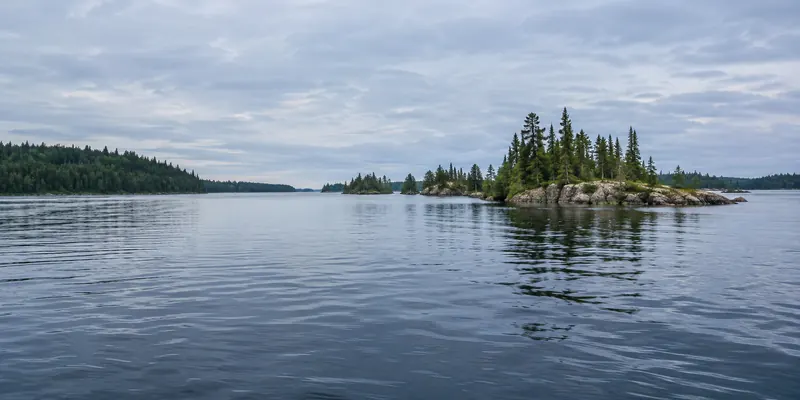
Northwestern Ontario fishing often begins with an island on the horizon and several possible routes around it. That is part of the draw, but it is also the first planning lesson. The northwest holds lakes large enough to make a week feel short, along with inland waters where a lodge dock can become the centre of the day. Choose the kind of water before you choose the length of the drive.
For fishing trips here, a useful starting question is simple: do you want to bring your own boat, have a boat waiting, or leave the road behind altogether? The answer will shape the rest of the week.
Lake of the Woods: choose a starting shore
Lake of the Woods offers walleye, northern pike, muskie, bass and other fisheries across a wide spread of islands, bays and deeper water. Kenora, Sioux Narrows and Nestor Falls are among the communities used as fishing bases. They are not interchangeable starting points. Decide which part of the lake interests you and how much travelling you want to do each day.
Ask a host about the normal fishing range from its dock, sheltered alternatives and the charts you will need. A boat that feels comfortable on a small home lake may feel different when a long open crossing lies between you and supper. Give navigation the same attention you give the tackle box.
Lac Seul: think in bays and basins
Lac Seul belongs on the list when you are looking at walleye country. Its broad water and many arms make the location of your base a real fishing decision. Sioux Lookout and Ear Falls are useful names while comparing access, but the lodge’s actual dock and the water reached from it matter more than the town name in the mailing address.
Ask where guests normally fish in rough weather and whether a guide can help with the opening day. Do not arrive with a plan built around running the full lake. Work outward from your base, keep track of the route, and leave time to fish the water you pass.
Minaki and the surrounding water
Minaki gives you another northwestern starting point to weigh against the larger lake names. The area is linked with Winnipeg River fishing country, where islands and channels can make the route as interesting as the fishing. A map deserves a close look before deciding whether you want to stay near the landing or farther along the water.
For a first visit, request clear arrival directions and a description of the daily boating routine. Ask which stretches suit your boat and experience. The longer Minaki destination story will follow later in the Where to Go section, with the town and the rest of the trip given their own space.
Road access or a flight into camp?
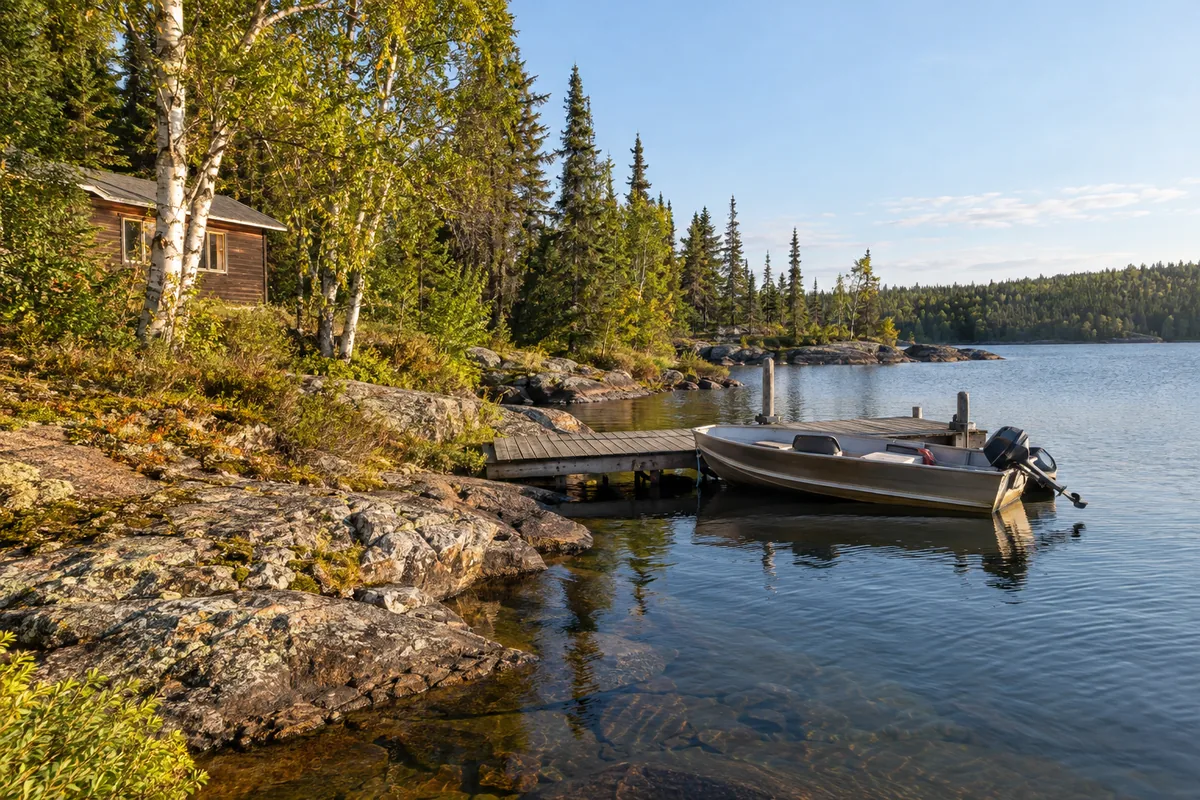
A drive-in stay gives you room to carry your own tackle, food and boat, provided the property can handle that boat. Ask about the launch, docking, fuel and trailer parking. If you are relying on supplied equipment, get the boat and motor details in writing rather than treating “boat included” as the whole answer.
A fly-in trip changes the packing list. Weight allowances, pickup arrangements, supplies and communications need settling with the operator. Choose equipment you understand and take a spare for the items most likely to stop the fishing if they fail. The return flight is part of the trip plan too, so leave room in your travel schedule for weather.
Fish one area well before moving on
On a new lake, it is tempting to spend the morning travelling from one promising shoreline to the next. A smaller plan can be more useful. Pick a safe stretch of water, learn its points and changes in depth, and keep a note of what you find. Conditions may change, but that knowledge stays with you through the week.
Keep the first day manageable. Use a current chart for navigation, not a fishing sketch alone, and ask about rocks, narrow passages and places where wind makes the return harder. Local advice can save a lot of unproductive running without turning the trip into somebody else’s timetable.
Leave a little room in the week
The northwest rewards having a spare morning rather than filling every hour. Weather may keep you close to the dock. A supply run, a slow breakfast or time to sort wet gear can still fit a fishing holiday. Families may prefer a base where shore time has been considered as carefully as the boat time.
When comparing properties, ask what happens on a day you stay off the main lake. That question tells you about the real routine. It is more useful than a long list of fish photos, and it helps everyone picture the same trip before the deposit is paid.
Finish the plan with the exact water
Check Ontario’s current fishing regulations for your chosen water, not just the region. Use Fish ON-Line as a starting resource for lake details. Keep a copy of your arrival instructions where it will be available without a phone signal.
If you are still choosing the country, compare this trip with Northeastern Ontario or Algoma and the North Shore. Pick the route that leaves you enough time and energy for the reason you came: fishing.