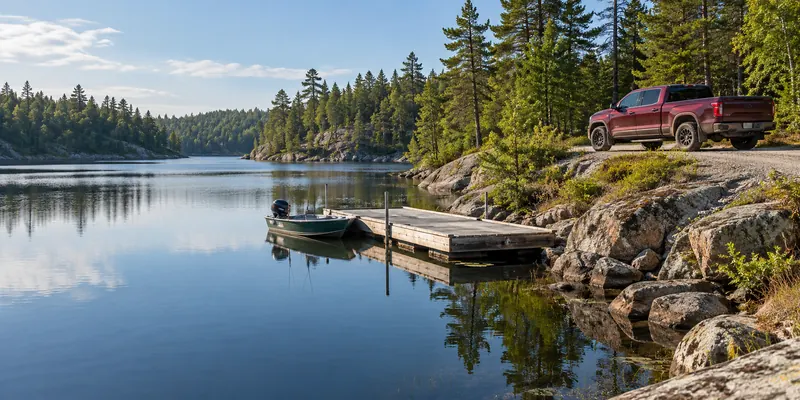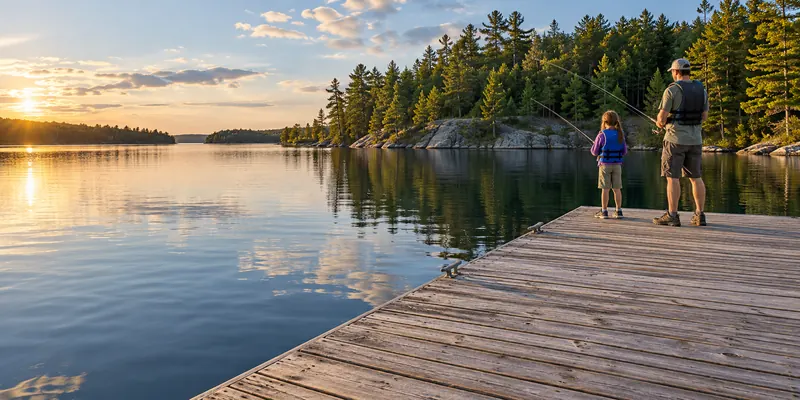
Ontario family fishing works best when the outing fits the people who are coming. A child waiting for a float to move, a teenager learning to cast and a grandparent who wants a steady seat may all need different things from the same afternoon. Choose the access and pace before choosing how far to drive.
For a first outing, a short session with a clear bite can be enough. There is no need to fill every hour with fishing. Lunch, dry clothing and a comfortable place to stop help keep a small snag or a quiet patch of water from deciding the whole day.
Let the youngest angler set the scale
Ask what everyone wants to try and how long they are likely to enjoy it. Start with a nearby outing before committing a new angler to a full boat day. A family holiday can include fishing without making every person take part in every trip.
If booking a stay, explain the ages, experience and needs of the group. Ask about safe access to the water, washrooms, seats, shade and places to take a break. Confirm the particular cabin and dock arrangement. The word family in a package name does not answer those practical questions.
Choose footing before scenery
A broad permitted bank or dock may be easier to manage than a steep shoreline. Look for enough room to stand, move and handle a fish without crossing another person’s line. Keep away from slippery edges and places where current or waves make the intended spot unsuitable.
Children need close adult supervision around water. Keep them within arm’s reach and in a properly fitted lifejacket or PFD, following Transport Canada’s guidance. Adults can wear theirs too. A flotation device helps; it does not take over the supervising adult’s job while that adult searches for tackle or checks a phone.
Give one simple rig a fair try
A small float rig can make a bite easy to see. Match the hook and bait to the legal target species and the place you are fishing. The perch and panfish guide offers a starting point for modest tackle and a manageable outing.
Show the casting motion away from other people before putting a hook into play. Keep loose hooks and spare tackle under adult control. Help with tangles without treating them as a failed lesson. Once the basic rig is working, let the new angler watch the float, feel the bite and have time to try again.
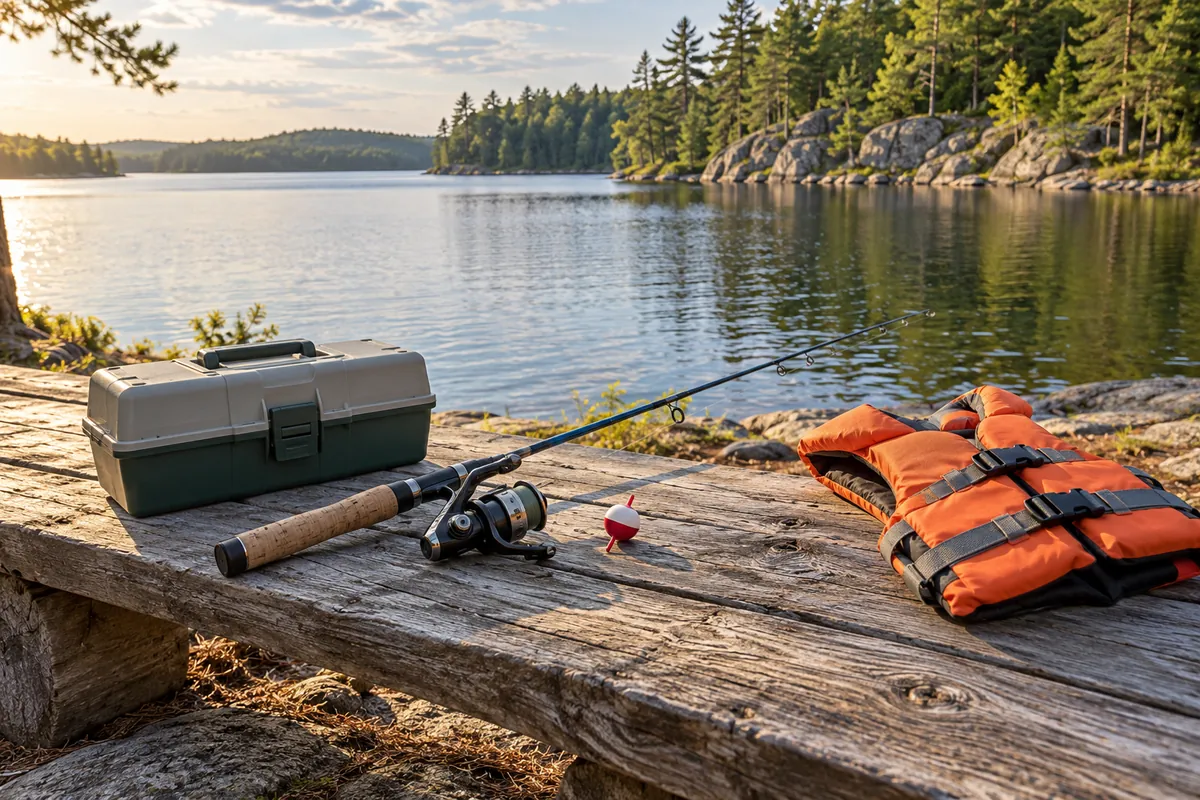
A boat outing needs its own plan
Ask about boat seating, the route, supplied equipment and correctly sized flotation devices before reserving a rental. Explain if anyone has never ridden in a small boat or needs help boarding. Keep the first route short and choose conditions that fit the whole group.
Settle operator documents and get a briefing on the actual boat. Keep bags and rods out of the walking space. Tell the children what to do during a stop, a cast and a fish landing. If the outing is not going well, return while the group still has energy for an easier activity ashore.
Make the holiday base do some work
The Muskoka Lakes guide and Haliburton Lakes guide describe cottage-country settings, but the useful choice is still the actual water and access. Ask whether the fishing dock is beside the accommodation or reached by another drive.
For a longer northern stay, choose a place with confirmed off-water options that interest your group. A picnic spot, a town visit or a quiet cabin afternoon can give the fishing days room to breathe. Ask about current opening hours and access instead of promising an activity from an old listing.
Pack for the pause
Bring drinking water, easy food, sun protection, rain clothing and spare dry layers. Keep the items needed during the outing in one bag that an adult can reach. A snack stop should not require emptying every tackle tray onto the dock.
Agree on a finish time and leave room to stop sooner. Watch for cold, tiredness and frustration. A child who wants to look at a minnow or count a float’s movements is still spending time with the water. The adult’s planned number of casts need not become the measure of the afternoon.
Check the rules for each person
Ontario’s licence requirements depend on details such as residency and age. Read the current family and youth fishing information and the licence guidance that fits each person. Free-fishing periods have their own conditions; check the current dates and rules rather than assuming any family outing qualifies.
The fish and the named water still need checking. Learn the species before keeping a catch, and read consumption advice if a fish meal is planned. Ontario’s Learn to Fish program can be another starting point; confirm the current locations and booking details. Leave the bank clean, then let the family help choose the next outing.