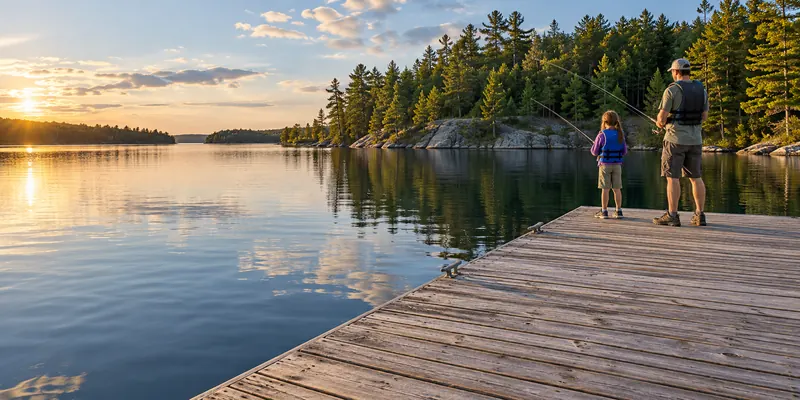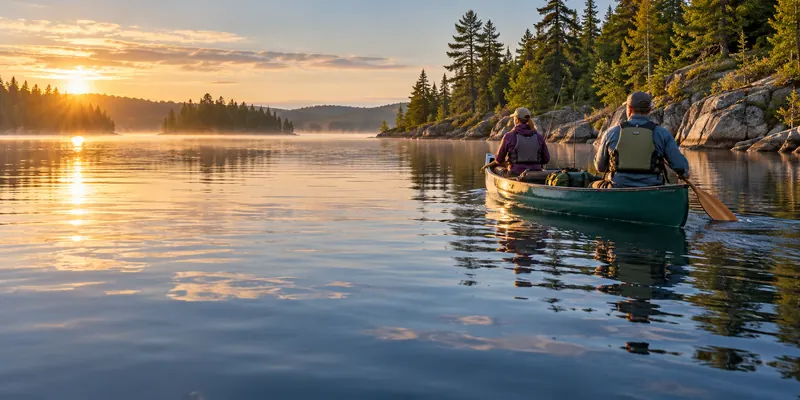
Ontario shore fishing can begin with one rod and an hour to spare. A boat is not part of the plan, but access still is. Find a legal place with sound footing, enough casting room and a way to land the fish you hope to catch. Those choices matter more than the length of shoreline visible from the road.
A settled bank can suit a solo evening, a first lesson or a family stop during a longer holiday. Keep the equipment small enough to carry easily. Leave time to check the actual spot before making a cast, because the water level, other visitors and local notices can change the outing.
Check who controls the access
Look for current information from the municipality, park, conservation authority or other body responsible for the location. Check where parking and fishing are permitted, along with opening hours and any local restrictions. A road allowance, bridge or worn footpath is not permission to cross private land.
Use the Southern Ontario guide and Eastern Ontario guide to narrow the region, then investigate a particular access point. Ontario’s fishing-water lookup can help with recorded species and fishing information. It does not settle ownership, parking or the right to walk across an adjoining property.
Give the bank a careful look
Before unpacking, check the surface, water level and room to move. Choose a broad steady position rather than a narrow ledge that needs balancing. Wet rock, steep edges and moving water can make a spot unsuitable even when it is easy to reach from the car.
Wear a properly fitted lifejacket or PFD where a fall into the water is a risk, and keep children under close adult supervision. If fishing beside a river, learn about local flow changes and closures before choosing the bank. Leave if the conditions do not suit the people coming. Another bank is part of the plan.
Find water the tackle can reach
From shore, the lure needs to reach useful water without forcing the angler into a poor position. Look at the depth, current, vegetation and room for a retrieve. A promising-looking point may still be outside the reach of the rod and method you brought.
Choose the species before choosing every rig. The carp and catfish guide covers a settled bottom-fishing approach, while the perch and panfish guide gives smaller tackle a place. Confirm those fish occur in the chosen water and that the current rules permit the intended fishing.
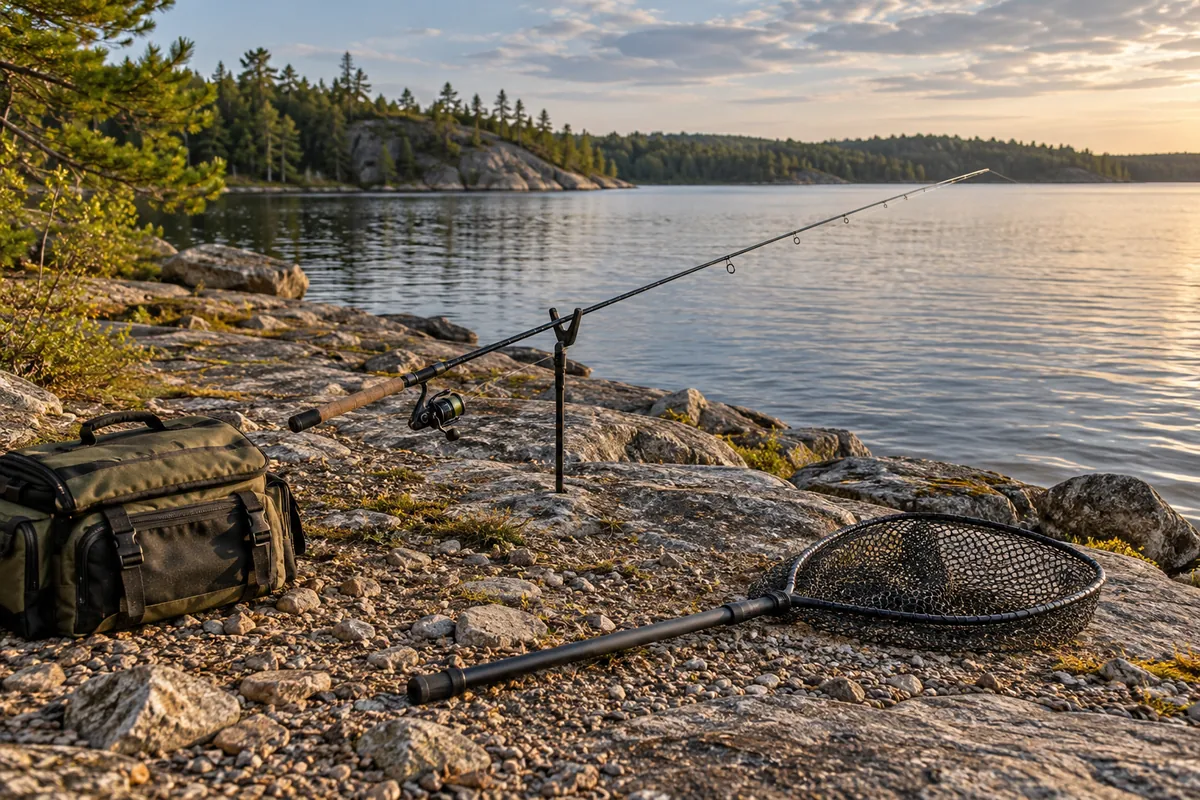
Pack one method you can manage
Bring a rod, a small tackle kit and the tools needed for the fish you intend to handle. Add a suitable landing net when the bank and target call for one. Keep food, clothing and spare gear in a bag that leaves your hands free on the walk.
For float fishing, start with a rig that makes the bite easy to see. For casting, choose a lure you can retrieve through the available water without repeated snags. Keep spare line and a few useful replacements. Changing every lure in the bag is less helpful than knowing where the current rig is fishing.
Plan the landing before the bite
Choose where the fish can be brought within reach without stepping onto a slippery edge. Keep the net and release tools ready. If the bank is too high or awkward for a sensible landing, choose another location before a large fish makes the decision urgent.
Work within your ability and ask for help if needed. Keep any fish that must be released in the water as much as practical. Avoid putting fish on dry gravel or dragging them onto a bank. Learn the identification and handling needs of the intended species before the rod begins to bend.
Know when the outing ends
Check the fishing season, species rules and any sanctuary or named-water exceptions before leaving home. Bait rules also belong in that check. If keeping a fish, read consumption advice and bring suitable storage instead of deciding what to do with the catch at the car.
Keep enough daylight for the return walk, or choose a location and equipment suited to a permitted evening outing. Tell someone where you will be if fishing alone. Pack out discarded line and every item you brought. A useful shore trip ends with a clear route home and a clean bank for the next person.