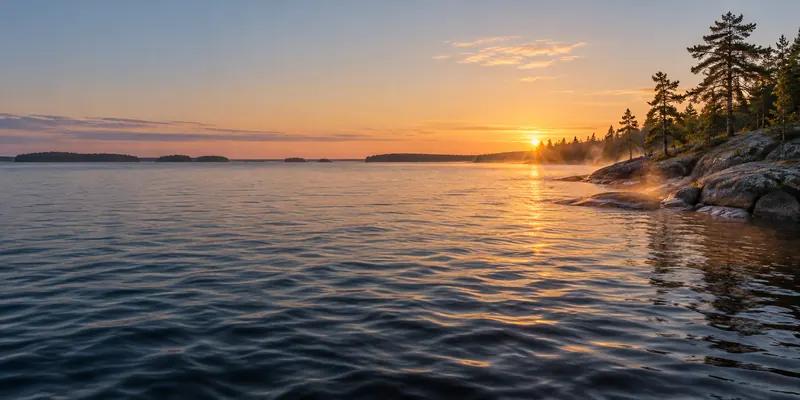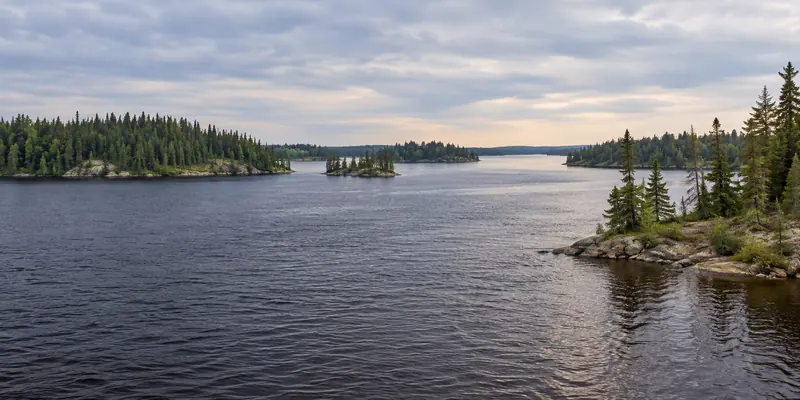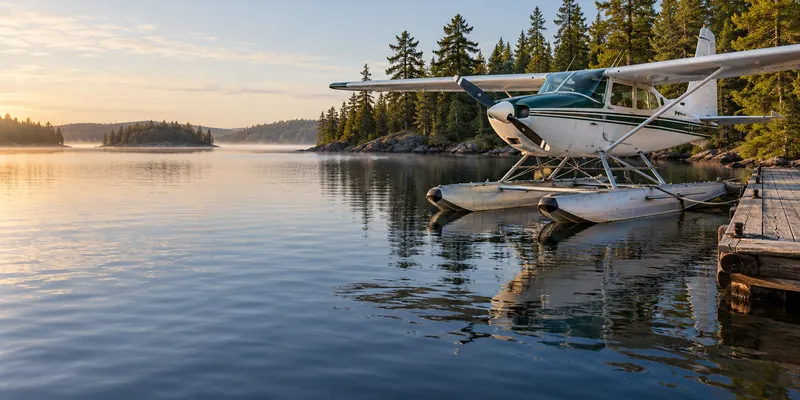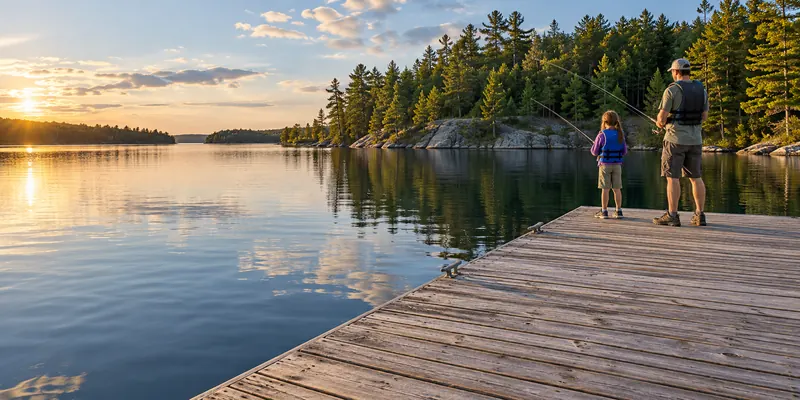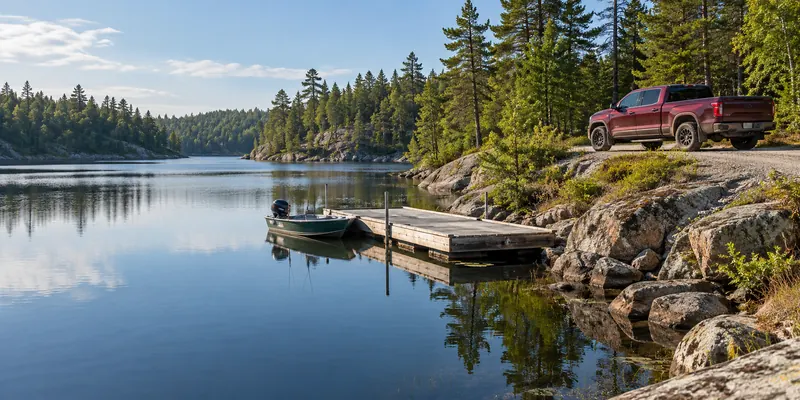
Ontario drive-in fishing starts with room in the vehicle and a road to the lake. You can bring familiar tackle, carry the rain gear you trust and stop for supplies on the way. The useful question is what waits at the end of that road: a cabin dock, a public landing or a boat you still need to arrange.
A road-access stay can suit a first northern trip or a return to water you know. It also leaves choices open. Decide how much of the holiday belongs in the boat, how much belongs ashore and whether the group wants to cook, eat supplied meals or spend part of each day in town.
Start with the water, then the bed
A cabin photograph tells you little about the fishing route. Ask which lake or river you will actually fish, where the boat is kept and whether getting there involves another drive. Some bookings put everything at one dock. Others give you a base for outings to several waters.
Read the Lake Nipissing guide for a broad-water trip or the Lac Seul guide for a northern lake plan. Neither lake name settles your choice of landing. Ask the host which part of the water is reached from the property and what fishing can reasonably fit into a shorter day.
Check the last part of the road
Get written directions from the operator, including the final turn and the arrival address. A map pin can lead to an office, a mailing address or the wrong side of a lake. Save the directions before losing a dependable phone connection.
Ask about the current condition of the final road, gate arrangements and access for your vehicle or trailer. Use Ontario 511 to check highway closures and roadwork along the wider route. Leave enough daylight to find the landing, unload and hear the boat briefing without turning arrival into a race against supper.
Bring a boat or reserve one
If towing, confirm the ramp, launch hours, parking, dock space and any charges before booking. Ask whether the landing suits your boat and trailer. The presence of a waterfront cabin does not settle the launch question, and a nearby ramp may need its own arrangements.
For a rental, ask about the boat layout, motor controls, fuel and supplied equipment. Tell the operator how many people will be aboard. Read Transport Canada’s rental-boat information and settle the required operator documents before arrival. A dock briefing should cover the actual boat, local hazards and the way to request help.
Give the cabin a separate packing list
Ask which kitchen items, bedding, towels and drinking-water arrangements are supplied. Confirm how the refrigerator, cooking equipment and heating work. Those details can change the load much more than another box of lures. Do not infer cabin equipment from a picture taken in a different unit.
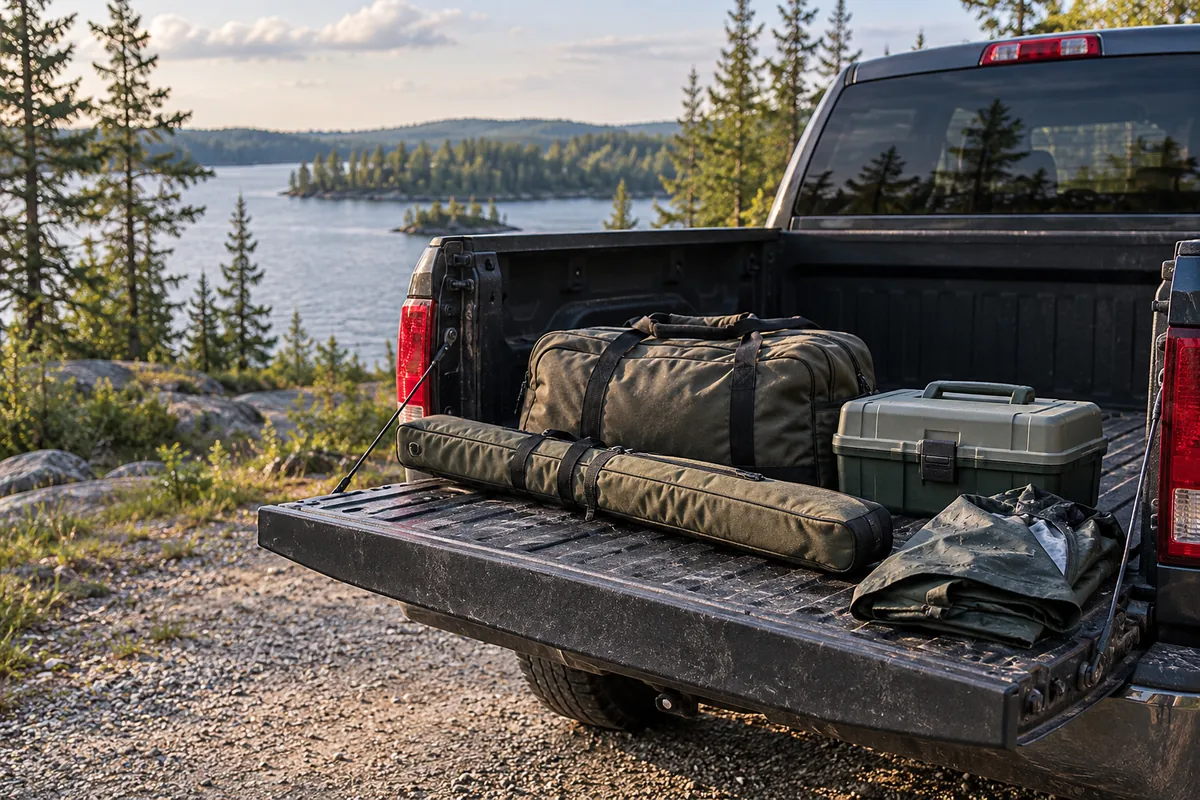
Keep the overnight bags separate from the gear needed for the first boat outing. Put rain clothing where it can be reached during unloading. Bring food that fits the cooking setup and the group’s habits. If meals are included, ask about times and any dietary needs before the final shopping stop.
Build a small first-day route
Arrival day is a good time to learn the dock, the nearby water and the return route. A long boat run adds little if the group is tired from driving and still sorting tackle. Choose a reachable section with a reason to fish it, then save a longer route for a settled morning.
The walleye guide and bass guide can help narrow the tackle choice. Match the target to the particular water and your dates. A mixed tackle box is useful; a clear first method is more useful when someone is learning the boat or casting for the first time.
Leave the booking room for weather
A drive-in trip gives you a vehicle at the property, which can help when a boat day is unsuitable. Ask what other legal fishing access is nearby and which off-water stops interest the group. Keep those options modest enough to use without another full travel day.
Check the terms for deposits, cancellations, late arrivals and shortened stays. Learn who decides whether a rented boat can go out in poor conditions. Budget for fuel, bait, launch fees or guiding only after asking what the quoted package includes. A clear total is easier to share among friends.
Settle the documents before departure
Check Ontario’s current fishing rules for your residency, licence needs, target species and named water. Save the relevant information where you can read it without a signal. If keeping fish, check consumption advice separately and plan suitable storage for the road home.
Leave a boat trip plan with a responsible person and confirm your return. Keep the daily route within the boat, weather and group’s limits. The road has already done the long-distance work. Once at the lake, a manageable fishing day gives you time to notice a useful point, work it carefully and return without rushing.