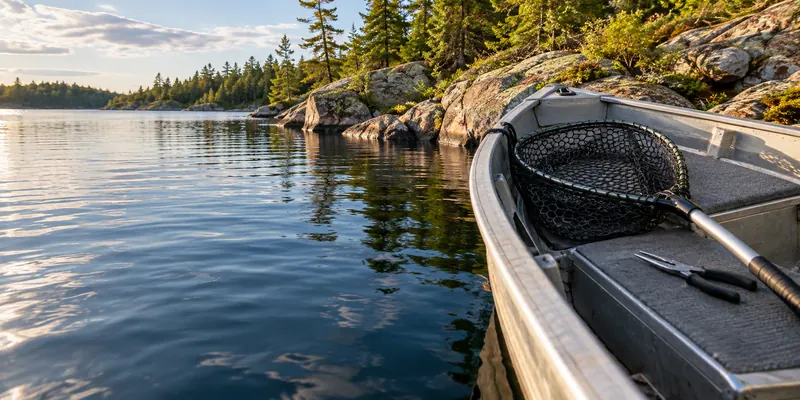
Fish care begins while the tackle is still dry. The net needs to be ready, the pliers easy to reach and the angler clear about what may be kept. A crowded boat with the tools buried beneath lunch is a poor place to work out those details while a fish waits.
Responsible fishing also includes the ground around the water: how you reach it, how much space you leave other anglers and what you carry away. Good habits are small enough to repeat on every outing. They matter on an ordinary evening at a town dock as much as on a week spent far from the highway.
Know the rule before making the cast
Read the current Ontario fishing rules for the species and named water. Targeting a fish in its closed season is prohibited even if you plan to release it. Choose an open target. Where a caught fish may not legally be retained, follow the immediate-release requirements.
Check the size restrictions and catch and possession limits before deciding on a meal. If the fish is intended for release, do not put it on a stringer or hold it for a later photograph. Read Ontario's fish-handling guidance alongside the rules so the day's arrangements fit both.
Put the tools in working order
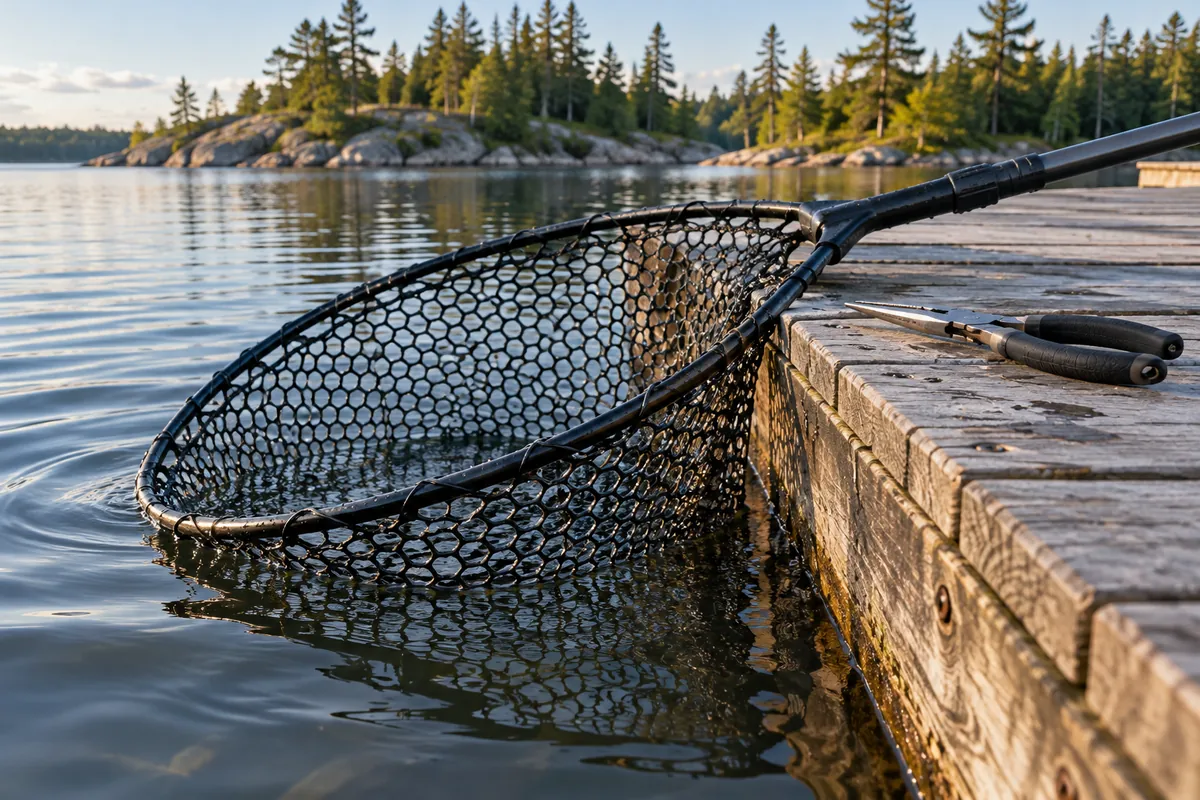
Carry a suitable rubber-mesh net and unhooking tools for the species. Use tackle capable of landing the likely fish without an unnecessarily long fight. Wet your hands before handling, keep the fish in water where possible and avoid contact with its gills. Support it properly rather than hanging it vertically.
Discuss the landing before the first fish arrives. In a boat, decide who handles the net and where the other rod goes. On shore, choose a position that gives safe access to the water without dragging a fish across rocks. Clear the immediate space. The aim is to make the needed work simple and quick.
Let the release set the pace
Minimize handling and air exposure. For a deeply hooked fish, Ontario's guidance recommends cutting the line instead of struggling to remove the hook. Read the provincial handling guide before the outing and ask for practical help if you are unfamiliar with the likely catches.
A photograph is optional. It should never delay a legally required immediate release; Ontario restricts delaying release for pictures or weighing when the fish may not legally be retained. If a photo is appropriate, have the camera ready first. Take the picture the situation allows, rather than arranging the fish around a picture you hoped to make.
Think about the fishing you choose
Release fishing deserves more care in extreme temperatures and when fish are brought up from deep water. Conditions can make a fish vulnerable even when the angler works quickly. Read the provincial guidance, understand the species and be willing to change the outing instead of assuming that every released fish will recover.
For a group, talk about expectations before departure. Nobody needs to pose with every fish, and nobody needs to keep fishing simply to improve a count. A meal, a useful lesson or a comfortable return can be enough for the day. Keep the focus on sound fishing decisions rather than proving that a trip has produced a certain number.
Leave the next water out of this one
Follow Ontario's invasive-species guidance when cleaning, draining and drying boats and fishing equipment between waters. Check bait-movement requirements before buying or travelling with bait. Do not empty unwanted bait into a lake or assume that gear from one river is ready for another without attention.
Before the next outing, inspect the net, tools and tackle. Replace damaged line and store sharp items securely. Teach a child or new angler the whole routine, including the cleanup, rather than ending the lesson at the catch. That leaves the next person with a useful way to fish and the next shore with less work to undo.