A fly rod changes the way an angler looks at a piece of water. The space behind the bank matters. So does the direction of the wind and the distance a fly needs to travel. A tidy short cast into useful water can be a better start than a long line thrown across half the river.
Ontario fly fishing includes trout streams, larger rivers and lake outings for bass, pike and panfish. Choose the species first, then arrange tackle and access around that choice. For a beginner, a manageable shore with room to cast and someone willing to help can be more useful than an ambitious trip to unfamiliar current.
Start with a balanced outfit
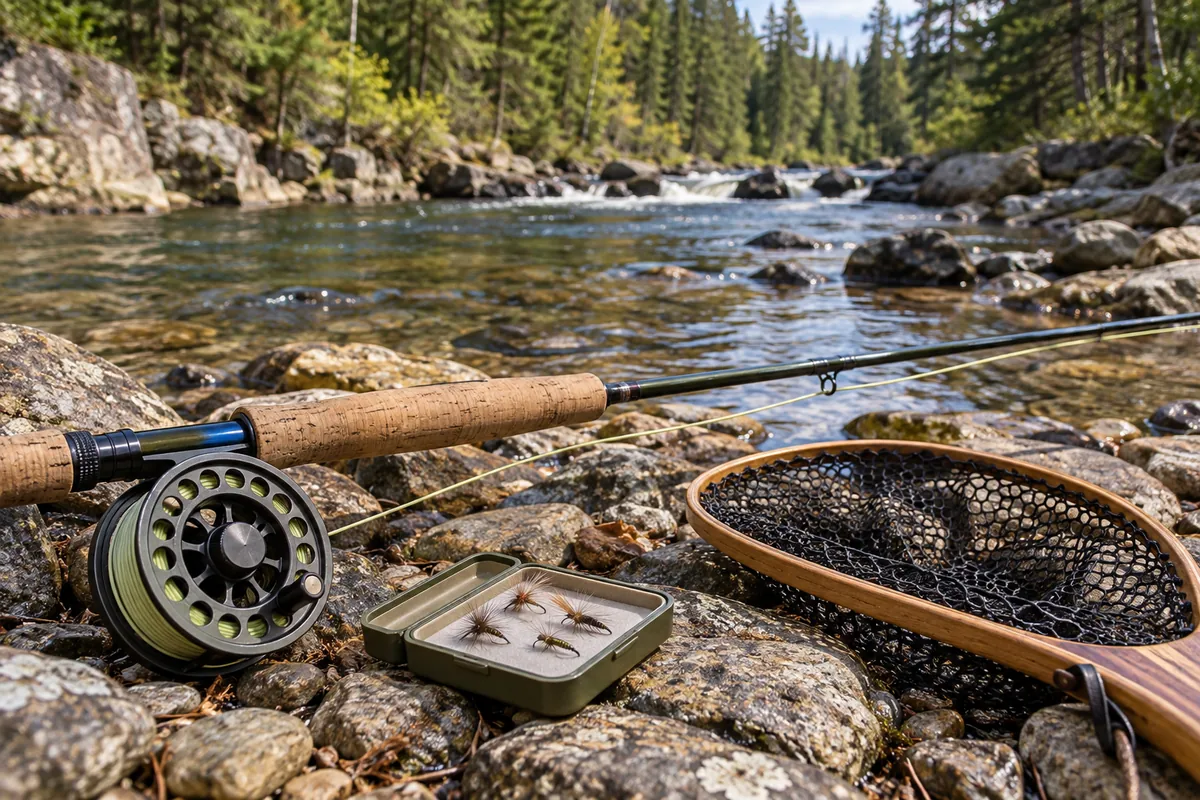
A fly outfit casts mainly with the weight of its line, rather than relying on a heavy lure. Rods, reels and lines use weight ratings that help match the equipment. Choose the outfit for the flies and fish you intend to handle. A rod suited to small trout flies may be a poor match for bulky pike patterns.
Ask to try the equipment before committing to a full week with it. A short lesson can settle questions about casting, knots and line management. Bring a few suitable leaders and tippet spools, a compact fly box and release tools. Keep the first kit understandable so you can spend the outing learning the water.
Learn on ground that gives you room
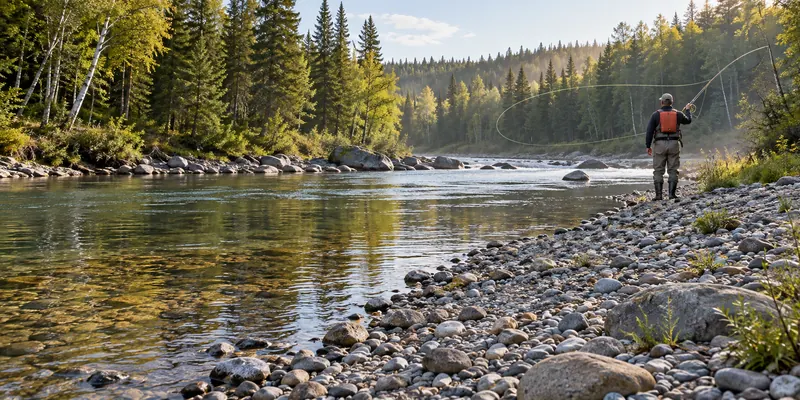
Practise a short cast on open ground with a harmless practice leader before fishing. Watch behind you and wear eye protection. On the water, start from a firm, dry bank when there is suitable legal access. You do not need to wade simply because you are carrying a fly rod.
Choose a stretch where the group can stand without crowding each other. Notice bushes, overhead branches and anyone walking nearby. When the space is tight, ask an instructor about a cast suited to it. Reducing distance is often the quickest way to gain control. Put the fly where you mean to put it before trying to reach farther.
Read a river one small piece at a time
Before making a cast, watch the current and decide which part you can fish from your position. Think about where the line will travel after landing. A cast across several different current speeds can be difficult to manage. Start with nearby water where you can see the drift and keep track of the fly or indicator.
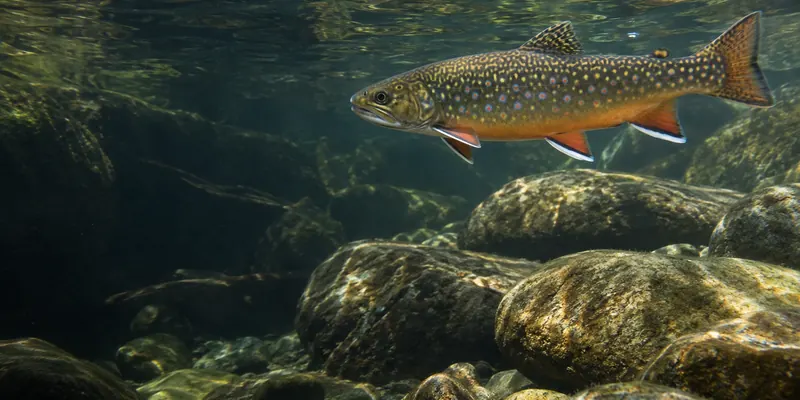
For trout fishing, learn the chosen river's species, seasons and access rules before arranging the day. Get local instruction on presentations rather than treating every riffle alike. The task is to fish a few places well. Repeatedly entering water you have not assessed can spoil the fishing and put you in a poor position.
Give lakes a place in the plan
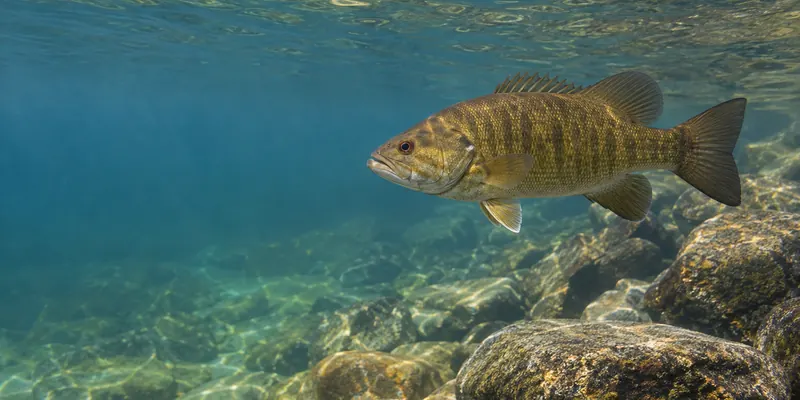
Fly fishing also suits still water. Bass and panfish offer other reasons to carry the rod, where the species is open and access is permitted. A clear casting space beside manageable water gives you room to learn the retrieve without also dealing with a moving river.
If fishing from a boat, settle the casting space before starting. Keep the partner out of the fly's path and stow loose gear. Wind can move the line toward people and equipment. Agree who casts first and change position when necessary. A safe, comfortable boat arrangement is part of the fishing method, rather than a detail to sort out after a near miss.
Pick flies that have a job
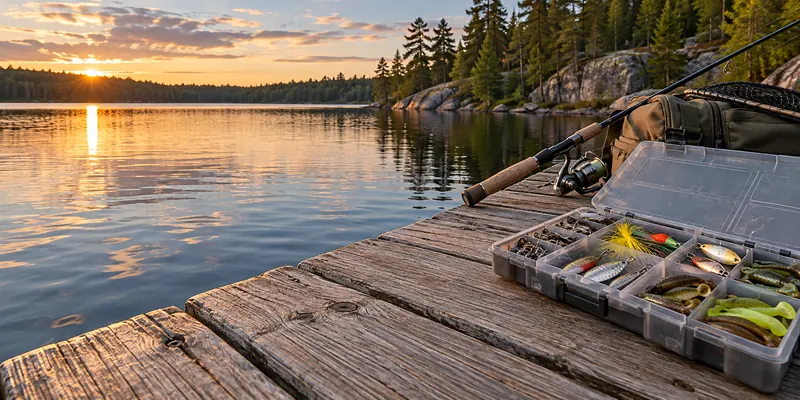
Carry a small selection suited to the target and water. Surface flies, subsurface patterns and streamers call for different presentations. Ask why a particular fly is being recommended and how to fish it. A useful explanation about depth, drift or retrieve helps more than a pattern name written on a shopping list.
For pike, use tackle and a tooth-resistant leader suited to the species, with appropriate landing and unhooking tools. Large flies and large fish need a different setup from a small trout outing. Get specific help if this is new fishing for you. Do not ask a light outfit to handle a job it was not chosen for.
Keep access, fish care and the weather together
Read the current rules, including any method restrictions on the named water. Respect private banks and signed closures. Wear suitable flotation near the water and assess footing before approaching an edge. If river levels or weather make the outing doubtful, choose another place or stop.
Clean, drain and dry equipment between waters, following Ontario's invasive-species guidance. Prepare for release before hooking a fish. After the outing, note what you could cast comfortably, which presentation you understood and what needs practice. Those notes give the next fly-fishing trip a useful starting point without adding another dozen patterns to the box.