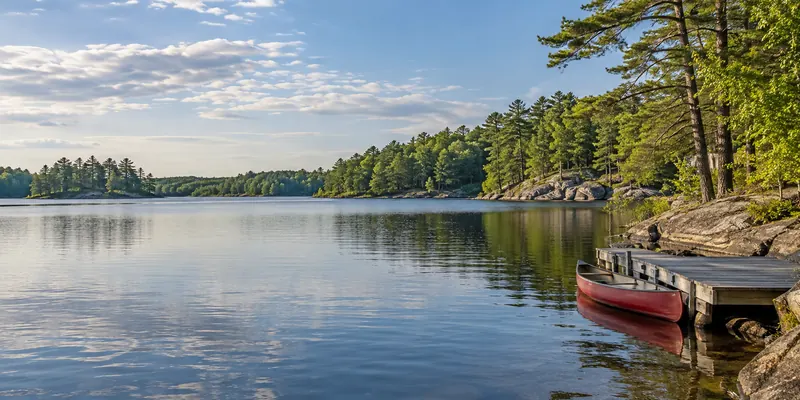
Central Ontario fishing can fit beside the rest of a cottage holiday without becoming an afterthought. A morning before the family wakes, a short boat ride after lunch, or an evening on the dock can each be a proper fishing outing. Cottage country fishing works best when the water, the access and the equipment are chosen with those ordinary days in mind.
Muskoka and Haliburton are the centre of this guide, with room for the Kawarthas and the wider central lake country. The familiar place names are a starting point. The actual lake and its shoreline decide what you can do once you arrive.
Muskoka: three well-known names and many other waters
Lakes Muskoka, Rosseau and Joseph are among the area’s best-known waters, but they are not the whole fishing map. The region has smaller lakes and rivers as well as the big cottage-country names. Bass, walleye, trout and pike opportunities depend on the selected water; do not assume that each is present at every cottage dock.
Ask a rental owner where guests normally launch and fish, what is close to the property and whether you can bring your boat. A waterfront address can mean a steep bank, a shallow bay, a busy channel or a dock that is awkward for the craft you have. Those details belong near the top of the booking conversation.
Haliburton: give the smaller map a close look
The Haliburton Highlands offer a useful setting for a fishing break built around an inland lake. When comparing places, look at the whole shoreline rather than choosing by the view from the deck. A small, manageable waterbody may suit a family better than a bigger lake with a long exposed run between the cabin and the fishing area.
Check the target fish on the exact lake. Ask about nearby launches, docking, boat rentals and whether a guide works there. If you intend to try another lake during the week, find out what the drive and launch involve. A close dot on the map does not always mean an easy outing with a trailer.
The Kawarthas and connected water
The Kawartha Lakes add another central Ontario choice for anglers who like bays, shore cover and towns within the trip. Connected water can be appealing, but it also means paying attention to navigation, current, channels and other users. Start with the lake or reach you can comfortably fish from your base.
If your plan depends on moving through a lock or between lakes, check the operating details before leaving. Do not spend the only good-weather morning trying to make a long transfer that was never necessary. A sensible first visit can be built around one waterbody, with wider trips left for another day.
A cottage booking is also an access booking
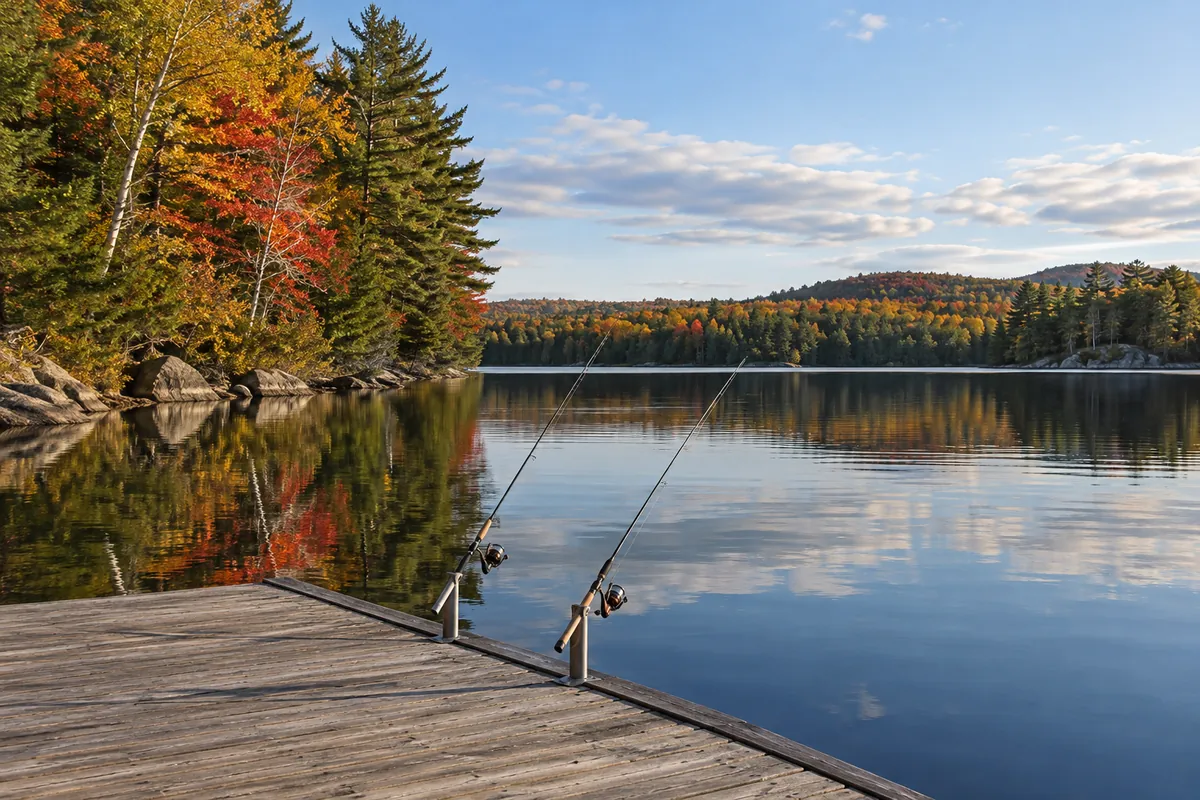
Read the rental description with a rod in mind. Is fishing from the dock allowed? Is the bank suitable for the children in your group? Is a boat included, and if so, what boat and motor? Can you charge a battery, store tackle securely and park a trailer without blocking the driveway?
Write down the answers. A photograph may show a canoe or a fishing boat that is not part of the rental. Confirm the equipment, the permission to use it and any extra cost with the owner. It is much easier to settle those details at home than to find an available boat after unpacking.
Keep the first outing short and simple
A family fishing holiday does not need to open with a full day across the lake. Choose a safe, easy place to begin, take a small amount of tackle and leave enough time to change plans. A few comfortable hours can tell you which parts of the trip everyone will enjoy and which need a different approach.
Avoid making the day depend on a particular catch. A packed lunch, a place to stretch legs and a clear return time are more reliable planning tools. When someone has had enough, head in while the outing is still a good one. The next morning can be longer if the group wants it.
Expect other people on the water
Cottage-country lakes are shared water. Keep watch for swimmers, paddlers, other boats and people fishing from docks. Give them room, control your wake and keep lines away from busy areas. Choose your approach to a shore spot with the same care you use when placing a cast.
At a public landing, prepare tackle and gear before taking your turn at the ramp. Check parking instructions and leave the access clear. Those small habits make the day easier for you and the next boat waiting behind you. A quiet early start can help, but it does not replace knowing the access arrangements.
Make room for a second kind of day
Leave one part of the holiday uncommitted. Rain, wind or a change of mood may put a town visit, a walk or a slow afternoon ahead of another boat ride. Choose accommodation that works for the whole group when nobody goes fishing. The best base for your trip should earn its place on both kinds of day.
Before fishing, read the current Ontario rules for the selected water. For a different pace, compare Southern Ontario or Eastern Ontario. If a longer northern stay is the aim, turn to Northeastern Ontario. Keep the plan sized to the holiday you actually want.