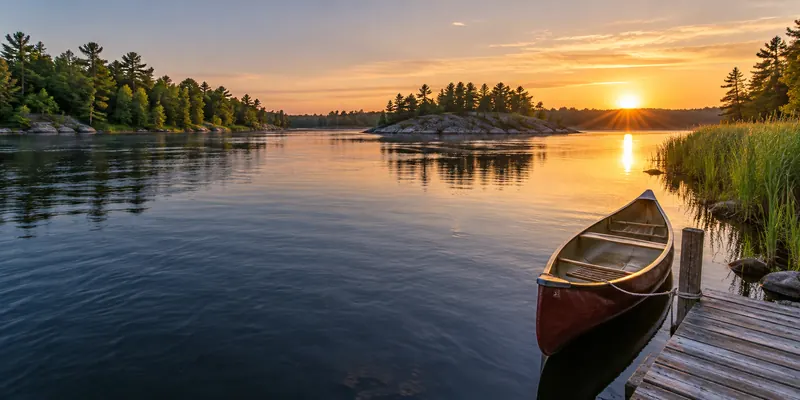
Eastern Ontario fishing follows several kinds of water. The Ottawa River gives the region a broad northern edge, the Rideau system threads through towns and lakes, and the St. Lawrence brings islands, channels and larger-water travel into the plan. Between them are inland waters suited to a cottage stay or a weekend with the rods packed.
For fishing trips here, think first about the reach of water you want to use. A cabin beside a quiet channel and a hotel near a busy harbour may both suit an eastern trip, but they will give the fishing day a different starting point.
Ottawa River: choose the reach before the overnight stop
The Ottawa River is a long waterway, not a single fishing address. Around Ottawa and farther up the valley, the shoreline, access and daily boating range differ. Walleye, bass, pike and muskie are among the fisheries associated with the river, but your target and the selected reach should be checked together.
Decide whether you want a guided outing, your own boat or a shore trip. Ask about current, navigation, nearby launches and sheltered alternatives. Because the river borders Quebec along much of its course, confirm the requirements for the waters you plan to fish. Do not treat the river’s name as a substitute for knowing which side and stretch your trip uses.
Rideau country: make the route manageable
The Rideau waterway connects Ottawa and Kingston through a chain of rivers, lakes and canal reaches. It offers a different kind of trip from open Great Lakes fishing. A base near a suitable launch can put the day’s water close at hand, while towns along the route give you choices for meals and overnight stops.
If your plan includes travelling through locks, check current operating details with Parks Canada before leaving. A fishing weekend does not need to cover the whole route. Choose one comfortable stretch, learn its access and let the fishing take up more of the day than the transfer. Busy channels deserve a watchful eye and room for other boats.
St. Lawrence and the Thousand Islands
The St. Lawrence adds broad river reaches, islands and channels to the eastern fishing map. Kingston, Gananoque and Brockville are useful place names when comparing starting areas. The nearest town will help you plan the road journey, but it is the chosen dock, launch or guide that sets the day on the river.
Use suitable navigation charts and ask about current, hazards and normal weather limits. A stretch that looks sheltered in a still photograph can be busy with boat traffic. The river also has an international boundary, so be clear about the waters covered by your outing and the requirements for any planned crossing. Keep the route straightforward on a first visit.
Inland lakes: another pace for the weekend
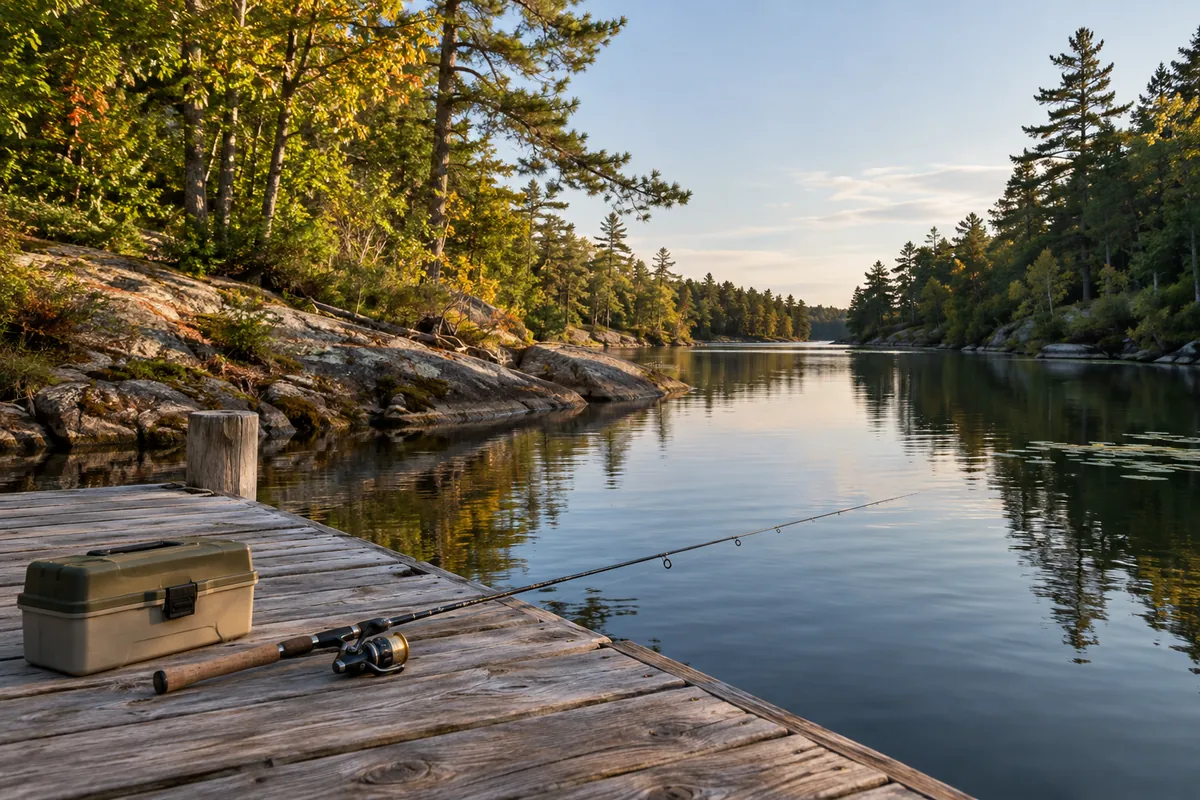
The inland lake country gives eastern trips an alternative to a large river base. A cottage or lodge beside the selected water can shorten the daily routine and leave more time for fishing, meals and shore time. Ask about the fish on the actual lake and what boat works well there.
Do not choose the accommodation first and leave access until the last email. Check the launch, docking, boat rentals and trailer parking while comparing properties. If fishing from shore is important to someone in your group, ask for a clear description of that shoreline. A deep-water dock, shallow reeds and a steep bank offer very different kinds of access.
A town base can suit a fishing-first trip
You do not always need to sleep beside the lake. A town base may work well when booking a guide, trying several public accesses or travelling with people who want other things to do. Set out the meeting points and daily drives before deciding whether it saves effort or simply shifts the travel into each morning.
If bringing a boat, ask the accommodation about safe parking and the space needed to turn a trailer. Put fuel and the launch on the route, and give yourself time to arrive without rushing. For a hired boat or guided day, get clear instructions about the meeting point. “At the waterfront” is not much help when several docks sit close together.
Fish with the river traffic in mind
Keep an eye on current and on the boats using the channel. Give navigation routes room, avoid anchoring where you would obstruct traffic, and choose places where you can keep control of your craft. Paddlers should plan a route suited to their experience and the conditions, rather than using a motorboat itinerary as a guide.
Shore anglers need room too. Choose a stable place with a clear casting path and a safe way to reach the water. Bridges, lock areas and busy landings may have restrictions or hazards that are not obvious from a road map. Confirm access instead of assuming that every public-looking bank is open for fishing.
Give the short trip a little breathing room
For a weekend, one good base and a few workable options can be enough. Keep a weather alternative and leave time to learn the water. A full schedule of different lakes may sound appealing at home, then leave very little time with a line in the water once launching and driving are included.
Check the current Ontario regulations for your chosen water, and keep arrival details available offline. Compare Central Ontario for a cottage-country stay or Southern Ontario for a shorter shore or city outing. The right eastern trip is the one that leaves the group ready for another day when the first one ends.