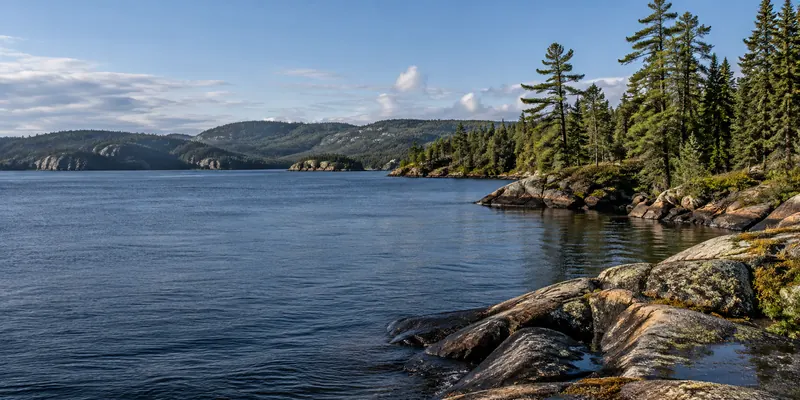
Algoma fishing puts two very different days within the same region: a quiet morning on an inland lake and an outing beside the open reach of a Great Lake. North Shore fishing adds communities, river mouths and bays along northern Lake Huron. Farther west, Superior sets its own scale. Start by choosing the water you want to fish, then build a route around it.
For this guide, Algoma and the North Shore are grouped as a travel area. The name is useful for planning a holiday, but it does not tell you which fishing rules apply at a particular landing.
Inland water deserves its own week
The inland lakes are a strong reason to visit Algoma. Walleye, northern pike, bass and trout opportunities vary from lake to lake, so put your target fish on the list before comparing cabins. A lake with trout is not automatically the right choice for a group set on casting for bass from a small boat.
Ask an operator which fish guests normally target, how far they travel from the dock and what a typical day involves. Look for a clear answer about the actual lake. Broad regional fish lists are useful starting points, but they should not be mistaken for a promise about the water outside your cabin.
Lake Superior calls for a bigger-water plan
Superior is not an inland lake with a longer shoreline. It deserves a trip planned around the water, the weather and the boat. A guide or charter can be a sensible first choice if your equipment and experience are built around smaller lakes. Ask what kind of fishing the trip offers and where the day begins.
A shore outing also needs care in the choice of location. Open rock, a river mouth and a protected bay can have very different conditions on the same morning. Keep a comfortable distance from waves and current, and leave an easy route back. The view is good reason to pause; it is not a reason to keep fishing a place that has become unsafe.
Huron’s North Shore: choose the bay, not only the town
Blind River, Thessalon, Spanish and the communities between them help put a North Shore route on the map. Look at the exact bay, river or lake connected to your chosen base. A property near Lake Huron might offer a different daily fishing routine from a cabin on an inland lake a short drive away.
Ask about wind exposure, docking and the distance to the water you intend to fish. If you want several shorter outings rather than one long day, choose access that makes that easy. A familiar sheltered area can be useful when someone in the boat wants to head in early or the weather begins to turn.
Sault Ste. Marie and the St. Marys River
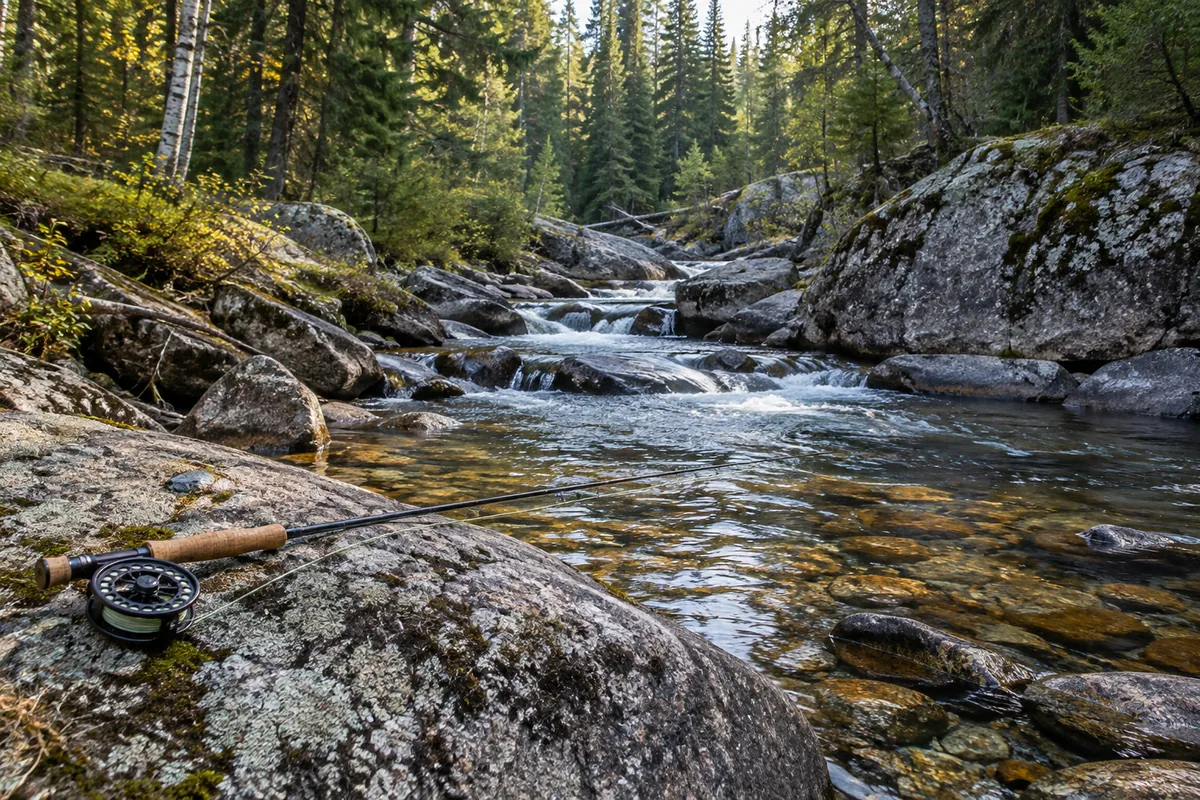
The St. Marys River is another Algoma starting point, with the city close at hand and moving water central to the trip. A river outing calls for attention to current, access and navigation. Ask a local guide which stretches suit the fishing you want and the equipment you are bringing.
Do not carry a plan from a quiet inland lake straight onto unfamiliar river water. Current can change boat control and the return journey. The river also sits along an international boundary, so confirm which waters your arrangements cover and what requirements apply. The right answer comes from the exact trip, rather than an assumption based on the nearest city.
The route into camp is part of the holiday
Algoma has drive-in, fly-in and train-in fishing choices. A road-access stay can be straightforward for a group with plenty of gear. A flight or train transfer changes how supplies, luggage and arrival times need to be handled. Ask the operator for the whole route from the meeting point to the cabin.
Check what you should carry, what is supplied and who handles the transfer. Keep booking instructions somewhere you can read without a signal. If travelling with children or someone who needs help boarding, describe that need while arranging the trip. Clear arrangements make arrival more comfortable for everyone.
Let the fishing day fit the country
An inland day may begin with a short run to a point you can see from camp. Another trip may involve a long shoreline, a river stretch or an early meeting at a dock in town. Pack for the day you will actually have. Food, dry clothing and a spare item of essential tackle can earn their place without filling the boat with equipment you never use.
Keep a weather alternative ready. It might be a more sheltered stretch of the same lake or a morning spent ashore. Ask whether your booking has any weather policy and what options are realistic. A plan made before the wind arrives is easier to use than one invented at the landing.
Make the final check local
Use the Ontario fishing regulations for the exact water and confirm access with the host or land manager. The Algoma Country fishing site is a useful regional starting resource, with inland and larger-water trip choices.
If your route is still open, compare Northwestern Ontario with Northeastern Ontario. Give yourself enough time to arrive, learn the water and fish at a steady pace. That is a better week than a long checklist of lakes seen only through a truck window.