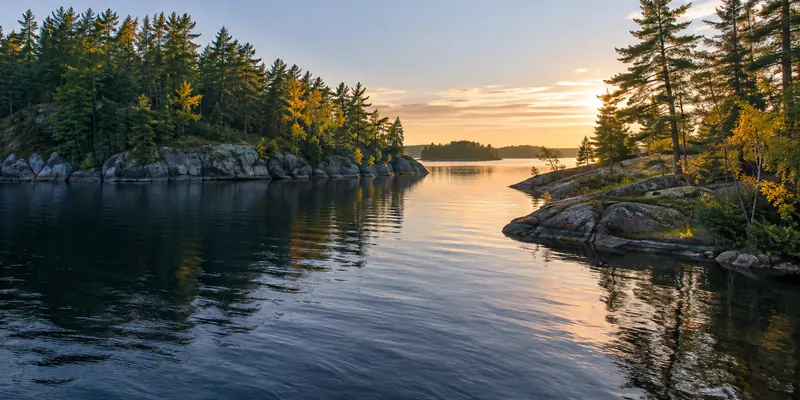
Northeastern Ontario fishing is not one kind of northern trip. Nipissing puts a broad lake beside established communities. The French River sends you into channels and rocky bays. Temagami brings island country and clear water, while Gowganda and the inland lakes offer another pace altogether. The road north gets you into the region; the choice of water decides the week.
Start your fishing trips with an honest picture of how you like to fish. A short evening outing from a cottage dock, a week working a home lake and a boat-in stay are different holidays, even when their maps overlap.
Lake Nipissing: pick the shore that suits the plan
Lake Nipissing is known for walleye, northern pike, bass and muskie. North Bay, Callander and West Nipissing give you several starting areas to compare. The lake name alone does not tell you how far you will travel by boat or what kind of shoreline lies close to your accommodation.
Ask where the launch sits in relation to the cabin, whether the dock suits your boat, and which nearby water is usable when wind rises. A base that makes ordinary mornings easy can be worth more than a place that looks closer to a promising spot on a small map. Keep the first outing short enough to learn the return route in daylight.
French River: let the channels set the route
The French River is fishing country for people who enjoy points, islands, sheltered pockets and changes in the shape of the water. Its channels make it easy to imagine a long day moving from bay to bay. They also make clear directions and a useful chart important on a first visit.
Choose a base by the water you can reach from it, rather than treating every French River address as the same trip. Ask about current, boat traffic, hazards and the usual range of a day’s fishing. A sheltered bay may be a good place to spend time when the wider water is uncomfortable. Read the French River guide for a closer look at the daily route.
Temagami: look closely at the lake name
Temagami means more than one lake on a fishing advertisement. Lake Temagami has its own island-and-bay layout, and the surrounding area holds many other waters. Trout, bass, walleye and pike opportunities vary with the lake. Confirm your target fish on the exact water instead of carrying one species list across the whole area.
Find out whether arrival is by road or boat and where you will leave a vehicle and trailer. If a transfer is involved, ask what happens when weather affects the pickup. A boat-in stay can be an excellent fit, but it works best when everyone knows the routine before the bags are loaded.
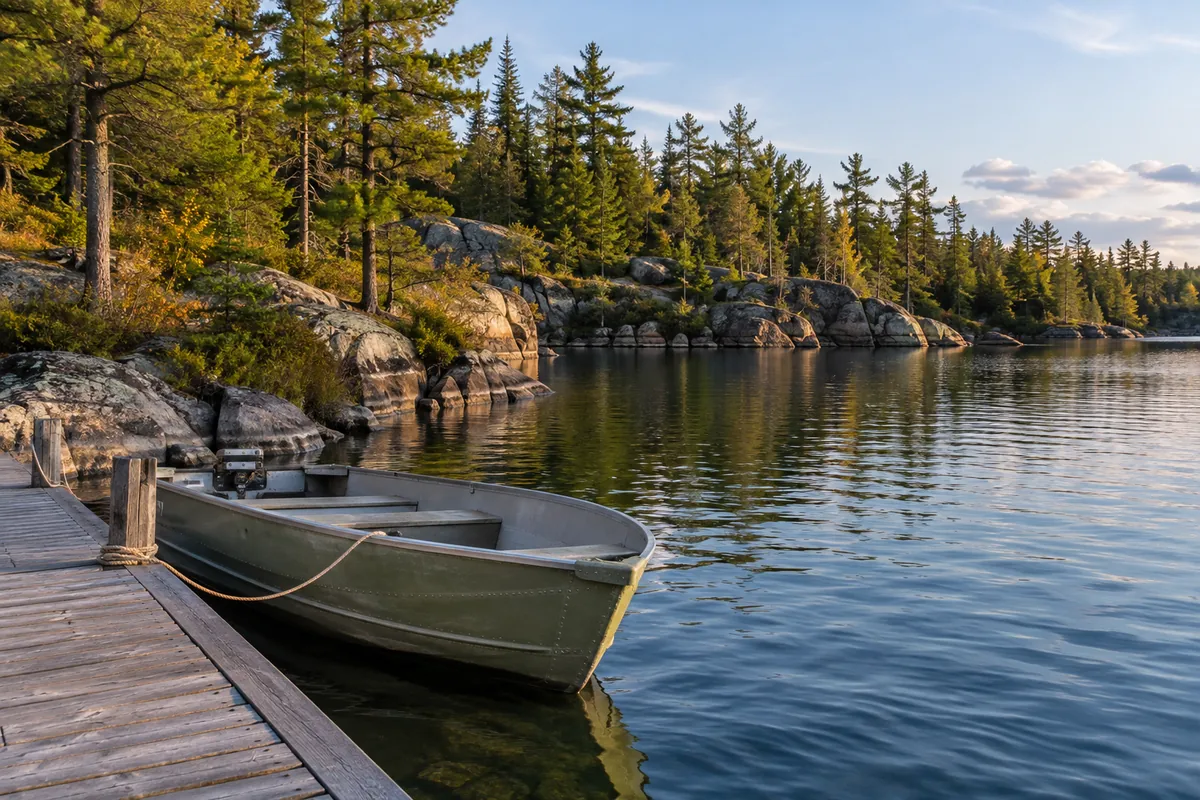
Gowganda and the inland country
Gowganda is a useful starting name for a trip built around smaller northern lakes and a lodge base. It is also a reminder that the northeast stretches well past its best-known waterfronts. Look at the area around your chosen property rather than assuming the lake beside the cabin is the only fishing option.
Ask which additional waters are actually reachable, what the access involves and whether another boat is needed. A nearby lake on a map may be separated from you by a rough road or a landing that does not suit your equipment. The Gowganda destination story will give the community and its fishing country a longer treatment later in the build.
Decide between one lake and several
There is a good case for staying with one waterbody through a week. You spend less time launching and driving, learn the shoreline, and can change the plan without packing everything again. That is often a sensible choice when travelling with children or bringing a boat that takes time to set up.
A base for several waters can suit anglers who enjoy variety and do not mind the daily travel. Ask the host for a realistic description of those outings. Keep one straightforward option for the day when the weather is poor or the group wants a shorter trip. A holiday should have room for both kinds of morning.
Get the boat details before the cabin details
Read the accommodation description, then spend equal time on the fishing equipment. Confirm the boat, motor, seating, fuel arrangements and any supplied navigation equipment. Ask whether a guide can be booked for the opening day and whether that guide fishes the water you want to learn.
If taking your own boat, check parking, the launch and docking arrangements. If taking a canoe or kayak, describe the route you have in mind and ask about current and exposed reaches. A property being “on the water” is not the same as that water being a good match for every craft.
Keep the northern day a comfortable one
A dry layer, food, drinking water and a way to manage changing weather belong beside the fishing gear. Leave someone with your route and return plan, then keep the day within that plan. There is no need to cross every part of a lake just because you have a week to fish it.
Use the current Ontario rules for the selected water. Compare the region with Algoma and the North Shore if a different route would leave more fishing time. When the practical details fit, the northeast has room for a trip at your own pace.