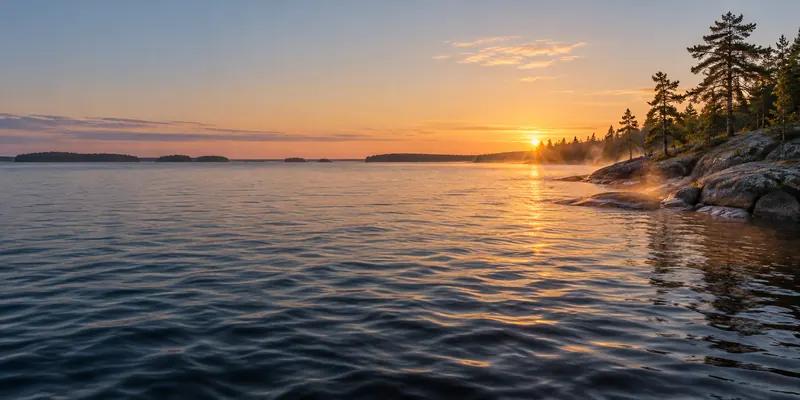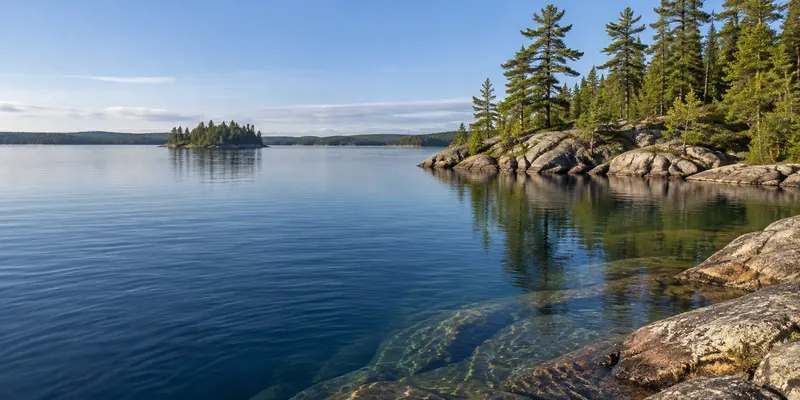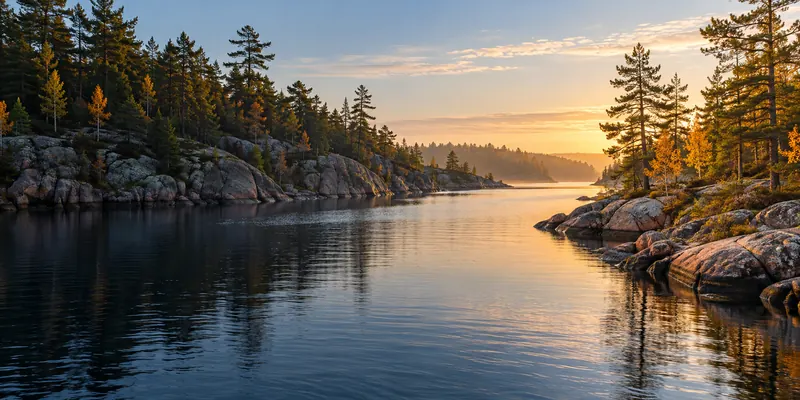
French River fishing has a way of making a modest plan feel like a full day. A rocky point leads to a bay, the bay opens into a channel and another island gives you a reason to stop. The river links Lake Nipissing with Georgian Bay through connected water, rapids and falls. That connection belongs on the map. It does not mean a fishing boat can travel every part of it.
The best fishing trips here begin with one section of the river. Choose the water near your base, learn its routes and leave the larger journey for a day when you have the knowledge and conditions to do it well.
Pick a bay, not just a river address
Wolseley Bay, Dry Pine Bay and the lower-river country offer different starting areas. A place advertised as being on the French River may put you beside a broad reach, a tucked-away bay or water reached by a boat transfer. Ask for the departure dock and the normal fishing range before comparing the cabins.
The question is how the day works from that address. Find out where supplies are available, whether fuel is at the dock and which water remains comfortable if the wind turns. Mark the route back before leaving. Several similar islands can look much less similar on the outward trip than they do late in the afternoon.
Walleye, smallmouth and pike
Ontario Parks lists walleye, smallmouth bass and northern pike among the river's fish. Each gives a different reason to study the shore. A rock point may suit a bass outing; a weed-lined bay may be a sensible place to look for pike. Walleye fishing can send your attention below the surface, toward changes in depth and the edge of moving water.
Treat those features as starting questions rather than promises. Look at the chart, check the current and work a manageable stretch. Keep the boat under control and use a lure you can fish properly in the conditions. A local guide can help you choose water for your target without spending the first day guessing which channel leads where.
Current changes the fishing and the route
Moving water deserves a separate look from a quiet bay. The seam between faster and slower water may draw your attention, but the fishing decision comes after the boat decision. Do not approach rapids, falls or constrictions simply because a line on the map appears to continue through them.
Ask about current conditions before taking an unfamiliar route. Water levels and flow change, and a passage that was used on a previous trip may need a different plan now. Keep a distance from hazards and turn around while there is still an easy choice. Advice from someone who knows the section is worth getting before the motor starts.
Learn the return route in daylight
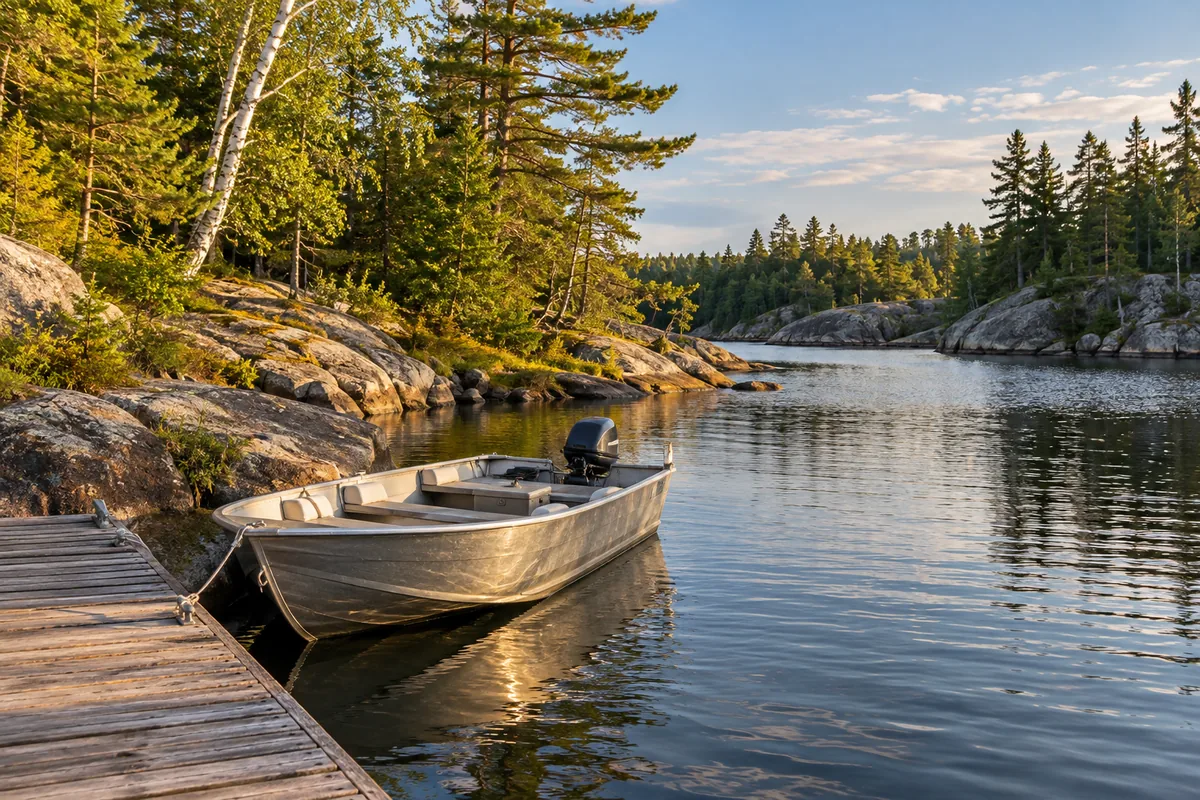
A river trip leaves more room for wrong turns than a simple run across an open bay. Islands, branch channels and bends hide the next landmark. Carry a suitable chart and record the route without making the screen your only source of direction.
On the first outing, stop now and then to look back. Notice the appearance of the channel you have just left. Save a few clear reference points and keep the route short enough to return with light to spare. A phone photograph of a junction may help your memory, but it does not replace a chart or local route advice.
Fishing by canoe or kayak
The French River is also a paddling destination. Ontario Parks describes routes through its lakes and channels, with portages around some fast water. A fishing paddle should be planned around the route and the skill of the group, not around how many promising bays fit on a page.
Allow time to carry the boat, wait out wind and set up camp if that is part of the trip. Read the park's current trip and access details, then confirm the launch, parking and any overnight arrangements. A park camping booking and a private marina's access charges are separate questions. Settle both before arriving with the canoe loaded.
Leave a little room for the river ashore
A lodge week need not become seven dawn-to-dark outings. The French River Visitor Centre and the Recollet Falls Trail provide another way to spend part of a day. Check Ontario Parks for current visitor details and trail conditions before making that the weather-day plan.
The break can be useful. Dry the clothing, check tackle and talk through what the group learned on the last outing. A shorter return to the water may be more enjoyable than forcing a tired crew through another long afternoon.
Make the first day a small one
Bring landing and unhooking gear that suits the fish you intend to target. Keep it within reach and agree on the routine before anyone hooks a fish beside the boat. Check the Ontario fishing rules for the river section, species and dates, including local exceptions.
The Lake Nipissing guide offers a useful comparison if you are deciding between broad lake water and river channels. The wider Northeastern Ontario guide puts both in the same trip-planning picture. Start the French River with a chart, a short route and one or two pieces of water worth fishing carefully. There will still be another bend tomorrow.