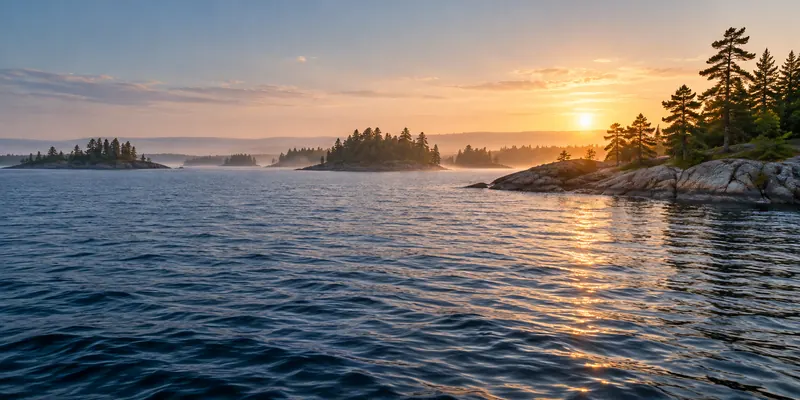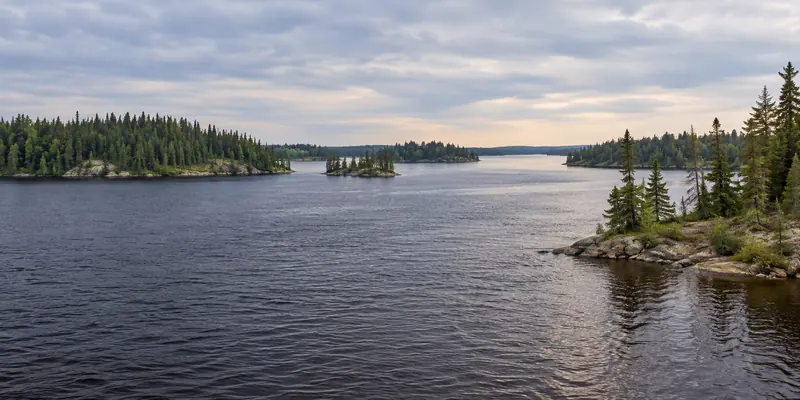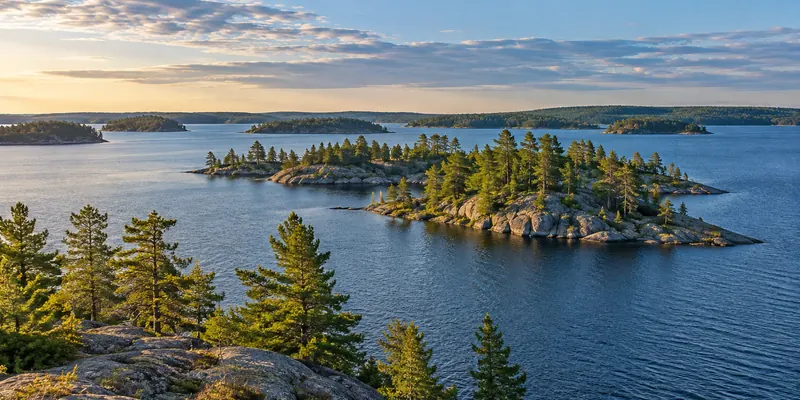
Rainy Lake is a place to fish with a map open beside the tackle box. Pine islands divide the horizon, rock points interrupt the shoreline, and a promising bay can sit only a short distance from a much wider stretch of water. The lake crosses the Ontario–Minnesota border. For an Ontario trip, make the Canadian side a clear part of the plan, rather than treating the whole chart as one fishing area.
Fort Frances gives the trip a town base. Elsewhere on the Ontario shore, a cabin or landing may put a different section of the lake within reach. Pick that section before picking the accommodation. A week built around nearby water usually leaves more time with a line down than one spent running between distant names on a map.
Choose your piece of Rainy
The Sunset Country tourism guide lists walleye, smallmouth bass, northern pike and crappie among Rainy Lake’s fishing draws. That is a useful starting list, but it does not tell you which fish suit the shore outside your dock. Ask a local guide about the species, bottom and daily boat routes in that particular part of the lake.
A smallmouth trip might stay close to rock and islands. A walleye day may call for longer drifts over changes in depth. Pike give another reason to look at the protected bays. Keep the first day modest: one area, a few likely places, and enough room to change course when the wind changes.
Smallmouth along the rock
A bare granite point is easy to notice. The better question is what happens under its outside edge. Look at the contour lines for a shelf, a break or a saddle between an island and the mainland. Those shapes give a casting plan something firmer than the colour of the shoreline.
Carry a small selection of tubes, soft-plastic minnows and moving baits. Work one depth carefully before moving to another. If the boat drifts too quickly, the lure spends little time where you intended it to fish. Make a shorter pass, reposition, and give the point a second look from another angle.
Walleye, with a reason for each pass
For walleye, depth and boat control deserve as much attention as lure choice. A jig that reaches bottom intermittently can tell you more about a slope than one dragged steadily through it. Choose its weight for the water beneath the boat and the speed of the drift, rather than using the same head everywhere.
Mark the beginning and end of a useful pass. Note wind direction, depth and the kind of bottom contact you felt. When a fish comes aboard, return to that stretch with a clear question: was it the point, the turn in the shoreline, or the edge of deeper water? One bite is a clue, not a promise that the whole bay will fish alike.
Leave room for another fish
Pike water can change the rhythm of a day spent looking for walleye. A bay with vegetation or a break outside a shallow flat is worth discussing with someone who knows that part of Rainy. Bring a suitable leader, long pliers and a landing net large enough for the fish you intend to target.
Crappie need a separate conversation. Their presence on the lake does not make every sheltered inlet a reliable stop. Ask where that fishery fits your dates and boat range. If the answer involves a long run or a very specific area, decide whether it belongs in this trip at all. A mixed-species week works best when its changes are practical.
Settle the landing before the drive
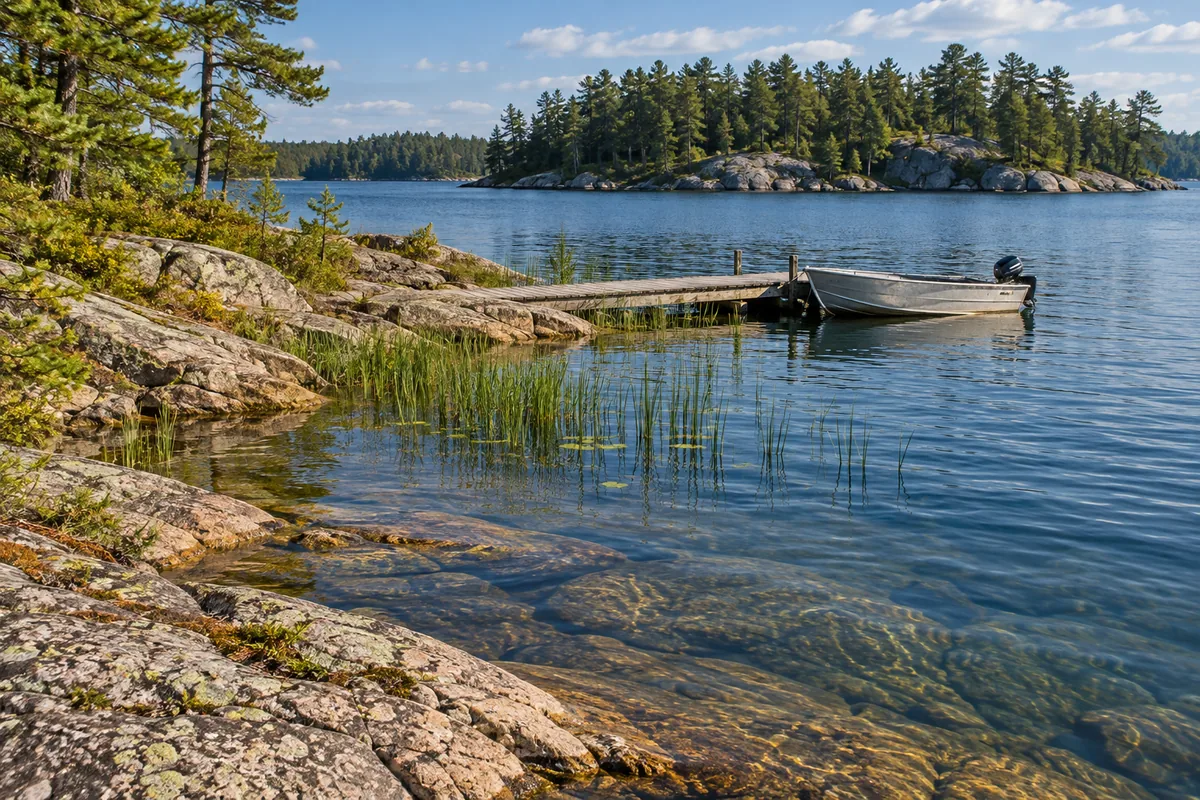
Get the launch name, address, parking arrangements and boat access in writing before leaving home. Ask whether the trailer can stay there and whether the boat can stay in the water overnight. A cabin reservation and a suitable launch are two different things. The short road distance between them may hide a much longer water route.
Check fuel arrangements as carefully as accommodation. Start each day with enough for the intended route and a sensible reserve. Save the return route before heading out, keep a chart available without a phone signal, and tell someone where you plan to fish. Islands can provide shelter, but the crossing between them still deserves attention.
Keep the border out of guesswork
Use the current Ontario fishing summary for the water you will actually fish, including exceptions listed for named waters. Do not assume that a rule from a nearby lake applies here. If your plan includes entering American water, confirm the applicable fishing and border requirements with the responsible agencies before the trip.
There is plenty of reason to build a day around Ontario water alone. Pick a route that lets you concentrate on fishing instead of an uncertain boundary crossing. Keep the chart handy, know the line, and ask your guide to explain the day’s area before the boat leaves the dock.
A town base and a slower evening
Fort Frances can give a fishing holiday a welcome pause between boat days: supplies, a meal, and time ashore before the next early start. The town’s Rainy Lake visitor page is a useful place to begin checking local information. Confirm individual services for your dates rather than relying on last season’s schedule.
For more nearby choices, read our Northwestern Ontario guide. Compare Rainy with Lake of the Woods if you are still choosing a base. Once the decision is made, let the daily route stay small enough to learn. A familiar point, fished with a better idea on the second morning, often gives a trip more character than another hour on the throttle.