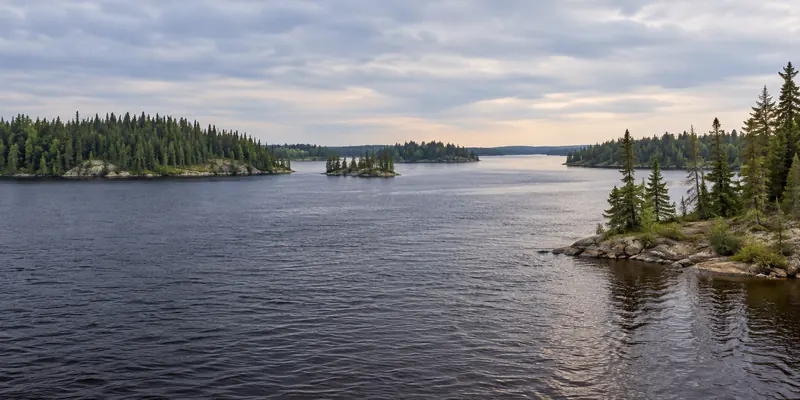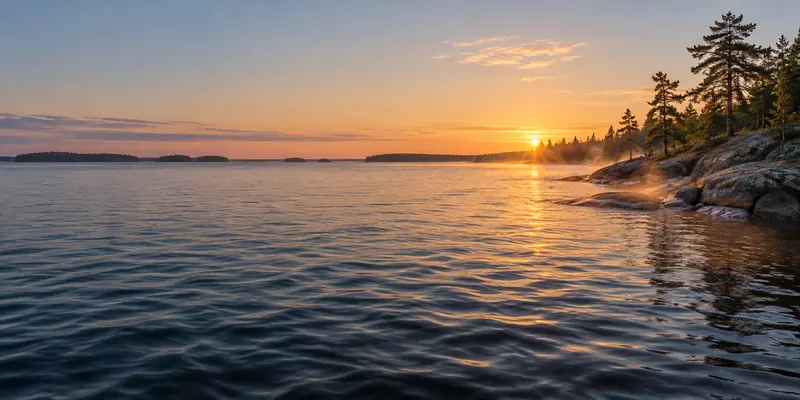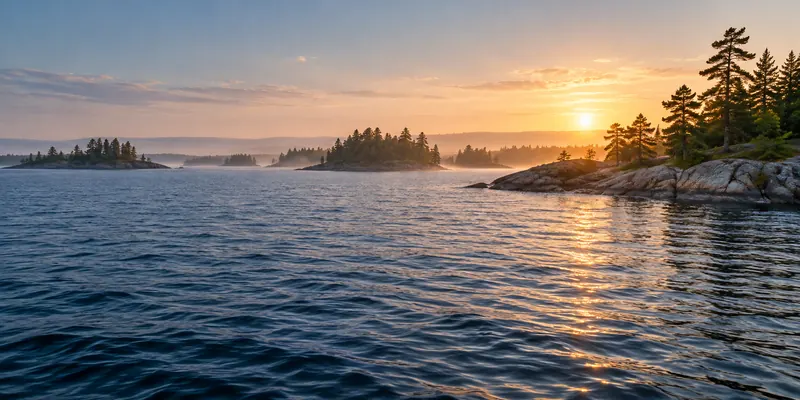
Lake of the Woods fishing puts a lot of choices in front of an angler. Walleye, bass, pike, muskie and crappie share the trip-planning page, with lake trout adding another option in suitable deep-water areas. Islands and bays give the map more edges than a visitor could fish in a week. The sensible response is to choose a smaller piece of the lake.
Build fishing trips around a base and a target fish. A week near Kenora and a week near Morson may carry the same lake name, but the daily boat routes, nearby water and available town services will differ. Decide which version of the trip you want before looking at cabin calendars.
The facts before the trip.
- Fishing zone
- Ontario waters: FMZ 5. Read the Lake of the Woods entries and sanctuary boundaries.
Source ↗ - 2026 walleye and sauger
- Ontario and Canadian residents: Sport 4, with none from 43 to 70 cm and at most one over 70 cm. Conservation 2, with none over 43 cm.
Source ↗ - Visitors from outside Canada
- Non-Canadian residents: Sport daily 2 and possession 4, with the same size rule; Conservation daily and possession 2, none over 43 cm. Crown-land camping can further reduce the Sport allowance.
Source ↗ - Lake trout
- A zero limit applies to much of the lake; named bays and inlets are excluded from that entry. Check the exact water.
Source ↗ - Public access
- Anicinabe Park is on the City of Kenora launch and docking list. The park beach is a no-launch area.
Source ↗ - Trailer parking
- The city lists no parking at the Anicinabe Park Boat Launch lot between 10:30 p.m. and 6 a.m.; confirm current signs.
Source ↗
2026 fishing rules checked . Lake profiles and municipal maps may have earlier source dates. Read the full named-water and sanctuary entries before fishing; confirm launch conditions before travelling.
Choose the launch and the parking together
Anicinabe Park is a useful place to begin planning a Kenora launch. Read the city’s docking page and parking page together: getting a boat into the water and leaving a trailer overnight are separate questions. The city lists Anicinabe Park as a launch or docking site, while the park beach is a no-launch area. Follow the ramp signs, loading limits and marked parking rules when you arrive.
Kenora also lists launch or docking sites at Keewatin Wharf, the Moncrief Construction Sports Centre and the harbourfront. That list includes docks as well as ramps, so check which site suits a trailered boat. Boatlift Road serves the Winnipeg River and should not be treated as a direct Lake of the Woods launch. Ask the city or park operator about the access you need, then set a fishing route that fits the day’s wind.
Carry the 2026 lake entry
Lake of the Woods has its own walleye, sauger, bass, perch, muskie and lake-trout entries. The current walleye size rule differs from older summaries found online. Take the dated 2026 summary with you. Lake-trout rules also divide much of the lake from named bays and inlets; a nearby launch does not settle which rule applies to your fishing spot. Mark the boundary before starting a trolling pass.
Four useful names on the planning map
Kenora gives the northern end of the lake a substantial town base. Sioux Narrows sits on the eastern side, with Whitefish Bay among the waters nearby. Farther along that eastern shore, Nestor Falls is a starting point for Sabaskong Bay. Morson opens another approach around Miles Bay and the water west of the Aulneau Peninsula.
Those names help narrow a search. They do not replace the exact departure dock. Ask the host where the first ordinary fishing day would take you, how exposed the route is and where you can obtain fuel or supplies. A motel-and-marina stay, a drive-in cabin and a boat-in lodge each produce a different morning routine.
Start the walleye day with a repeatable pass
Walleye is a strong reason to choose Lake of the Woods. Points, shorelines, shoals and changes in depth give you somewhere to begin, but choose features you can fish under control. The useful spot is the one you can find again and work well in the day's conditions.
Watch the boat as closely as the lure. Note the direction of the pass, the depth and the speed that let you stay in touch with the presentation. If you get a bite beside a particular change in bottom, fish it again before assuming the next bay must be better. A small area can teach you plenty when you stop long enough to learn it.
Bass fishing gives the shore a closer look
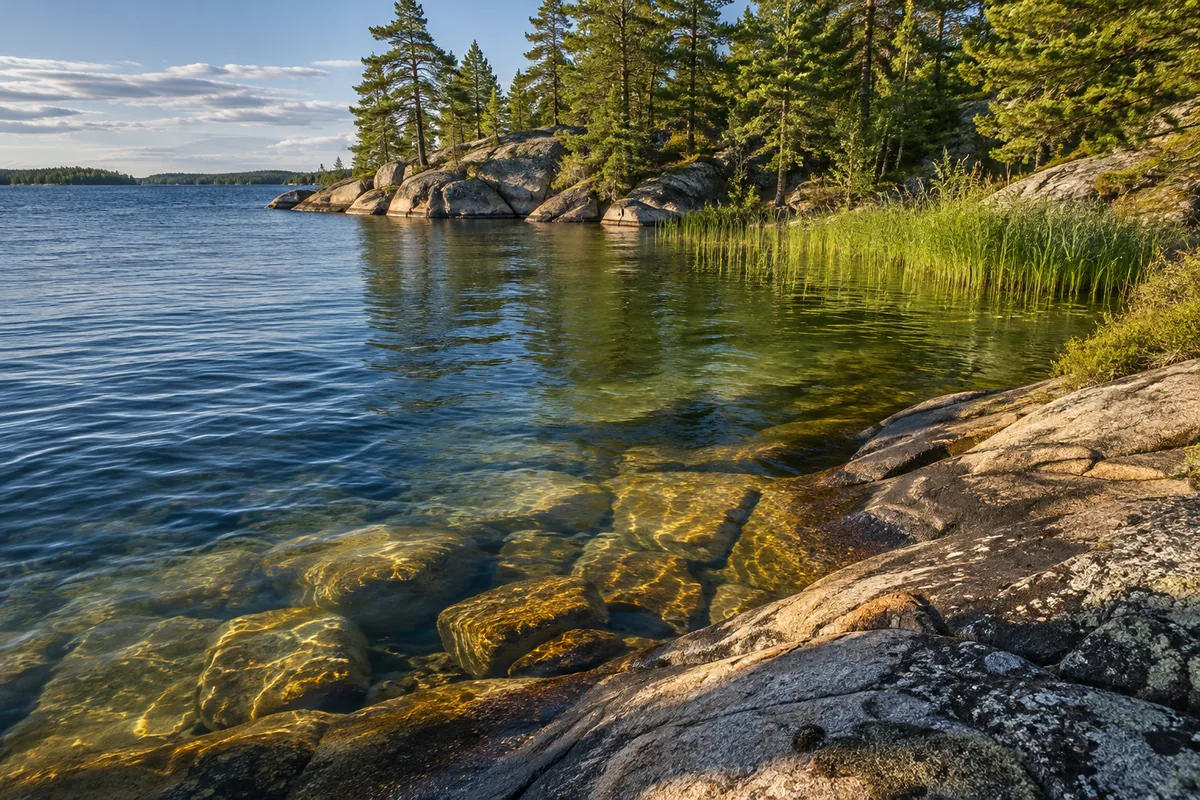
Smallmouth bass make rocky shorelines and boulder water worth studying. Work a point from more than one angle and pay attention to where the shallow rock drops away. A cast made parallel to a feature can show you something different from a cast straight toward shore.
Largemouth bass are another option in suitable weedy bays. Confirm that fishing with a host or guide who knows the water close to your base. Do not choose the whole trip around a species list for the entire lake. Bring the gear for the outing you can actually make, then allow time to fish that water carefully.
Pike and muskie need a handling plan
Northern pike and muskie belong in a different tackle conversation from an afternoon spent jigging for smaller walleye. Bring equipment, leaders, landing tools and unhooking gear suited to the fish you intend to target. Arrange the boat so those tools are available before the first cast.
A guide can help turn a muskie trip from a broad wish into a day's work on suitable water. Ask where the guide fishes, what tackle is supplied and how the outing is paced. Keep expectations honest. A well-run day teaches you something about the lake even when the fish you most want does not appear.
Crappie and trout are separate choices
Crappie gives some visitors a reason to look at sheltered bays and another style of fishing. Lake trout adds a deeper, colder-water trip in areas such as Whitefish Bay and the northwestern arms. These are not simply extra names to tack onto every outing.
Ask whether the chosen base gives practical access to the species you want. Confirm the gear, current fishing approach and local rules for that water. Keeping one main target for the day makes it easier to choose a route and judge whether a move is useful. You can plan a different species outing tomorrow without carrying every rod today.
Give the week a manageable shape
Leave one short outing in the plan and one day that can change with the weather. Ask about the boats, launch, docking, fuel and daily help before booking. A base that lets the group spend more time fishing and less time arranging the boat may be the better choice, even when another cabin looks closer on a large map.
Read the current Ontario fishing regulations, including Lake of the Woods waterbody exceptions. Compare Lac Seul for another northwestern trip built around walleye, or read Northwestern Ontario for the wider country. The lake gives you no shortage of places to begin. Pick a few that fit the day and give them your attention.