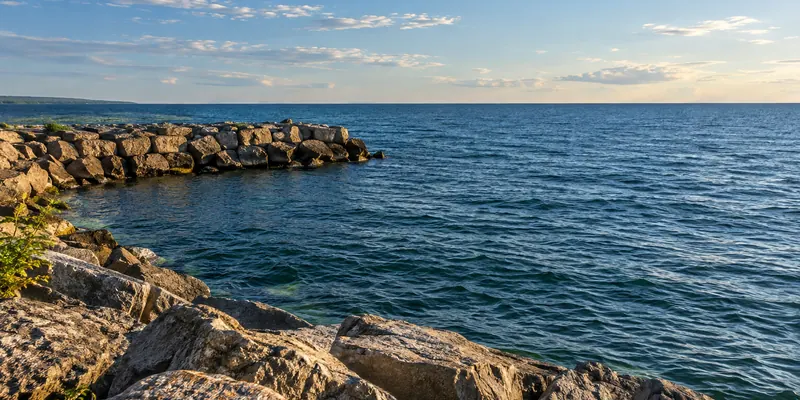
Lake Ontario fishing can mean a salmon charter from a western port, a shore outing near home or a walleye trip in the Bay of Quinte. Those are different holidays with different gear, routes and legal checks. Choose the part of the lake and the fish first. Then work back to the launch, boat and daily routine that fit the group.
The facts before the trip
- Fishing zone
- Canadian Lake Ontario waters are in FMZ 20. Tributaries and boundary waters need their own checks.
Ontario FMZ 20 overview - Fishing choices
- Ontario describes salmon and trout fisheries in deep water and warm-water fisheries in eastern areas, including the Bay of Quinte.
Ontario FMZ 20 overview - Public ramp examples
- Mississauga lists ramps at 15 Front Street South, 120 Lakefront Promenade and 140 Lakefront Promenade. Read current fees and parking rules before use.
Mississauga public launch passes and parking
Sources checked November 19, 2026. Read the current annual rules and any later notices before fishing.
Put a public ramp into the travel plan
Mississauga's municipal ramp page gives named addresses and the current pass choices for motorized boats and personal watercraft. Parking is first come and overnight parking is not permitted under the posted arrangements. Check the latest details close to departure, rather than relying on a fee from an old trip.
For another port, use that municipality's marina or launch page. Confirm the ramp, trailer space and return access separately. If launching early, find out whether gates, payment or parking rules affect the time you may enter. A smooth start leaves more attention for the weather and the boat.
Make a salmon or trout charter booking specific
Ask the captain which fish the outing is built around and what equipment is supplied. Check the trip length, onboard facilities, fish-cleaning arrangements and cancellation terms. Tell the operator about children, limited boating experience or other needs that will affect a comfortable day.
A photograph of a large catch is only one part of choosing a charter. The crew, boat routine and weather plan matter throughout the trip. Ask what a typical morning involves and how much guests take part in setting tackle or landing fish. Keep the day's expectations clear before making the booking.
Treat the Bay of Quinte as its own guide
The Bay of Quinte has a separate fishing character and named rules within FMZ 20. Use the Quinte guide for its walleye dates, access notes and the line-rule check around Glenora. Do not turn a rule for the open lake into a blanket rule for every connected bay or river mouth.
If travelling east for walleye or bass, choose the departure point and reach of water before booking accommodation. A drive between nearby towns can still leave the boat far from the intended fishing. Ask where local guests normally launch and what the daily run involves.
A tributary is another rules check
Lake Ontario's tributaries can have seasons, boundaries and sanctuary conditions separate from the main lake. Read the entry for the stream and the reach being fished. A road bridge or railway crossing can be a named boundary, so a general river name is not enough.
Shore access also needs care. Use public locations where fishing is allowed, respect signs and leave room for other users. A municipal marina or harbour can restrict fishing even when boats use it. Keep the access question separate from the fishing-licence question.
Choose the return route before the long run
Read the marine forecast, carry the required boating equipment and wear suitable flotation. Keep fuel and time in reserve. The lake can be comfortable near a harbour and much less forgiving farther out, so a short first outing is a sound way to learn the boat and the water.
Our Great Lakes guide compares the wider shorelines, while the salmon and trout guides help with species choices. Once Lake Ontario fits the group, keep the plan tied to one port, a clear target and the day's conditions. A useful holiday leaves room to fish another day.