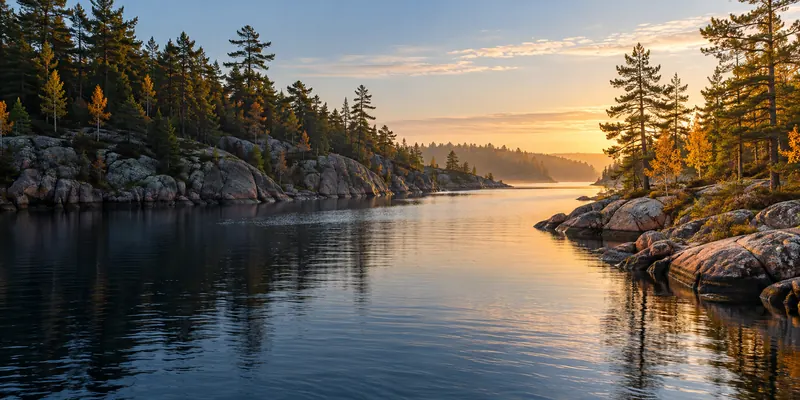
An Ottawa River trip starts with a reach of river, not the whole line on a map. The launch, current, islands and distance between services shape a useful day. Decide where you will enter the water and which shore you will fish before choosing tackle or a place to stay. A city outing and a longer valley trip need different plans.
The facts before the trip
- Ontario fishing zone
- FMZ 12 includes Ontario portions of the Ottawa River and Lake Temiskaming. Read the current rules for the exact reach.
Ontario FMZ 12 overview - Species choices
- Ontario lists walleye, sauger, northern pike, muskie and both bass species among the zone's fisheries.
Ontario FMZ 12 overview - A small-craft access example
- The NCC's Shirleys Bay launch suits small, shallow-draft boats. The shore is shallow and rocky; check current access before use.
NCC Greenbelt boating access
Sources checked November 19, 2026. Read the current annual rules and any later notices before fishing.
Check both the water and the province
The Ottawa River runs along the Ontario–Quebec boundary. Before fishing, read the licensing and fishing rules that apply to the water you will actually use. Do not assume that a licence bought for a home province settles every location, species or season along the river.
Use Ontario's current FMZ 12 summary and the relevant Quebec guidance when a route involves boundary water. If anything is unclear, ask the responsible ministry before the trip. A road address in one province and a fishing spot near the other shore deserve separate checks.
Choose access that suits the boat
The National Capital Commission describes Shirleys Bay as a launch for small, shallow-draft craft because of its shallow, rocky shoreline. That makes it a useful example of why a public ramp name is not enough. Read the actual access notes and match the craft to the site.
Keep parking and the return landing in the plan. A canoe outing can need a different place from a larger fishing boat. Confirm opening hours and any local restrictions before carrying gear to the water. Avoid blocking the ramp while sorting tackle or loading bags.
Let the target fish set the equipment
For walleye or sauger, bring tackle that lets you control depth and boat position in the conditions you will meet. Learn the identification differences before deciding to retain a fish. Note the direction and speed of a pass rather than only the lure colour.
A muskie day needs its own tackle and release tools. Ask a guide about supplied equipment, safe working space and the landing routine. If the group would rather cast lighter gear for bass or pike, say so when booking. One boat trip does not have to cover every species.
Read current and distance with care
A sheltered departure can hide quite different conditions farther along the route. Keep the first outing short enough to learn the reach and the landing. Carry the chart and required boating equipment, wear suitable flotation and leave a route plan with someone ashore.
Be cautious around dams, changing current and marked exclusion areas. A fishing spot is not worth entering water outside your equipment or skill. Ask local operators about the day, then keep enough time and fuel to turn back before the choice becomes difficult.
Choose the next outing from what you learned
Keep a few notes about access, depth, wind and the time needed to return. Those details help decide whether tomorrow should use the same reach or a different launch. A short familiar route can leave more time for fishing than another long drive and an uncertain first run.
Our Eastern Ontario guide places the river beside other regional choices, while Bay of Quinte offers a different walleye setting. Use the species guides to choose a target, then put the exact water and date back beside the rules. The river is large enough to reward a modest first plan.